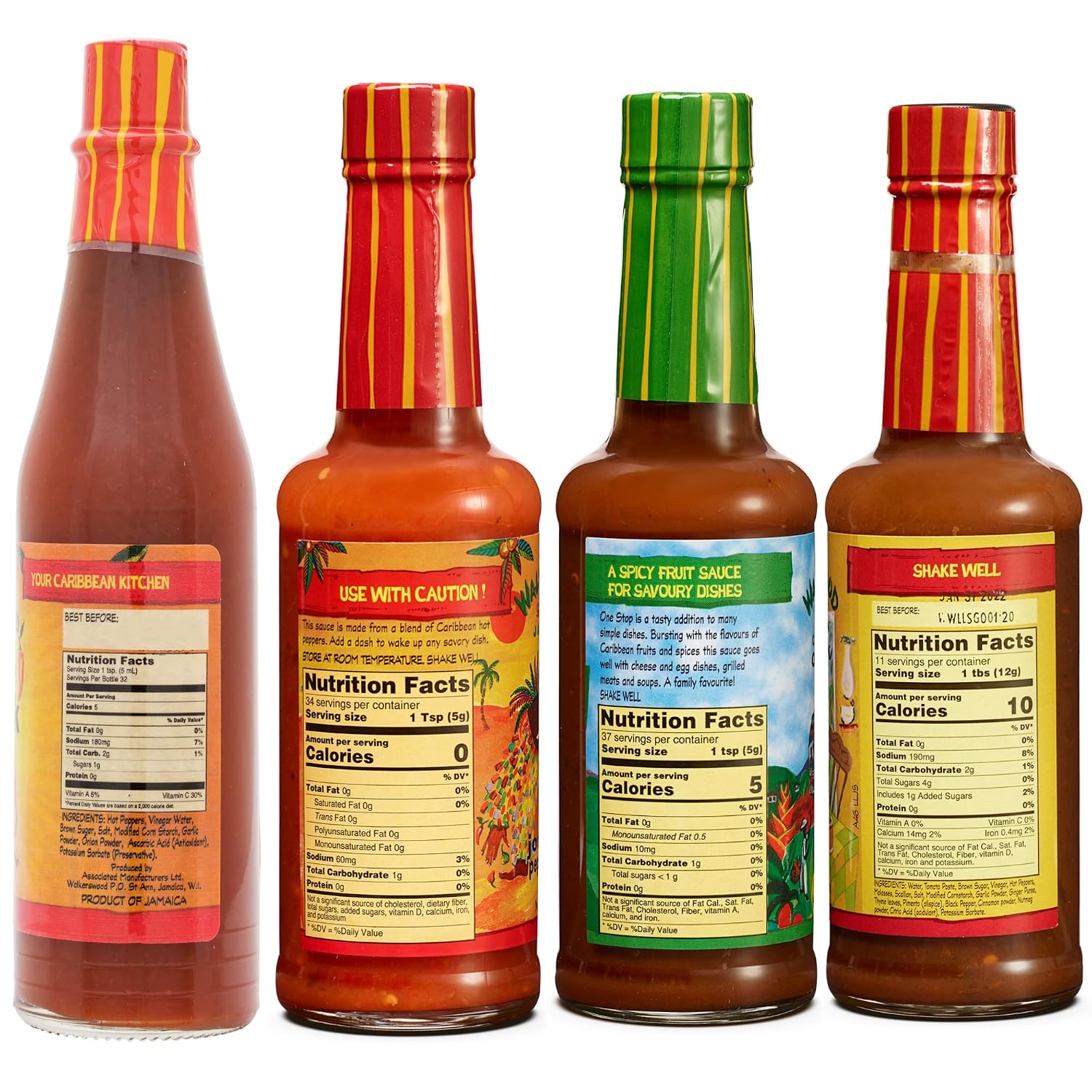
You know that feeling when you’re staring at a product listing that seems almost too convenient — a four-bottle sauce kit from a brand you already trust — and you can’t quite tell whether it’s a genuine value or just clever packaging? That’s the exact question driving this guide. Walkerswood is a Jamaican brand with genuine island roots and a production facility in the Blue Mountains parish of St. Ann; their jerk seasonings and hot sauces are staples in Caribbean households and diaspora kitchens worldwide. The Walkerswood Hot & Savory Sauce Kit bundles four of their sauces into a single purchase, positioned somewhere between an everyday pantry buy and a gift-ready set. If you already cook with Walkerswood products — or you’re shopping for someone who does — the real question is whether the kit earns its place or whether you’re better off cherry-picking individual bottles to match how you actually cook. This guide breaks that down honestly, including a freshness concern that shows up consistently in buyer reviews and that you need to know before you click.
What’s Actually in the Kit — and Are the Four Sauces Genuinely Different?
This is the core question, because a variety pack that’s just “more of the same heat with different labels” isn’t a variety pack — it’s a marketing exercise. The good news: buyers who have received and used the Walkerswood Hot & Savory Sauce Kit consistently report that the four sauces are meaningfully different from one another in flavor profile, not just spice level.
The kit typically includes:
- Walkerswood Traditional Jerk Seasoning (in sauce form, not the dry rub) — the base marinade flavor most associated with the brand: allspice-forward, thyme-present, with a slow scotch bonnet heat
- Walkerswood Jamaican Hot Jerk Sauce — a looser, pourable version built for table use and finishing, with a sharper, brighter heat character
- Walkerswood Scotch Bonnet Pepper Sauce — the most heat-forward of the lineup, fruit-forward at the nose (scotch bonnets have a tropical, almost apricot-adjacent aroma before the fire) and then genuinely hot
- Walkerswood West Indian Hot Sauce — the most versatile and “everyday” of the four; milder heat, more vinegar backbone, works across proteins and grains without dominating
Reviewers at multiple retail platforms note specifically that guests at gatherings gravitated toward different bottles, which is the clearest validation of the variety format’s premise. Per Saveur’s overview of Caribbean hot sauces, scotch bonnet-based products (scotch bonnet peppers are a variety of capsicum chinense, related to habaneros, native to the Caribbean and clocking in at 100,000–350,000 Scoville Heat Units, or SHU — a standard measure of pepper heat) tend to have a distinctive fruity-hot character that sets them apart from the vinegar-dominant Louisiana-style sauces most American pantries default to. The kit lets a first-time buyer — or a gift recipient — experience that range of expression from a single, trusted producer.
Heat-level quick reference:
| Sauce | Relative Heat | Family-Dinner Safe? |
|---|---|---|
| West Indian Hot Sauce | Mild–Medium | ✅ Yes |
| Hot Jerk Sauce | Medium | ✅ Most tables |
| Traditional Jerk Seasoning | Medium–Hot | ⚠️ Know your crowd |
| Scotch Bonnet Pepper Sauce | Hot–Very Hot | 🔥 Fire-breathing territory |
The Freshness Problem: Why You Need to Check Dates Immediately
Here’s the section that competitors won’t write, but you need to read. Across verified buyer reviews, a consistent and serious quality-control concern emerges: some kit shipments include bottles that arrive expired or within weeks of expiration. This is not a one-off complaint — it shows up in multiple independent reviews across different purchase windows.
Why does this happen? Variety-pack bundles like this are often assembled at the distribution level, not at the manufacturer. Walkerswood produces excellent products, but once a case enters a third-party fulfillment network, the individual bottles in a kit can have mismatched production dates. A bottle that was produced six months before the others — or that sat at a slower-moving warehouse — can drag the expiration window down dramatically. Perishable condiments with no artificial preservatives (Walkerswood’s sauces use natural acidity and salt to extend shelf life, not chemical preservatives) are particularly vulnerable to this.
What to do if you receive bottles at or near expiry:
- Check dates the day the package arrives. Don’t wait. Open every bottle in the kit and note the best-by date on each individually.
- If any bottle is expired on arrival, document it immediately — photo the date code before you do anything else. This is your evidence for a return or replacement claim.
- “Within weeks” of expiry is also a legitimate complaint. A sauce that expires in 18 days is not a usable product — you haven’t had time to cook through it. Most platforms honor returns in this window, especially if the product was fulfilled by the retailer rather than a third-party seller.
- Contact the retailer directly, not the brand. The freshness issue is a fulfillment chain problem; the brand’s customer service cannot swap out a unit that was mis-assembled downstream.
This freshness risk is real and documented. It does not mean the kit is a bad product — it means the kit is a higher-scrutiny purchase that requires you to act within the return window, not six weeks later when you finally open the last bottle.
Kit vs. Individual Bottles: The Value Math
Let’s run the numbers as they stood going into mid-2026. Walkerswood individual bottles — particularly the Traditional Jerk Seasoning and the Scotch Bonnet Pepper Sauce — are widely stocked at specialty Caribbean grocers, Caribbean-focused online retailers like caribbeanfoodstore.com, and some mainstream natural grocery chains.
By the numbers:
- Individual Walkerswood sauce bottles (standard 10–12 oz size): roughly $7–$10 each at specialty retail
- Four bottles purchased individually: approximately $28–$40
- Walkerswood Hot & Savory Sauce Kit (four bottles, typically smaller format at 5–6 oz each): roughly $28–$38 depending on the retailer and current pricing
The math shifts significantly based on bottle size. If the kit contains smaller bottles than the individual retail size (which is frequently the case with variety sets), you are paying a similar or slightly higher price per ounce than individual bottles, not a lower one. Per Epicurious’s guidance on building a Caribbean pantry, the value of a variety format isn’t primarily cost — it’s format: sampler-sized bottles reduce commitment risk for new flavors and are appropriate for gifting contexts where a full-size bottle of a very hot sauce might go unused.
The honest cost conclusion: If you cook through Caribbean sauces regularly and already know which Walkerswood products you reach for, individual full-size bottles offer better cost-per-ounce value. The kit is not a “deal” in the traditional sense — it’s a format buy, appropriate for specific use cases.
When the Kit Makes Sense (and When It Doesn’t)
The kit is the right call when:
- You’re gifting it to someone who cooks Caribbean food but doesn’t already have a deep Walkerswood rotation — the variety format is genuinely exciting to open and explore
- You’re hosting an event (jerk night, Caribbean-themed dinner) and want to set out multiple sauces without committing to four full-size bottles
- You’re new enough to the Walkerswood range that you genuinely don’t know which sauces you prefer yet — this is an efficient way to run that experiment
- The recipient already uses Walkerswood Jerk Seasoning (the paste/rub product, sold separately in its own packaging) but hasn’t explored the sauce range — the kit introduces a different product category from the same brand they trust
Skip the kit when:
- You or your recipient already knows their Walkerswood preferences — buying individual full-size bottles of the two or three you actually use is smarter
- You have had freshness/fulfillment issues with bundled condiment sets in the past and aren’t prepared to immediately verify dates
- You’re looking for a budget-friendly introduction to Caribbean condiments — at this price point, the kit competes with assembling your own mini-pantry starter (a Grace scotch bonnet sauce, a Walkerswood jerk paste, a Marie Sharp’s) that would give broader brand exposure
How It Compares to Bertie’s Trinidad Pepper Sauce Gift Box
Shoppers comparison-shopping gift sets often pit the Walkerswood kit against Bertie’s Trinidad Pepper Sauce Gift Box, and these are genuinely different products designed for different recipients.
Bertie’s is a Trinidad-origin product rooted in the chadon beni (also called shado beni — the Caribbean name for culantro, Eryngium foetidum, a serrated herb with a flavor similar to but more pungent than cilantro) and scotch bonnet tradition native to the southern Caribbean. Its sauces lean more toward fresh herb brightness and aromatic complexity; Walkerswood’s palette is more allspice-and-jerk forward, reflecting its Jamaican culinary context.
Per TasteAtlas’s entries on regional Caribbean condiment traditions, Trinidadian pepper sauces and Jamaican hot sauces are genuinely distinct regional expressions — not interchangeable. Both are excellent. The decision rule: if your recipient is oriented toward Jamaican cooking (jerk, rice and peas, festival), the Walkerswood kit speaks their dialect. If they cook more Trini-inflected food (doubles, stewed oxtail in Trini style, pelau), Bertie’s is the more resonant gift.
Frequently Asked Questions
Are the four sauces in the kit meaningfully different in flavor, or just heat level? Yes — meaningfully different. Buyers consistently report that the West Indian Hot Sauce, the Jerk Sauce, the Traditional Jerk Seasoning, and the Scotch Bonnet Pepper Sauce each occupy distinct culinary roles, with different heat levels, aromatics, and use cases. This is the kit’s strongest selling point, validated repeatedly in buyer accounts.
What should I do if I receive bottles that are already expired or close to expiry? Photograph the date codes immediately upon arrival. Contact the retailer (not the brand) and initiate a return or exchange request within the standard return window — most platforms offer 30 days. “Close to expiry” (under 30 days remaining) is a legitimate complaint even if the product is technically not yet expired. Act quickly; don’t wait until you open the bottles weeks later.
Is the kit good value compared to buying individual Walkerswood bottles? Only if the format itself has value to you (gifting, sampling, entertaining). On a strict cost-per-ounce basis, individual full-size bottles are generally equal or better value. The kit does not offer a meaningful price discount; it offers convenience and variety in a gift-ready format.
Which of the four sauces in the kit is the hottest? The Walkerswood Scotch Bonnet Pepper Sauce is consistently identified as the hottest in the lineup. Scotch bonnet peppers register at 100,000–350,000 SHU — in genuine fire-breathing territory. If you’re serving anyone with low heat tolerance, start them on the West Indian Hot Sauce.
Is this kit suitable as a gift for someone who already uses Walkerswood jerk seasoning regularly? Yes — with a clarification. The Walkerswood Jerk Seasoning (paste/rub, sold separately) and the sauces in this kit are different products. A cook who relies on the paste for marinating has likely not explored the sauce range extensively. The kit introduces them to a different format from a brand they already trust, which reviewers and editors at Serious Eats consistently note is one of the strongest gift dynamics in the condiment category: same trusted name, new product territory.
How does this compare to Bertie’s Trinidad Pepper Sauce Gift Box as a variety-pack gift option? Different region, different flavor tradition. Walkerswood is Jamaica-rooted and allspice-forward; Bertie’s is Trinidad-rooted and herb-forward with chadon beni character. Choose based on the recipient’s dominant cooking tradition, not price — both sit in a comparable tier. If they cook Jamaican, go Walkerswood. If they cook Trinidadian, go Bertie’s. If they cook broadly Caribbean, consider whether one regional set is more resonant than a mixed-brand assortment you build yourself.