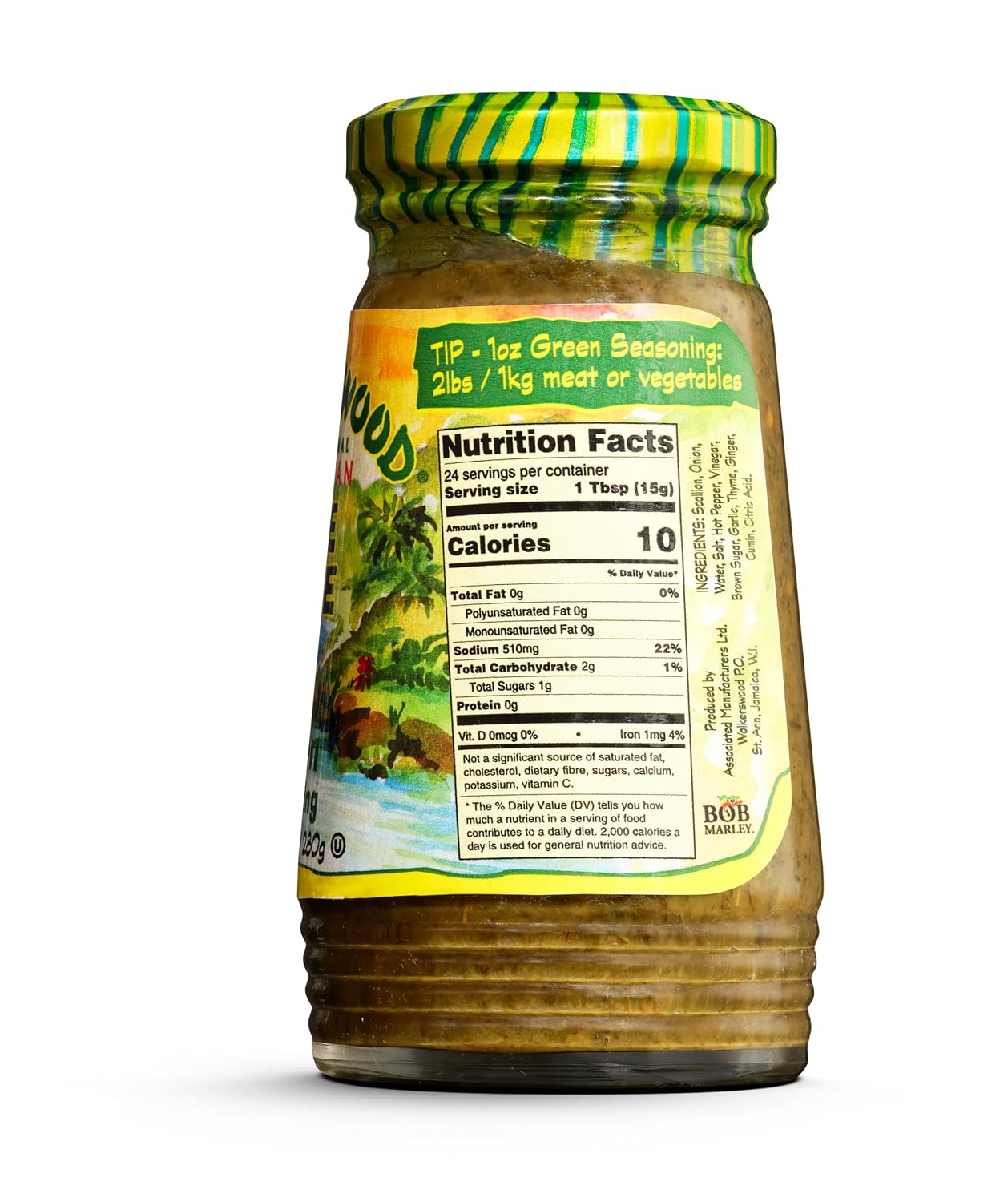
You know that feeling when you pick up a jar of jerk seasoning, get excited, cook a chicken — and then realize you have no idea how to build anything else Caribbean from your pantry? You’ve got one flavor and about four dishes you know to apply it to, but the whole rest of the cuisine — the stews, the rice dishes, the braises, the marinades — feels locked behind a door you don’t have the key to. That door is green seasoning. If jerk seasoning is the flashy front entrance of Caribbean cooking, green seasoning is the utility room where all the actual work gets done. It’s the wet, herb-dense base paste — typically a blend of culantro (a broad-leafed, intensely fragrant herb, also called shado beni in Trinidad and Tobago), thyme, garlic, scallions, and peppers — that underpins pelau, curry chicken, oxtail, stewed fish, and dozens of other dishes that don’t look “jerk-adjacent” but taste unmistakably Caribbean. This guide will walk you through what green seasoning actually is, why Walkerswood’s version deserves shelf space next to their famous jerk, and which other all-purpose condiments fill out a genuinely functional Caribbean pantry.
What Green Seasoning Actually Does (and Why It’s Not Optional)
Green seasoning operates as a marinade base and flavor foundation in one. Where jerk seasoning delivers a destination flavor — smoke, allspice, scotch bonnet heat — green seasoning is more like a flavor infrastructure. It’s what you reach for before the protein even sees heat. As Saveur’s coverage of Caribbean cooking notes, green seasoning is less a condiment and more a technique bottled: it replicates the scratch prep that Caribbean home cooks have done for generations by blending fresh culantro, thyme, and aromatics into a paste.
Shado beni (also spelled shadow beni, botanical name Eryngium foetidum) is worth a short detour here because it’s the ingredient most likely to confuse a newcomer. It looks like a long, serrated leaf and smells powerfully of cilantro — but it’s a distinct plant, and in the context of Caribbean cooking, The Spruce Eats’ overview of the herb notes it’s considered more heat-stable and pungent than regular cilantro, which is why it holds up better in cooked applications. If you see “culantro” or “shado beni” on an ingredient label, that’s a mark of authenticity worth noticing.
Walkerswood’s Jerk Seasoning earned the brand’s global reputation — the Walkerswood Traditional Jamaican Jerk Seasoning, produced in St. Ann, Jamaica, has been in continuous production since 1978, and the Jamaica Observer has profiled the cooperative’s model as one of the island’s more successful rural food-production enterprises. But the brand’s Reggae Spice Seasoning and Green Seasoning line are where intermediate cooks find the most utility. Green seasoning is lower-heat, more herbaceous, and infinitely more flexible than jerk paste. It’s not a watered-down product; it’s a different tool with a different job.
The Practitioner’s Decision Frame: When to Reach for Which Product
If you’re building or rebuilding your Caribbean pantry and you have a budget to allocate, here is the actual decision logic — the if/then framework that resolves most pantry-building confusion:
If the dish involves marinating poultry or pork that you want to grill or smoke, reach for Walkerswood Traditional Jerk Seasoning (hot or mild). The allspice-forward profile and scotch bonnet heat are designed for dry heat. The catering jar ($20–30) makes sense if you cook Caribbean food at least biweekly; the smaller jar works for occasional cooks.
If the dish is a stew, braise, curry, or rice-based one-pot, reach for green seasoning as the foundational marinade. You’ll add it to the protein before cooking — typically an hour to overnight — and it will dissolve into the sauce without fighting the other flavors. Walkerswood’s green seasoning runs approximately $6–9 for a standard jar at Caribbean specialty retailers.
If you’re cooking fish, green seasoning plus a citrus acid (lime or sour orange) is the canonical prep across Trinidad, Barbados, and Guyana. Jerk on fish works, but it’s the secondary choice.
If you’re building a marinade base from scratch but want a shortcut, green seasoning is the shortcut. Taste Atlas’s documentation of Caribbean seasoning traditions consistently flags that green seasoning replaces what would otherwise require blending fresh culantro, thyme, garlic, onion, and pimento (allspice berries) by hand every cooking session.
By the Numbers
| Product | Approx. Price | Best Application | Heat Level |
|---|---|---|---|
| Walkerswood Traditional Jerk (hot) | $8–12 / 10 oz jar | Grilled / smoked protein | 🔥🔥🔥 (family-dinner caution) |
| Walkerswood Traditional Jerk (mild) | $8–12 / 10 oz jar | Grilled protein, broad tables | 🔥 (family-dinner safe) |
| Walkerswood Green Seasoning | $6–9 / 10 oz jar | Marinades, stews, braised dishes | None (heat-free) |
| Walkerswood Reggae Spice Seasoning | $7–10 / jar | All-purpose dry rub, seasoning salt | 🔥 (mild-moderate) |
The Rest of the Pantry: Four More Essentials That Change What You Can Cook
Green seasoning unlocks the door, but a genuinely versatile Caribbean pantry has several other items that practitioners often miss because they bought jerk and considered the job done. Here is the edited shortlist — with tradeoffs called out explicitly.
1. Browning Sauce (Caramel Sauce for Savory Cooking)
Browning is a dark, intensely caramelized sugar sauce used across Jamaican and broader West Indian cooking to add color and a bitter-sweet backbone to stews and gravies. It’s not a flavor star — it’s a color and depth tool. Grace Foods’ browning sauce is the category benchmark at Caribbean retailers ($3–6), and it’s what gives Jamaican brown stew chicken its mahogany color. Without it, brown stew looks beige and tastes flat despite correct seasoning.
The tradeoff: a little goes a very long way. New buyers consistently over-use it (reviewers across Caribbean cooking communities flag this repeatedly). Start with a teaspoon per pound of protein and adjust from there.
2. Scotch Bonnet Pepper Sauce — and Why Marie Sharp’s Earns the Shelf Space
There are dozens of Caribbean hot sauces on the market, and this is a category where provenance and heat calibration matter more than price. Marie Sharp’s Habanero Pepper Sauce, produced in Dangriga, Belize, has a flavor profile that serious cooks and reviewers at food publications consistently distinguish from generic vinegar-forward hot sauces: it’s fruit-forward, with carrot as a base, and the scotch bonnet / habanero heat is real but not reckless.
Heat literacy check: Scotch bonnet peppers run approximately 100,000–350,000 Scoville Heat Units (SHU) on the standard capsaicin measurement scale, per Taste Atlas’s pepper index. Marie Sharp’s Mild is manageable at a family dinner; the Fiery Hot is a fire-breathing designation — genuine caution for capsaicin newcomers.
The competitive tradeoff against Matouk’s Calypso Sauce (Trinidad-produced, mango-base, moderate heat): Matouk’s is fruitier and slightly milder as a baseline, which makes it more versatile as a table sauce across different heat tolerances. Marie Sharp’s delivers more habanero-forward heat and a brighter acidity. If you’re stocking one, the family-dinner answer is Matouk’s; the flavor-depth answer for cooks who eat hot is Marie Sharp’s. Serious pantry builders stock both.
3. Coconut Milk — and the Case for Not Cutting Corners
This is where price-per-ounce math matters. Grace Foods produces canned coconut milk that is widely available and genuinely reliable. The tradeoff isn’t between brands so much as between full-fat and reduced-fat: reduced-fat coconut milk breaks differently in high-heat applications and produces a thinner, less emulsified curry or rice-and-peas. Serious Eats’ Caribbean pantry coverage is consistent on this point — the full-fat version is the correct call for rice and peas, rundown (a Jamaican coconut-milk-based fish stew), and oil-down (Grenada’s national dish). Budget the roughly $1.50–2.50 per can for full-fat and treat reduced-fat as the wrong product for most applications.
4. Cassareep — The Specialist Item Worth Knowing
Cassareep (pronounced CASS-ah-reep) is a dark, intensely concentrated syrup made from the boiled-down juice of bitter cassava root, originally developed by the Indigenous peoples of Guyana and the wider Caribbean. It’s the defining ingredient in pepperpot, Guyana’s national dish — a slow-cooked meat stew that, traditionally, is kept going for days or weeks by adding fresh meat and more cassareep, which acts as a natural preservative due to its antimicrobial properties.
This is a specialty-collector and serious-practitioner item. It’s not a daily-driver like green seasoning or browning, but if you cook Guyanese or Trinidadian cuisine, it’s non-negotiable and genuinely hard to substitute. Retailers like caribbeanfoodstore.com stock it in the $6–10 range per bottle. The tradeoff: it has an intensely bitter, molasses-like flavor that is arresting out of context — don’t free-pour it. Used correctly in pepperpot or as a trace flavoring agent, it’s the difference between an approximation and the real thing.
Building the Full Pantry: If/Then Decision Rules
Here is the clean decision framework for where to invest your next pantry dollar, depending on where you currently are:
- If you only have jerk seasoning: Add Walkerswood Green Seasoning next. It triples your dish range overnight.
- If you have green seasoning and jerk: Add browning sauce and full-fat coconut milk. You can now execute stewed chicken, rice and peas, and curry chicken credibly.
- If you have all of the above: The next tier is a quality scotch bonnet sauce (Marie Sharp’s or Matouk’s based on heat preference) and a small bottle of cassareep if you cook Guyanese.
- If you’re buying for a gift set in the $60–120 range: The combination of Walkerswood Traditional Jerk (catering jar), Walkerswood Green Seasoning, Marie Sharp’s Habanero, Matouk’s Calypso, Grace browning, and full-fat coconut milk represents a genuinely complete starter pantry that a diaspora cook would recognize and appreciate. It’s not a novelty basket — it’s a functional toolkit.
The deeper point here, which Saveur’s writing on Caribbean cooking returns to repeatedly, is that the cuisines of the Caribbean are not monolithic. Jamaican, Trinidadian, Guyanese, Barbadian, and Grenadian food share ingredients but diverge in technique and flavor emphasis. Green seasoning is one of the unifying threads — it appears in some form across Trinidad, Guyana, Barbados, and the Eastern Caribbean. Jerk is more specifically Jamaican. Building a pantry that can flex across these regional styles means moving beyond the one iconic product and investing in the infrastructure layer underneath it.
The good news: the infrastructure layer is accessible, shelf-stable, and most of it lands between $6 and $12 per item. The total cost of a genuinely versatile Caribbean pantry — the kind that lets you cook confidently across half a dozen national cuisines — is well under $75. The limiting factor has never been price. It’s been knowing what to buy and in what order. Now you do.