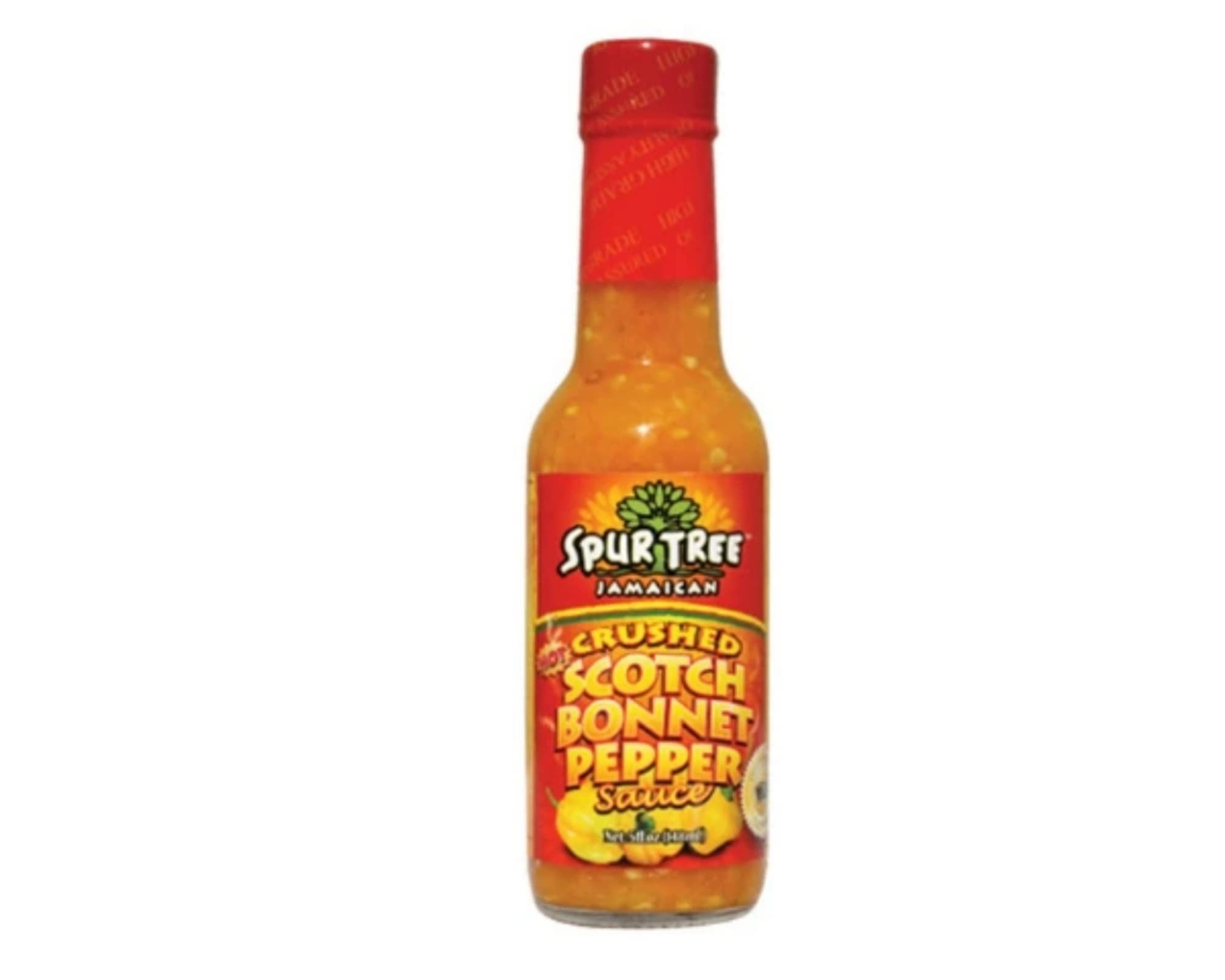
You know that feeling when you reach for a bottle of hot sauce, shake a generous pour onto your plate, and immediately realize you’ve made a catastrophic miscalculation? One bottle at a family cookout turns into a five-alarm situation; another one that looked equally fiery turns out to be mild enough for your seven-year-old niece. That confusion is almost always caused by a single misunderstood ingredient: the scotch bonnet pepper. The scotch bonnet is a small, wrinkled, lantern-shaped chili native to the Caribbean — related to the habanero but with its own distinct fruity, almost floral heat — and it’s the backbone of dozens of commercially bottled Caribbean pepper sauces. The catch is that “scotch bonnet sauce” is not one thing. Depending on the brand, the recipe, the percentage of peppers used, and what else is in the bottle, you can be looking at anything from a bright, manageable table condiment to a sauce that belongs in a safe. This guide maps the full spectrum so you can stop guessing and start buying with intention.
Understanding the Heat Unit: What Scoville Actually Tells You
Before the brand comparisons, let’s get the measurement straight. The Scoville scale — named after pharmacist Wilbur Scoville, who devised the test in 1912 — measures the concentration of capsaicin, the compound responsible for the burning sensation in chili peppers. It’s expressed in Scoville Heat Units (SHU). As Serious Eats explains in their guide to hot sauce heat, the scale is logarithmic in practice: going from 50,000 SHU to 500,000 SHU isn’t a 10× increase in perceived heat — it feels like far more because your palate’s tolerance compresses.
Here’s the rough landscape you’re working in:
| Pepper / Sauce Type | Approximate SHU Range |
|---|---|
| Jalapeño (fresh) | 2,500 – 8,000 |
| Scotch bonnet (fresh pepper) | 100,000 – 350,000 |
| Habanero (fresh pepper) | 100,000 – 350,000 |
| Pure capsaicin extract sauces | 1,000,000 – 16,000,000 |
The critical insight: a commercial scotch bonnet sauce almost never delivers the full 100,000–350,000 SHU of the raw pepper, because the sauce recipe dilutes that heat with vinegar, fruit, mustard, or other base ingredients. The question is how much dilution — and that varies wildly by brand and product line. Taste Atlas notes in their scotch bonnet flavor profile that the pepper’s fruity, apricot-adjacent aroma is often what gets lost first when a brand over-dilutes to chase a mass-market audience. That’s the tradeoff at the core of every buying decision in this category.
The Four Heat Tiers: A Decision Framework
Rather than ranking sauces on a single linear scale, think in four practical tiers. Each tier represents a different use case, and mismatching tier to occasion is where most buying mistakes happen.
Tier 1 — Family-Dinner-Safe (Mild to Medium, ~1,000–15,000 SHU in sauce form)
These are sauces where scotch bonnet appears in the ingredient list but contributes primarily aroma and flavor rather than searing heat. They’ve been blended with a significant proportion of carrots, mangoes, papaya, or other sweet vegetables that physically dilute capsaicin concentration. Children, heat-sensitive guests, and newcomers to Caribbean food can use these without drama.
What to look for on the label: Scotch bonnet listed third or later in the ingredient list, with a fruit or vegetable listed first. A relatively short Scoville claim on the label — or no claim at all — is also a signal that the brand isn’t leaning into heat as its selling point.
Representative products in this tier: Matouk’s Flambeau Sauce sits comfortably here for most users — it’s a Trinidad-made, mustard-and-scotch-bonnet blend that reviewers consistently describe as “warm” rather than hot. The mustard base does double duty as a flavor vehicle and a heat buffer. Grace brand’s Scotch Bonnet Pepper Sauce (the standard supermarket-facing product, not their hotter reserve lines) is similarly positioned: accessible, bright, manageable.
The tradeoff: At this tier, you’re getting the fruity, tropical top notes of the scotch bonnet without the physiological event. If you’re cooking for a mixed crowd — kids, heat-averse relatives, first-time Caribbean food guests — this is the right buy. The cost is that seasoned heat-eaters at the table will find these underwhelming and reach for something else.
Tier 2 — Enthusiast Range (Medium-Hot, ~15,000–50,000 SHU in sauce form)
This is where the majority of serious Caribbean pantry sauces live, and it’s the tier where brand identity, provenance, and flavor complexity matter most. These sauces deliver genuine heat that builds over the course of a meal, but they’re not incapacitating — a heat-tolerant adult can use them freely, and a moderately heat-experienced diner can manage them with reasonable caution.
Marie Sharp’s Habanero Pepper Sauce from Belize is the canonical reference point for this tier, even though it uses habanero rather than pure scotch bonnet. As Epicurious notes in their feature on the brand, Marie Sharp’s built its reputation on using fresh carrots as the base, which gives the sauce a natural sweetness that contextualizes rather than masks the pepper heat. The result is a sauce that tastes complete — not just hot. Reviewers across aggregated buyer feedback consistently report that the heat lands mid-palate and lingers without overwhelming, which is the signature of a well-formulated Tier 2 sauce.
For a Jamaica-made, scotch-bonnet-forward option at this tier, Walkerswood Scotch Bonnet Pepper Sauce delivers the provenance credentials the Caribbean pantry audience prioritizes. The Jamaica Observer has covered Walkerswood Foods as an institution in Jamaican food manufacturing, and the brand’s sauces consistently skew toward authentic island heat rather than tourist-market dilution. The scotch bonnet percentage is higher than most grocery-facing brands, which means more of that fruity, floral heat rather than a watered-down facsimile.
The tradeoff: Tier 2 is where you have to make the family-dinner calculation honestly. These are not sauces you pour over a dish without tasting first. The right move is to serve them on the side, not cooked in, when guests’ tolerances are unknown.
Tier 3 — Fire-Breathing (Hot, ~50,000–150,000 SHU in sauce form)
At Tier 3, the formulation is built around maximizing heat delivery, with other flavors present but clearly subordinate to capsaicin impact. These sauces are for confident heat-eaters who want the full scotch bonnet experience — the burn that arrives fast, climbs, and stays.
Small-batch and artisan producers dominate this tier, because the commercial market has limited appetite for sauces this hot at scale. Brands like Busha Browne’s Pukka Hot Pepper Sauce (Jamaica-made, widely cited in Caribbean food writing for its straightforward, unapologetic heat) operate here. Saveur’s feature on scotch bonnet peppers in Caribbean cooking specifically calls out this category of sauce as the authentic workhorse of island home kitchens — not the milder export versions formulated for North American supermarket shelves.
If you’re stocking a pantry for genuine Caribbean cooking — not presentation cooking — a Tier 3 sauce is often what jerk marinades, curry bases, and pepper pot recipes actually assume when they call for “hot pepper sauce.” Using a Tier 1 or 2 sauce in these recipes leaves the dish flat.
The tradeoff: Tier 3 sauces require controlled application. A quarter-teaspoon in a pot feeds six; a full teaspoon feeds one person who has signed the liability waiver.
Tier 4 — Genuinely Dangerous (Extract-Enhanced or Extreme, 150,000+ SHU in sauce form)
This tier includes any sauce where capsaicin extract — a concentrated, lab-derived capsaicin compound rather than whole peppers — has been added to push heat beyond what the natural pepper ratio could achieve. Serious Eats’ Scoville explainer draws a clear line here: extract-enhanced sauces often sacrifice flavor entirely in pursuit of heat numbers, because capsaicin extract is bitter and chemically sharp in a way that fresh pepper heat is not.
Some small-batch producers use extremely high pepper ratios without extract, which can also land in this tier. Either way: Tier 4 is challenge-sauce territory. It belongs on the shelf as a conversation piece or a cooking ingredient used in gram quantities, not as a table condiment.
The tradeoff: If you’re buying Tier 4 thinking it’s a premium version of Tier 3, you will regret it. The experience is physiologically unpleasant for most people — not a richer heat, but a different and less enjoyable kind of heat.
Price-Per-Ounce Math: What You’re Actually Paying For
A practical note for pantry-serious buyers:
- Entry tier (Grace standard, supermarket scotch bonnet sauces): $4–7 for 5–6 oz bottles. Roughly $0.70–$1.20/oz. Heat is mild to moderate; these are accessibility products.
- Mid-premium tier (Marie Sharp’s, Walkerswood Scotch Bonnet, Matouk’s): $10–16 for 5–10 oz bottles. Roughly $1.00–$2.00/oz. This is where flavor complexity and provenance justify the step up.
- Artisan/small-batch tier (Busha Browne’s, single-origin island producers): $12–20 for 5 oz. Roughly $2.40–$4.00/oz. You’re paying for heat authenticity, island sourcing, and production runs that don’t compromise recipe for shelf life.
The gifting sweet spot sits firmly in the mid-premium tier: a curated two- or three-bottle set spanning Tier 1 through Tier 3 gives the recipient the full heat narrative and a practical pantry addition, typically landing in the $30–50 range that works for a thoughtful housewarming or food-lover gift.
The Decision Rule: If X, Then Y
If you’re cooking for a mixed group including children or heat-sensitive guests, buy Tier 1. Matouk’s Flambeau or a Grace standard scotch bonnet sauce will not derail the meal.
If you’re stocking a serious Caribbean pantry for authentic daily cooking, buy Tier 2 as your baseline and keep a Tier 3 on hand for recipes that demand it. Walkerswood Scotch Bonnet Sauce for Tier 2; Busha Browne’s Pukka or a comparable Jamaica-made artisan sauce for Tier 3.
If you’re building a condiment collection or curating a gift set, anchor it at Tier 2 with a Marie Sharp’s or Walkerswood bottle, include a Tier 1 for accessibility, and add a Tier 3 for the adventurous. That three-bottle range tells the full story of Caribbean pepper sauce without sending anyone to the emergency room.
If the label doesn’t list a Scoville number, look at ingredient order: pepper listed first means Tier 3 or 4. Pepper listed third or later, behind a fruit or vegetable, means Tier 1 or 2. That single label read will save you more confusion than any other piece of information in this guide.