You know that feeling when you’re halfway through a pot of rice and beans, you reach for that little foil sazon packet — the one that smells like Sunday dinners at someone’s grandmother’s house — and you realize you’re completely out? If you cook Caribbean or Latin-influenced food with any regularity, sazon (pronounced sah-SOHN, Spanish for “seasoning”) is the workhorse blend that turns plain rice an inviting golden-orange, gives chicken stew its deep, savory backbone, and does quiet heroic work in sofrito-based dishes. It’s typically a blend of ground coriander, cumin, garlic, oregano, and annatto — the seed of the achiote tree, responsible for that signature color. The packet format is iconic. The bulk format — a jar or resealable bag holding the equivalent of 20, 30, even 50 packets — is where serious home cooks eventually land.
This article is for the cook who’s already past the “what is sazon?” stage and now faces a more interesting question: which bulk sazon, and why? Three products dominate the buyer conversation right now — Badia Sazon, GranAroma Sazon, and Unpretentious Sazon — and they map onto three genuinely different priorities. We dug into aggregated reviewer data, published nutritional specs, and manufacturer labeling to lay out the tradeoffs clearly. No guesswork. Just the decision frame.
The Three Buyer Profiles (and Why They Map Onto Different Products)
Before the product-by-product breakdown, it’s worth naming the three gravitational pulls that surface repeatedly in long-form buyer discussions:
Nostalgia and proven flavor → Badia
Dye-free formulation without sacrificing color → GranAroma
Stain anxiety and a cleaner kitchen experience → Unpretentious
These aren’t marketing segments invented by the brands. They’re what actual buyers mention unprompted when explaining why they chose one over another. Recognizing which pull is strongest for your kitchen is the fastest path to the right jar.
Badia Sazon: The Workhorse with a Sodium Caveat
Flavor Profile and Consistency
Badia is a Miami-based brand with deep roots in the Caribbean and Latin American grocery ecosystem. Serious Eats, in their piece “The Case for Keeping a Fully Stocked Latin Pantry,” identifies Badia as one of the most reliably distributed sazon-adjacent brands in the U.S. diaspora market. The bulk format delivers the familiar aroma profile reviewers describe as “exactly what I grew up with”: that warm, slightly earthy, annatto-forward blend that colors rice a proper golden-orange and rounds out sofrito without demanding much else from you.
Cooks who have used the brand’s foil packets for years find the large-format jar delivers the same flavor profile with no learning curve. That reliability is the product’s strongest selling point, and it explains why Badia dominates the everyday seasoning segment across Caribbean and Latin American households in the United States.
Sodium Load and Practical Adjustments
This is the consumer-protection note worth foregrounding. Badia Sazon contains significant sodium — published nutrition labels put a single teaspoon serving at roughly 330–360mg — and the packet format, which many older recipes still call for by unit rather than by teaspoon, can lead new users to dramatically over-salt a dish when they transition to bulk.
The Spruce Eats, in their guide “What Is Sazon Seasoning and How Do You Use It?,” specifically flags that when switching from packets to bulk, home cooks should measure by teaspoon and adjust added salt accordingly rather than estimating by feel. Badia’s published label also lists monosodium glutamate (MSG) in addition to sodium chloride, making it a dual sodium source. If you’re cooking for someone managing sodium intake, or if your sofrito or broth already carries salt, Badia bulk rewards careful measuring. It does not reward pouring freely from the jar the way the fixed-dose packet once did.
Price-per-use math: Badia’s bulk format consistently delivers among the lowest cost-per-teaspoon of the three products reviewed here. For households cooking rice and beans three or more times a week, the economics are meaningful.
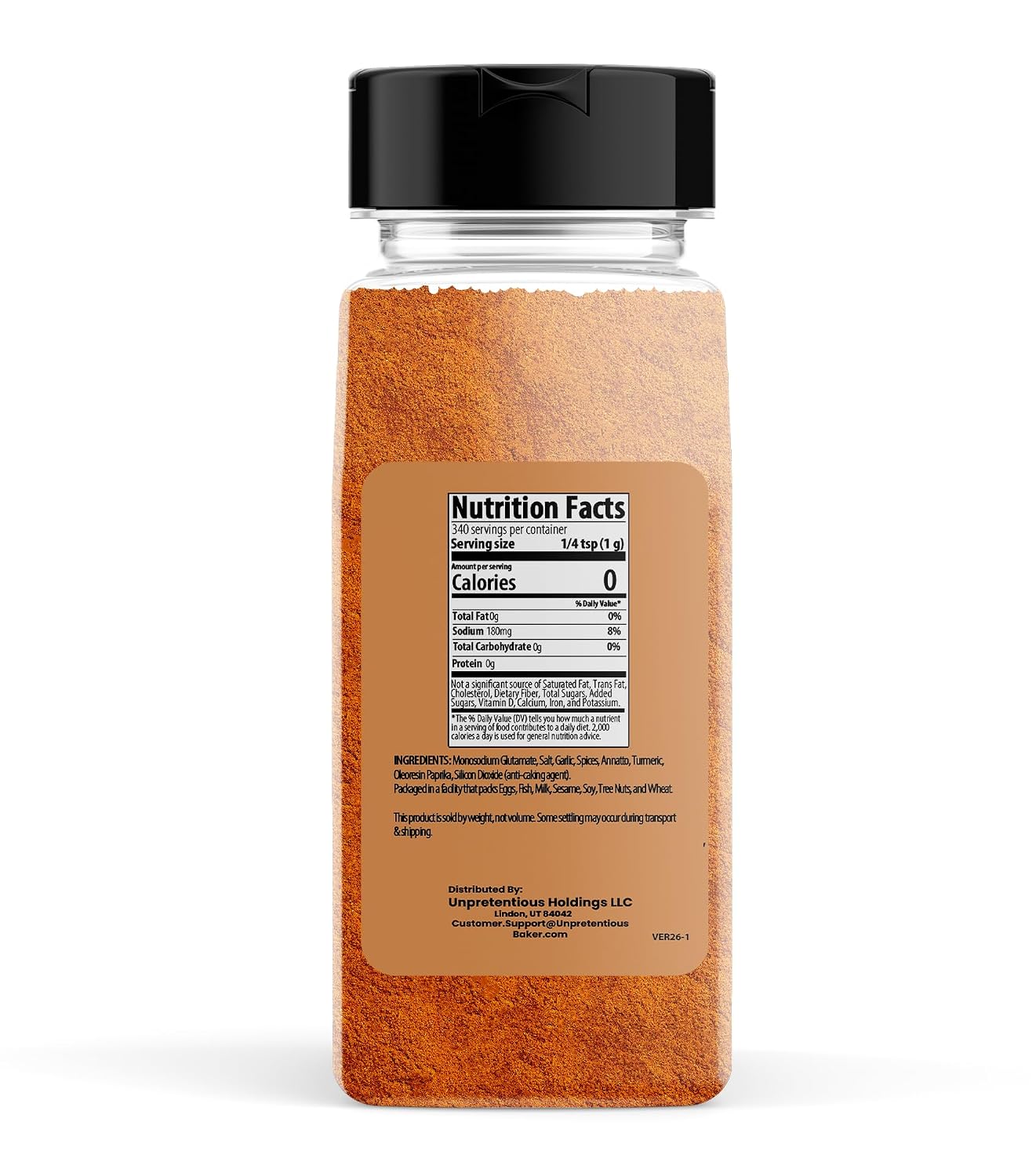
Unpretentious
$8.49
In stock on Amazon
Check price on AmazonGranAroma Sazon: The Dye-Free Gap-Fill
What the Dye-Free Claim Actually Means
The key claim — and it holds up under label inspection — is that GranAroma achieves its golden color through annatto seed extract rather than FD&C yellow dyes such as Yellow 5 and Yellow 6, which appear in some competing formulations. For buyers who prioritize clean-label ingredients or who are managing dye sensitivities in their household, this is a genuine differentiator.
Epicurious, in their piece “Your Guide to Latin Spice Blends,” notes that annatto is the traditional colorant in sazon-style seasonings, making the dye-free angle less a compromise than a return to the ingredient’s roots. Reviewers confirm that GranAroma does produce rice color comparable to standard formulations: the annatto delivers a golden-yellow result that reads clearly in finished dishes. Finding a dye-free sazon that still colors food the way sazon should is genuinely difficult. GranAroma fills that gap.
The Flavor-Depth Tradeoff
Across aggregated reviews, a consistent pattern emerges: GranAroma buyers report more often than Badia buyers that the blend benefits from supplementation. Specifically, cooks mention adding extra garlic, additional cumin, or fresh culantro — the serrated-leaf herb (also called shado beni) foundational in Trinidadian and Puerto Rican cooking — to round out a dish. The flavor profile is described as lighter or less complete as a solo seasoning than Badia’s.
This is the central tension in the comparison: GranAroma solves the dye problem but partially offloads the flavor-building to the cook. For a practitioner who already builds dishes in layers — who has sofrito in the freezer, uses fresh aromatics, and treats sazon as one voice in a larger flavor conversation — this is probably fine, maybe even preferable. For a cook who relies on sazon to carry most of the seasoning weight in a weeknight one-pot, the lighter profile may frustrate.
GranAroma’s published labels typically show a slightly lower sodium figure than Badia — approximately 270–290mg per teaspoon depending on lot — which reflects both a lighter salt load and the absence of MSG.
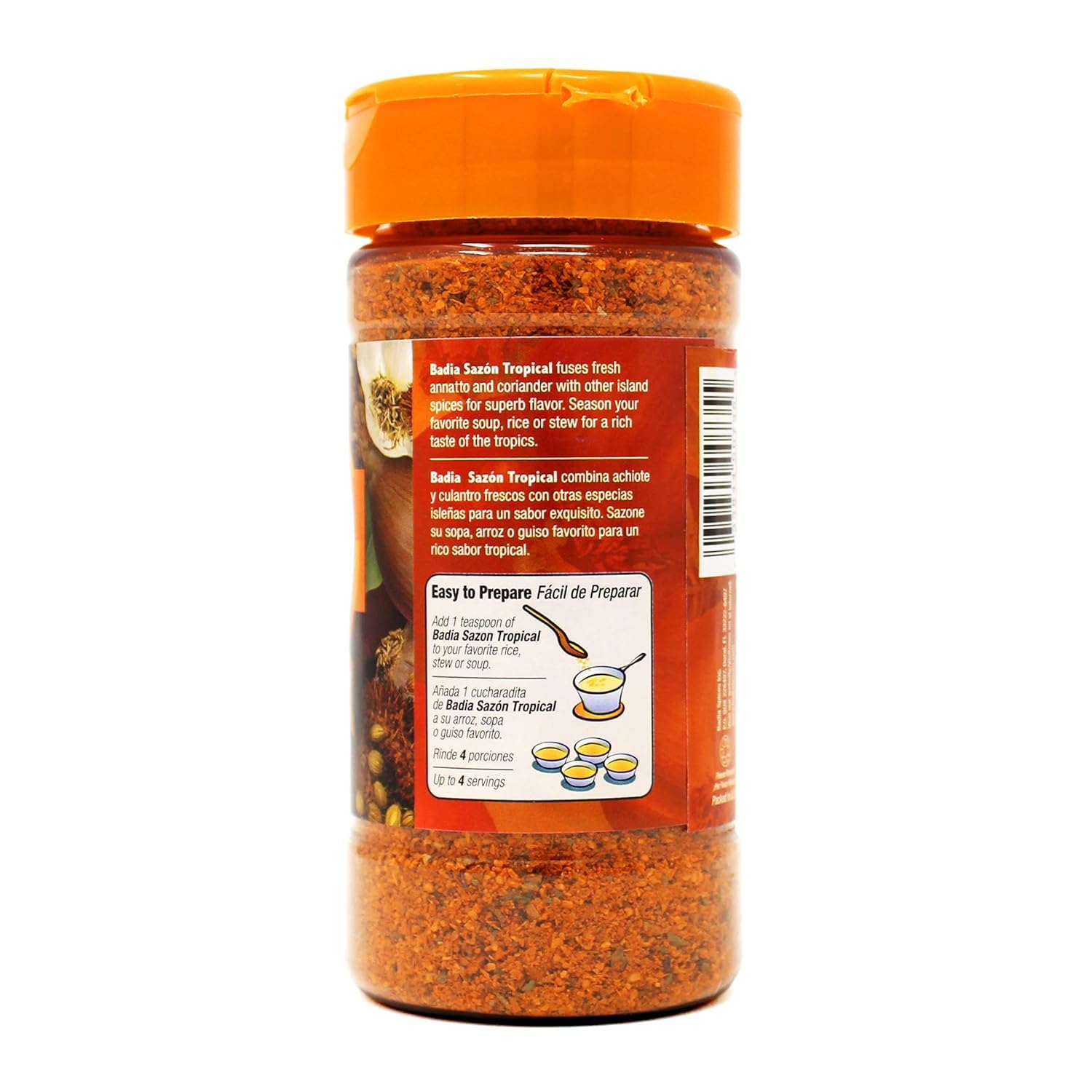
Badia
$4.87
In stock on Amazon
Check price on AmazonUnpretentious Sazon: The Anti-Stain Pick for Kitchen-Conscious Cooks
Addressing the Staining Problem Directly
The name is literal and the positioning is real: Unpretentious markets itself to buyers who want simple, recognizable ingredient lists without a lot of brand mythology attached. But what’s striking in the review corpus is how specific Unpretentious buyers are about a concern the other two camps rarely mention — staining.
Standard sazon, with its annatto oil content, can stain countertops, wooden spoons, fabric, stovetop grout, and light-colored silicone tools a stubborn orange-yellow. It’s one of those small kitchen grievances that sounds trivial until it’s your countertop. Taste Atlas, in their documentation of sazon under “Sazon: Regional Variations and Uses,” notes that the annatto-to-carrier ratio varies meaningfully between brands, which tracks with what reviewers observe in practice: Unpretentious’s formulation appears to produce a less aggressively oil-heavy residue, making cleanup noticeably easier after a cooking session.
Who This Product Is Actually For
If you have light countertops, frequently wear light clothing while cooking, manage a kitchen with grout you care about, or have had the specific frustration of a stained wooden spoon that refuses to come clean — Unpretentious addresses that grievance most directly. It’s also positioned well for cooks who want to read an ingredient list and immediately understand what’s in their spice jar.
Flavor profile: Reviewers place Unpretentious in the moderate-to-strong camp, similar to GranAroma. The same advice applies: lean on it as part of a broader flavor-building approach rather than expecting it to carry a dish solo. The dye-free, annatto-based formulation means color output is present and functional, though some reviewers describe the shade as slightly warmer-gold than the deeper orange of Badia. Sodium per teaspoon is approximately 290–310mg based on published labels — between Badia and GranAroma.
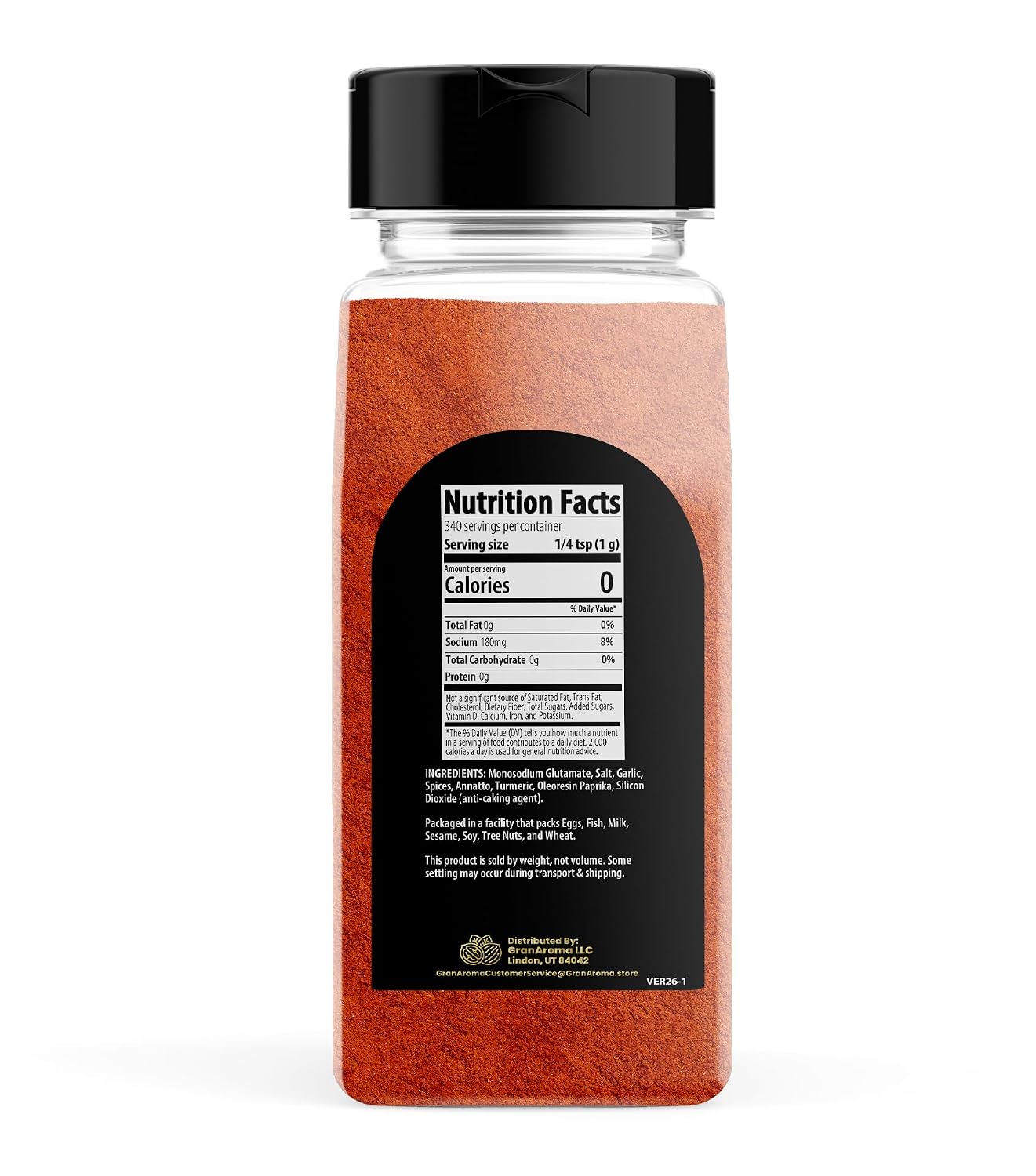
GranAroma
$8.79
In stock on Amazon
Check price on AmazonSide-by-Side: What the Numbers Show
| Badia Sazon | GranAroma Sazon | Unpretentious Sazon | |
|---|---|---|---|
| Approx. sodium per tsp | ~340mg | ~280mg | ~300mg |
| Dye-free? | No | Yes | Yes |
| Annatto-colored? | Yes | Yes | Yes |
| Contains MSG? | Yes | No | No |
| Solo-seasoning strength | High | Moderate | Moderate–High |
| Stain residue | Higher | Moderate | Lower |
| Cost-per-use | Lowest | Middle | Middle–High |
| Unpretentious — $8.49 | Badia — $4.87 | GranAroma — $8.79 |
(Figures drawn from published manufacturer nutrition labels as of Q1 2026; always verify current labeling before purchase.)
The sodium column is where Badia’s tradeoff crystallizes most clearly. GranAroma’s lower sodium reflects both a lighter salt load and the absence of MSG, which contributes sodium in addition to its flavor-enhancing properties. Unpretentious sits between the two, offering a middle path for cooks who want dye-free formulation without sacrificing as much seasoning depth.
How to Actually Use Bulk Sazon: Practical Ratios and Applications
Because the bulk format removes the packet as a built-in unit of measure, a few concrete benchmarks are worth establishing.
Rice color: The working ratio cited consistently across Caribbean and Latin American cooking guidance — including The Spruce Eats’ guide “What Is Sazon Seasoning and How Do You Use It?” and Epicurious’s coverage of Latin spice blends — is approximately ¾ to 1 teaspoon of bulk sazon per cup of dry rice. Start at the lower end, especially with Badia, and adjust upward for deeper color. The color develops as the rice cooks, so resist the urge to add more mid-process.
Proteins: Sazon works beautifully as part of a dry rub or marinade for chicken, pork, and fish. Taste Atlas’s documentation on sazon notes it is used regularly across Caribbean and Latin American cooking as a protein rub, not only a rice seasoning. For seafood, ½ teaspoon per pound of fish, combined with citrus, keeps the earthiness from overwhelming delicate flesh. Reviewers consistently report strong results with shrimp and firm white fish such as cod.
Sofrito integration: When sazon is added directly to sofrito-based dishes, the annatto content blooms in the fat, distributing color and flavor more evenly than if added to the liquid later. Add it to the pan with your oil and sofrito before the liquid goes in.
Packet-to-teaspoon conversion: One standard sazon packet (the foil kind, approximately 1.41g) is roughly equivalent to 1 level teaspoon of bulk sazon. This conversion is the single most useful thing to have written down when adapting older recipes written in packet units.
Frequently Asked Questions
What is the difference between sazon with annatto and sazon without — does it affect flavor or just color? Annatto contributes a very mild, slightly earthy, almost nutty undertone in addition to color. The flavor impact is subtle — most cooks describe it as background warmth rather than a dominant note. The color difference, however, is dramatic: sazon without annatto will season but won’t produce the golden-orange hue that defines the dish visually. For rice especially, the visual result matters as much as the flavor.
Does Badia Sazon contain MSG or significant sodium — should I adjust my salt use? Badia Sazon’s published label lists monosodium glutamate in addition to sodium chloride, making it a dual sodium source with roughly 330–360mg of sodium per teaspoon. The Spruce Eats, in their guide “What Is Sazon Seasoning and How Do You Use It?,” recommends reducing or eliminating added salt when cooking with sazon bulk until you taste the finished dish. This is especially important in rice recipes, where liquid absorption concentrates seasoning as cooking progresses.
Is GranAroma truly dye-free and will it still color rice? Based on published ingredient labels reviewed as of early 2026, GranAroma does not list FD&C dyes and achieves its color through annatto. Reviewers confirm the rice comes out colored, though some describe the shade as slightly lighter or more golden-yellow than Badia’s deeper orange. For dye-sensitive households, it appears to be a workable solution without requiring any change in cooking method.
How much sazon should I use per cup of rice for the right color? Start with ¾ teaspoon per cup of dry rice. Adjust up to 1–1¼ teaspoons if you want a deeper color or a more pronounced savory note. Taste before adding any additional salt, particularly if you’re using Badia.
Can sazon be used on proteins beyond rice — does it work on seafood and steak? Yes. Taste Atlas’s regional sazon documentation cites sazon regularly as a rub component for chicken, pork, shrimp, and firm fish. On steak it’s unconventional but functional. Pair it with acid — citrus or a light vinegar — on lighter proteins so the earthiness doesn’t overpower delicate flesh.
Is the large bulk format worth buying over individual packets for home cooking? For any household cooking rice and beans, sofrito dishes, or marinated proteins more than once a week, the bulk format delivers meaningful cost savings and eliminates packet-disposal friction. The tradeoff is that you lose the built-in portion control of the foil packet, which is exactly why the teaspoon conversion matters. If you cook sazon dishes only occasionally, the packet format remains more forgiving for beginners.
The Decision Frame
If your priority is flavor consistency and proven weeknight performance, and sodium management isn’t a primary concern: Badia bulk is the workhorse pick. Measure carefully, reduce added salt, and it will deliver exactly what it promises at the lowest cost per use.
If your household manages dye sensitivities or you want a clean-label product that still colors food the way sazon should: GranAroma fills a real gap. Plan to layer in additional aromatics — fresh garlic, cumin, shado beni — to round out the flavor profile the blend doesn’t fully provide on its own.
If staining is a genuine kitchen frustration — countertops, tools, clothing — and you want a dye-free option with a cleaner residue profile: Unpretentious addresses that specific grievance most directly, at a cost-per-use that sits between the other two.
None of these is the wrong answer. They’re answers to different questions. The bulk format, whichever brand you choose, is almost always worth it if sazon is already a regular part of how you cook. The packet era is a fine entry point. The jar is where you stay.