You know that feeling when you buy a bag of flour with the word “roti” on it, follow a recipe you trust, and the dough tears every time you try to roll it thin enough? You end up with something closer to a thick tortilla than the paper-thin, slightly chewy, split-pea-stuffed flatbread you were aiming for. That flatbread is dhalpuri — arguably the queen of Trinidadian roti — and getting it right starts long before the tawa (a flat cast-iron griddle) is hot. It starts with the bag of flour in your hand. Dhalpuri dough needs to be extensible, meaning it stretches without snapping back, and pliable, meaning it folds around a filling without cracking. Those properties are almost entirely determined by the protein content and the fineness of the grind in your flour. This guide breaks down three flours that diaspora households reach for most often — Laxmi, Sujata, and Aashirvaad — and tells you exactly which one earns a permanent spot on the shelf.
| EDITOR'S PICKAashirvaad Whole Wheat Atta 11lb | Mid-tierSujata Chakki Atta | Budget pickTAJ Signature Sharbati Atta | |
|---|---|---|---|
| Weight | 11 lb | 10 lb (160 oz) | 4 lb |
| Mill | — | Chakki | Chakki |
| Grain | Whole wheat | Whole wheat | Sharbati wheat |
| Pack count | — | 1 | — |
| Price | $27.99 | $23.49 | $13.99 |
| See on Amazon → | See on Amazon → | See on Amazon → |
Why Protein Content Is the Whole Conversation
Before we get into brand-by-brand numbers, let’s establish the frame. Wheat flour’s gluten network — the stretchy web that forms when flour meets water and is worked — is built from two proteins called glutenin and gliadin. Higher total protein (measured as a percentage of flour weight) means a stronger, more elastic network. Bread flour runs 12–14% protein; all-purpose hovers around 10–12%; cake flour dips to 7–9%.
Dhalpuri lives in a specific sweet spot. You need enough protein to hold the split-pea filling inside when you fold and press, but not so much that the dough fights back when you roll it to near-translucent thickness. The Spruce Eats, in their overview titled “Types of Wheat Flour Explained,” notes that a medium-protein flour in roughly the 9–11% range gives you the extensibility without the snap-back tension characteristic of a high-gluten dough. Overshoot into bread-flour territory and your dhalpuri dough will shrink off the pin like it has somewhere better to be.
Critically, protein alone doesn’t tell the whole story. Grind fineness matters too. A superfine flour hydrates faster, creates a silkier dough, and rolls thinner with less resistance. A coarser grind can produce a tougher, grainier texture even at the same protein percentage. Keep both variables in mind as we walk through each brand.
The Three Contenders: Published Specs and Cook Consensus
Laxmi Fine Chakki Atta
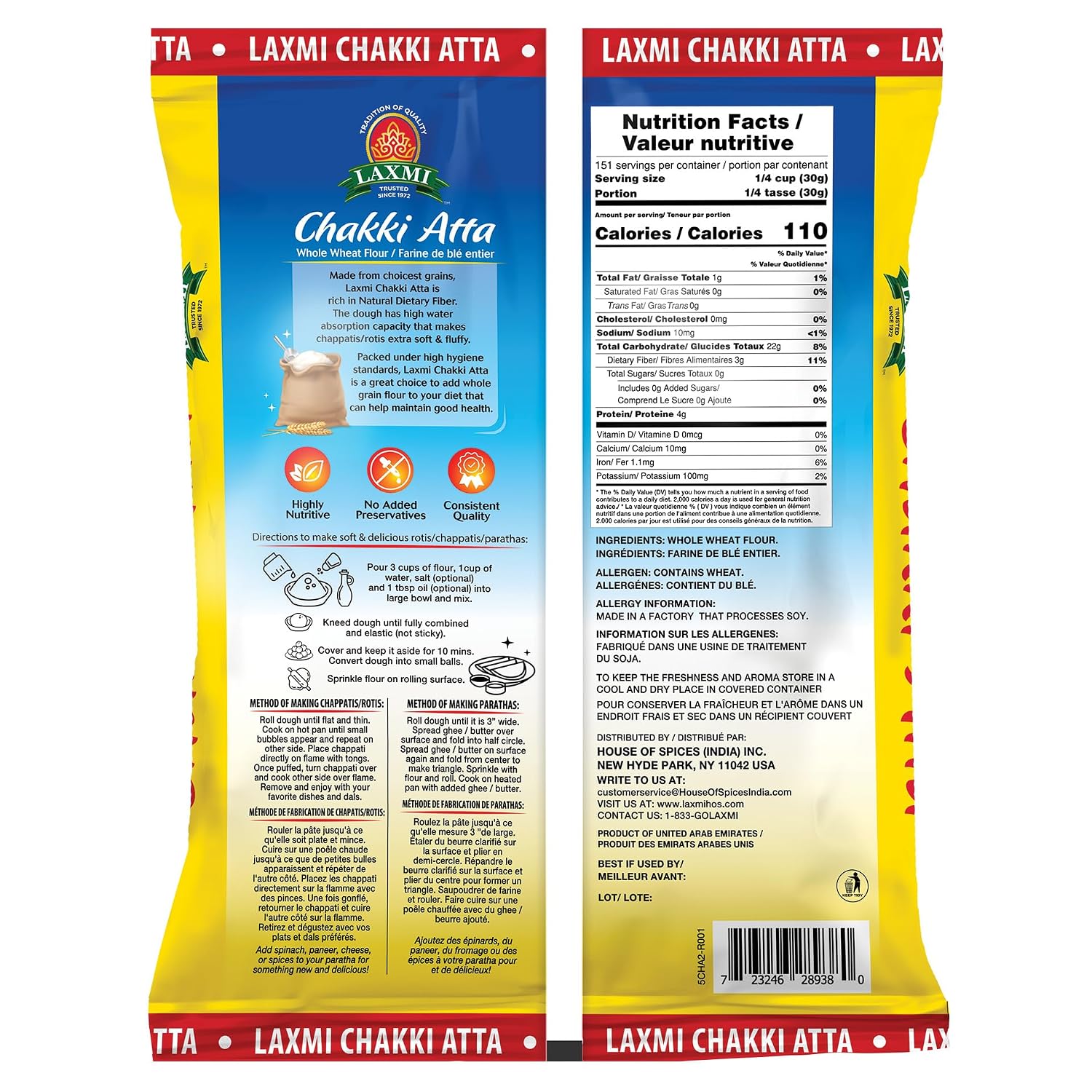
Published protein: approximately 11–12% (per bag nutrition panel) Origin: Marketed by House of Spices (USA-based diaspora brand); milled from hard red or durum wheat depending on the SKU Price tier: roughly $7–10 for a 10-lb bag at specialty South Asian and Caribbean grocers
Laxmi is the most widely available of the three in Caribbean diaspora grocery corridors in the US and Canada, and that availability is both its biggest selling point and a source of confusion. The brand produces multiple atta products — a standard whole-wheat atta, a fine chakki-style atta, and a durum-blend atta — and the labels look nearly identical. This matters enormously for dhalpuri, because the whole-wheat version, which includes the bran, produces a heavier, less pliable dough.
The SKU you want for dhalpuri is the Laxmi Fine Chakki Atta or the Laxmi Premium Durum Wheat Atta. Both are milled to a finer particle size than the standard bag. Aggregated buyer feedback from specialty Indian and Caribbean cooking communities consistently notes that these versions produce a dough that stays smooth and doesn’t tear when stretched thin — a quality that shows up repeatedly enough to constitute a reliable pattern.
The tradeoff: at 11–12% protein, Laxmi sits on the high end of the dhalpuri sweet spot. Experienced cooks report needing to rest the dough longer — 30 to 45 minutes rather than the standard 15–20 — to let the gluten relax before rolling. Skip that rest and you will fight the dough every step of the way.
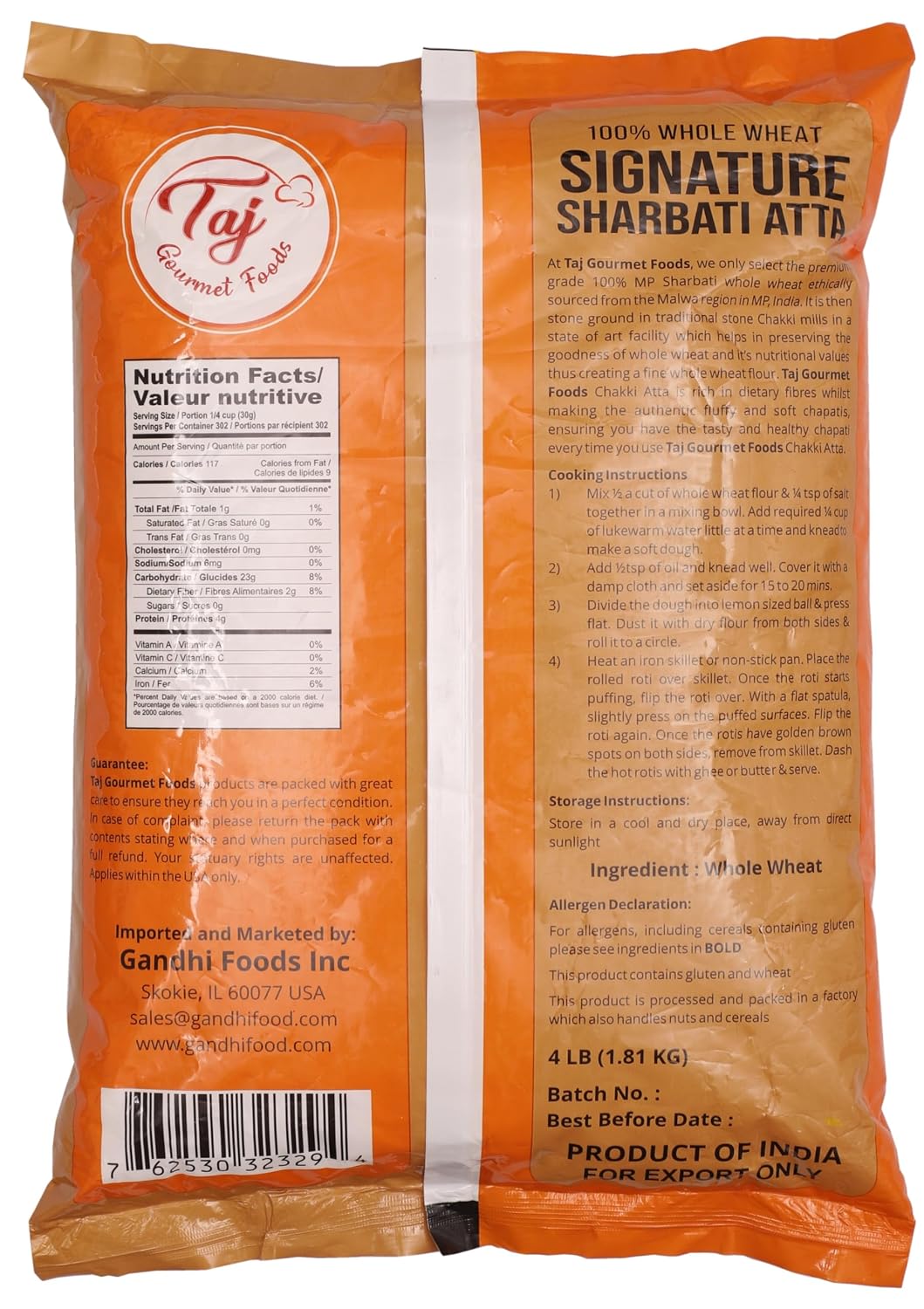
TAJ
$13.99
In stock on Amazon
Check price on AmazonSujata Premium Chakki Atta
Published protein: approximately 10–11% (per nutrition label) Origin: India-milled; imported and distributed through South Asian grocery chains in North America and the UK Price tier: roughly $8–12 for a 10-lb bag
Sujata is a consistent favorite among more experienced Trinidadian-diaspora home cooks for one specific reason: its grind is exceptionally fine. The brand’s chakki (stone-grinding) process produces a flour with a notably silkier texture than Laxmi’s standard line, and that fineness translates directly into dough behavior. At 10–11% protein — slightly lower than Laxmi — Sujata hits closer to the center of the dhalpuri protein window.
Saveur, in their feature titled “The Art of Trinidadian Roti,” draws on interviews with Port of Spain home cooks to describe the ideal dhalpuri dough as feeling “like soft leather” after rest — firm enough to handle but yielding when pressed. Cooks who have made the switch to Sujata describe exactly that quality, attributing it to the flour hydrating more evenly and quickly because of the finer particle size. Serious Eats, in their piece “The Role of Gluten in Bread and Pastry,” reinforces this by explaining that finer-milled flour exposes more starch surface area, accelerating hydration and producing a more cohesive dough with less mechanical working required.
The tradeoff: Sujata is harder to find. It is stocked reliably at South Asian specialty grocers but rarely appears in Afro-Caribbean or West Indian grocery stores. If you are shopping at a Caribbean grocer rather than a South Asian one, you may not find it on the shelf.
There is also a price-per-ounce consideration worth flagging:
By the numbers: Laxmi Fine Atta (10 lb / ~$8.50): ~$0.053/oz Sujata Chakki Atta (10 lb / ~$10.50): ~$0.066/oz Aashirvaad Select Sharbati Atta (10 lb / ~$12): ~$0.075/oz
At scale — if you are making roti for a gathering of twelve or prepping for a catering situation — the $0.02/oz gap between Laxmi and Sujata adds up meaningfully. For a household cook making dhalpuri twice a month, it is negligible.
Sujata
$23.49
In stock on Amazon
Check price on AmazonAashirvaad Select Sharbati Atta
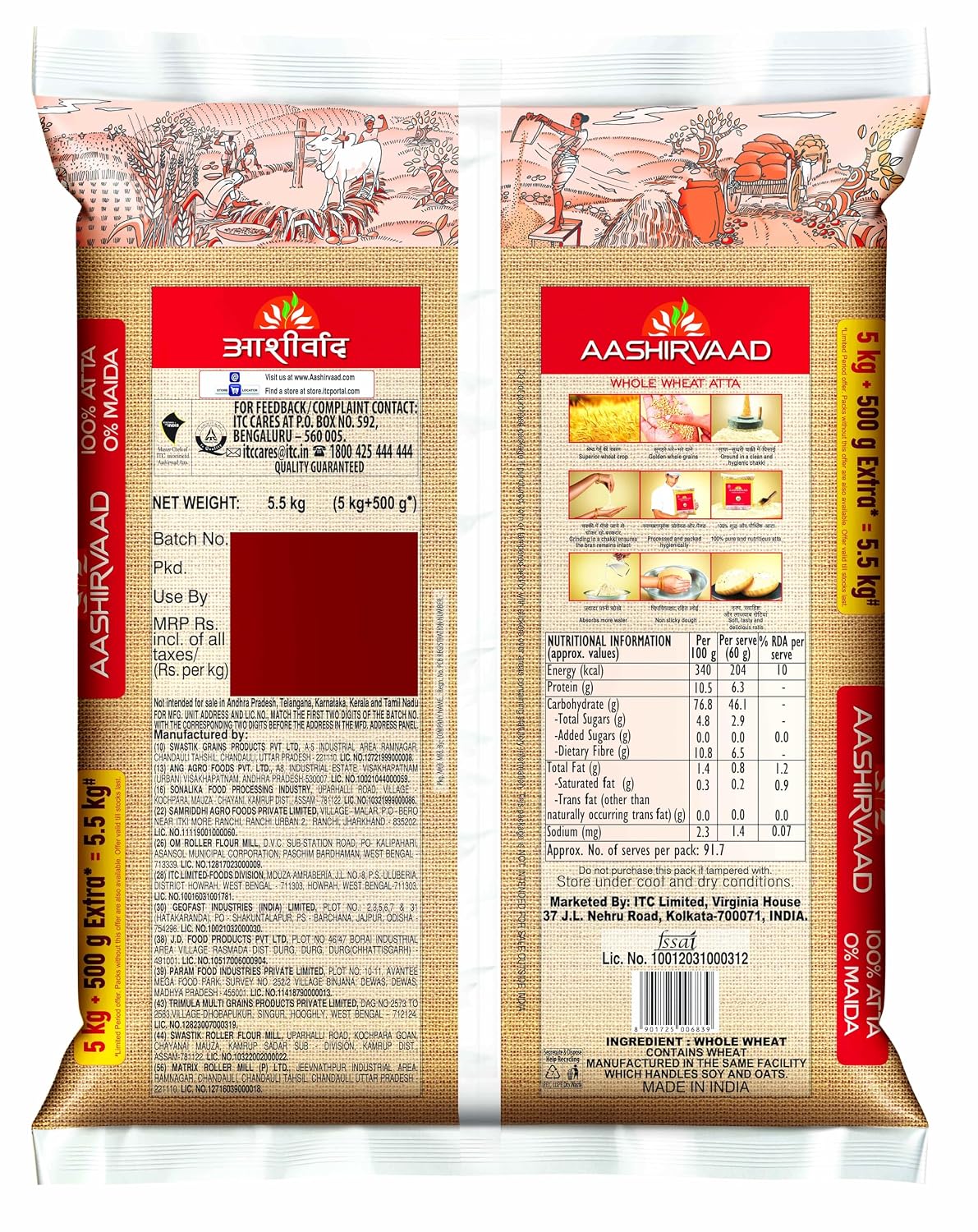
Published protein: approximately 10% (per nutrition label; Select Sharbati SKU) Origin: India-milled by ITC Limited; widely imported Price tier: roughly $10–14 for a 10-lb bag (Select Sharbati SKU commands a premium over the standard Aashirvaad line)
Aashirvaad is the prestige option in this comparison, and for good reason. The Select Sharbati SKU is milled from Sharbati wheat, a variety grown in Madhya Pradesh that is prized for its natural sweetness, lower protein floor, and exceptionally fine bran integration. Food52, in their piece “Everything You Need to Know About Flour,” explains that single-origin or varietal wheat flours can produce meaningfully different results in flatbread applications precisely because protein content and starch composition interact at the varietal level — not just at the milling level. That distinction matters here.
At approximately 10% protein, Aashirvaad Select is the gentlest on gluten development of the three. Cooks report — and this pattern is consistent across multiple aggregated review sets — that dough made with Aashirvaad Select feels ready after a shorter rest period of 15 to 20 minutes and rolls thinner without tearing. The flatbreads produced are described as having a faint natural sweetness that complements the seasoned split-pea filling characteristic of a well-made dhalpuri.
TasteAtlas, in their entry on dhalpuri roti, notes that the characteristic thinness and near-translucent quality of a properly made dhalpuri is precisely what separates it from the thicker bus’ up shut (paratha) and dhal roti variants. That thinness is where Aashirvaad’s low-protein, very-fine-grind profile genuinely excels over the competition.
The tradeoffs are twofold. First, price: at roughly $0.075/oz, you are paying a measurable premium. Second, lower protein means less structural tolerance for error. If your split-pea filling is too wet or too coarsely ground, a lower-protein dough is more likely to blow out at the seam when you press it on the tawa. Experienced cooks with well-calibrated fillings will find Aashirvaad Select forgiving and rewarding; cooks still dialing in their dal grind may find it punishing.
Aashirvaad
$27.99
In stock on Amazon
Check price on AmazonThe Head-to-Head Matrix
| Attribute | Laxmi Fine Chakki | Sujata Chakki | Aashirvaad Select |
|---|---|---|---|
| Protein (approx.) | 11–12% | 10–11% | ~10% |
| Grind fineness | Medium-fine | Fine | Very fine |
| Dough rest needed | 30–45 min | 20–30 min | 15–20 min |
| Rollability | Good (with rest) | Very good | Excellent |
| Forgiveness margin | High | Medium | Lower |
| Availability | Wide | Moderate | Moderate |
| Price/oz (approx.) | ~$0.053 | ~$0.066 | ~$0.075 |
| Tier | TAJ — $13.99 | Sujata — $23.49 | Aashirvaad — $27.99 |
If X, Then Y: Your Decision Rule
If you are buying at a Caribbean or West Indian grocery store and Sujata or Aashirvaad are not on the shelf, reach for Laxmi Fine Chakki Atta — confirm “Fine” or “Chakki” is on the label — and plan for a 40-minute dough rest. Do not buy the standard whole-wheat Laxmi; the bran content will work against you. At roughly $0.053/oz, it is also the most accessible price point, which matters when you are scaling up for a large family meal or a seasonal gathering.
If you have access to a South Asian grocery and are making dhalpuri regularly for a household, Sujata is your everyday flour. It balances availability, price, and rollability better than any other option at this tier. Serious Eats’ treatment of gluten development in flatbreads reinforces that hitting the 10–11% protein range with a fine grind is the reliable path to extensible flatbread dough — and Sujata does exactly that without requiring the extended rest time that Laxmi demands.
If you are making dhalpuri for a special occasion, your filling is carefully prepped and dry, and you want the thinnest, most authentic result, Aashirvaad Select Sharbati is worth the extra dollar or two per bag. It is, by published spec and consistent cook consensus, the highest-ceiling flour in this comparison. The Spruce Eats’ breakdown of wheat flour types describes very-fine-milled, lower-protein flours as ideal for applications where thinness and tenderness take priority over structural strength — a description that maps precisely onto what dhalpuri requires.
One More Thing Worth Saying Before You Buy
Roti flour — like ackee and sorrel — cycles in and out of stock at specialty retailers. Diwali and Christmas windows hit South Asian flour supplies particularly hard, and a 10-lb bag of your preferred brand can disappear from shelves for weeks. Buy when you see it, not when you need it. The dough does not forgive a last-minute substitution, and no amount of technique compensates for a bag that does not belong in a dhalpuri bowl.
Your shelf should be stocked before the tawa goes on.