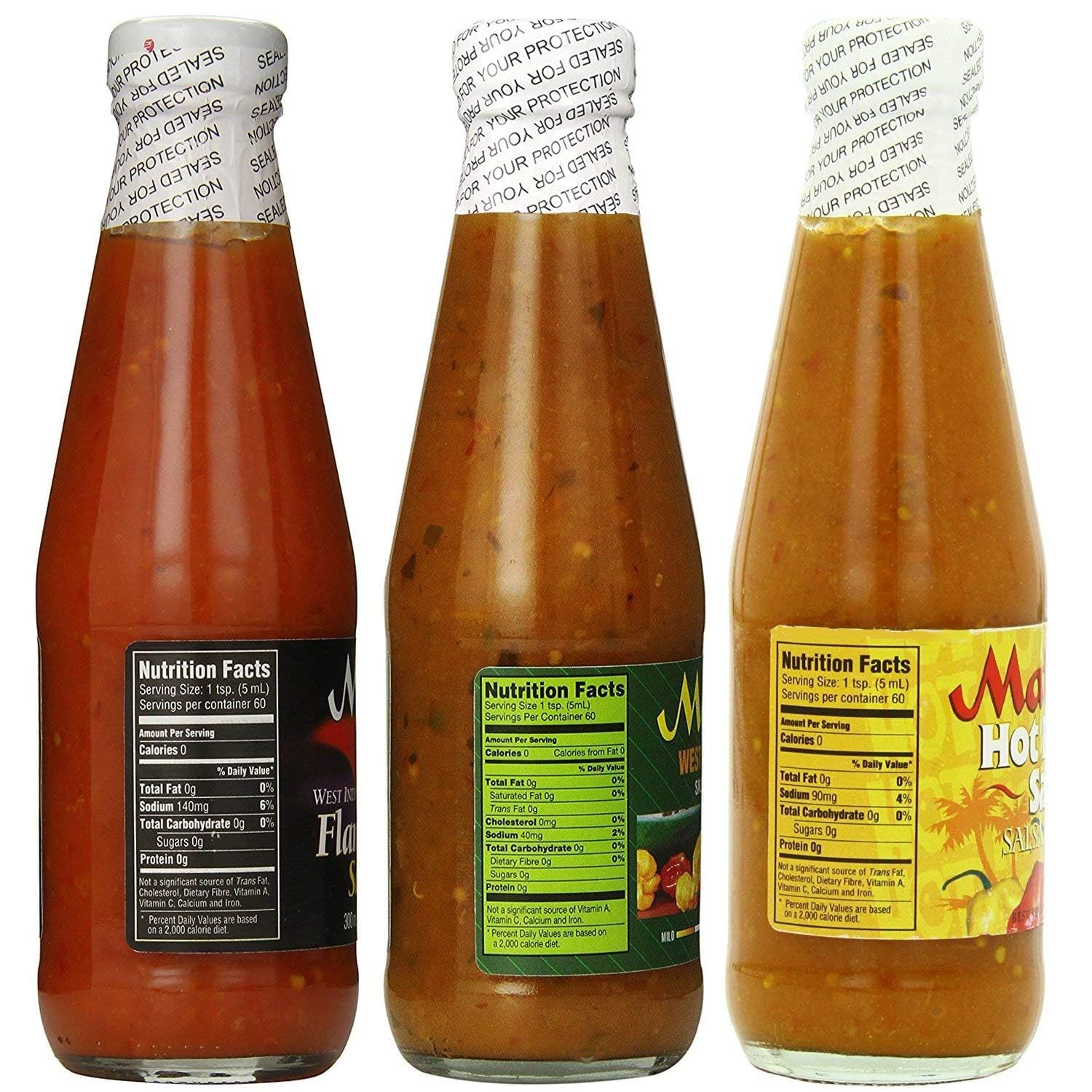
You know that feeling when you’re standing in a Caribbean grocery aisle — or scrolling an online specialty store at midnight — staring at three almost-identical bottles from the same brand, and you genuinely cannot tell which one you should buy? That’s most people’s first Matouk’s moment. Matouk’s is a Trinidad-made hot sauce brand that has been bottling pepper sauces on the island since the 1930s. “Hot sauce,” in this context, means a condiment built around scotch bonnet peppers (one of the hottest pepper varieties in the world, related to the habanero, typically landing between 100,000 and 350,000 Scoville heat units — think ten to thirty times hotter than a jalapeño). What separates Matouk’s from the American mainstream is that their sauces are not just hot — they’re seasoned. Mustard, papaya, and regional spice blends appear across the line, making each bottle a distinct cooking tool, not just a heat dial. This guide exists to hand you that cheat sheet: which bottle does what, which is genuinely fiery versus family-dinner-safe, and whether the three-pack variety set is the smartest entry point.
The Matouk’s Origin Story Matters More Than You Think
Before you compare labels, it’s worth understanding why Matouk’s commands the kind of loyalty it does. Across aggregated buyer reviews on specialty food platforms, one phrase appears repeatedly: “I first found this in Trinidad” or “I discovered this on a dive trip in the Bahamas.” Reviewers consistently describe a pattern — encounter the sauce on the island, fall hard for it, return home, find it unavailable at local grocery stores, and then seek it out online to rebuild the relationship. That’s not a casual hot sauce dynamic. That’s a pantry anchor.
Taste Atlas, in its overview of Trinidad and Tobago’s condiment culture, identifies Matouk’s as one of the definitive expressions of Trinidadian pepper sauce tradition — a tradition that blends scotch bonnet heat with mustard base and aromatic fruit (often papaya or mango) in a way that distinguishes Caribbean hot sauce from Louisiana-style vinegar sauces or Mexican-style chile-forward salsas. Epicurious’s guide to reading a hot sauce label notes that mustard-based sauces behave fundamentally differently in cooking and as table condiments because the emulsifiers in mustard create a thicker, clinging texture that distributes heat more evenly across a dish rather than pooling.
That context matters for your buying decision: you are not choosing between “mild Matouk’s” and “hot Matouk’s.” You are choosing between three different flavor instruments that happen to share a family of ingredients.
The Three Sauces, Decoded
Matouk’s Flambeau Sauce — the complex flagship
Flambeau is the bottle reviewers reach for when they want the brand’s full personality. Across long-run reviews — and the word “decades” appears with unusual frequency in Flambeau reviews specifically — owners describe it as the hottest of the three and the most layered in flavor. The heat builds rather than hits immediately, and the mustard-papaya backbone carries a fruity depth that softens the scotch bonnet’s raw edge without dulling it.
Where Flambeau earns its keep: jerk chicken and oxtail, where the sauce functions as both a finishing condiment and a flavor amplifier. Owners consistently report using Flambeau the same way a chef deploys a finishing salt — a controlled amount at the end to sharpen everything that’s already in the pot. It is not a family-dinner-safe sauce for households with low heat tolerance. If you are buying for a mixed-heat table, this is the bottle you set out for the adults who know what they’re asking for.
Heat designation: 🔥🔥🔥🔥 Fire-breathing tier. Scoville context: scotch bonnet–based, in the 100,000–350,000 SHU range depending on batch and pepper ripeness.
Matouk’s Calypso Sauce — the curry kitchen’s secret weapon
Calypso is the surprise of the three, and arguably the most underappreciated in non-Caribbean households. Reviewers consistently describe it as intensely savory with a pronounced Indian spice quality — a flavor profile that makes sense historically, given Trinidad’s substantial Indo-Trinidadian community and the deep integration of curry traditions into Trinidadian cuisine (what Saveur’s Caribbean pantry feature describes as “doubling of flavor traditions” on the island). One frequently cited review note is explicit: Calypso pairs better with curry dishes than any other hot sauce the reviewer has tried.
The flavor logic here is direct. Calypso’s spice profile — heavier on cumin-adjacent aromatics, with the mustard base behaving more like a curry emulsifier than a straight condiment — means it doesn’t fight your curry for dominance. It complements the dish’s existing spice architecture. Reviewers use it on: curry goat, dhal, pelau (a one-pot rice and pigeon peas dish central to Trinidadian cooking), and as a dipping condiment for roti (flatbread used throughout the Caribbean to scoop stew and curry).
If you’re building a pantry that handles both Caribbean and South Asian cooking — or if you’re regularly making diaspora crossover dishes — Calypso is the workhorse bottle in this lineup.
Heat designation: 🔥🔥🔥 Hot, but negotiable. The savory depth softens the perception of heat; owners with moderate heat tolerance report using it more liberally than the Flambeau.
Matouk’s West Indian Hot Sauce — the everyday pour
West Indian Hot is the daily driver. Reviewers describe it as tangy, accessible, and bright — closer in temperament to a vinegar-forward pepper sauce than the richer Flambeau or savory Calypso. It is the bottle that lives on the table rather than in the cabinet, the one that gets shaken over scrambled eggs, rice and beans, or a quick weeknight soup without ceremony.
The flavor profile Serious Eats identifies as characteristic of fresh-pepper-base (vs. fermented or mustard-heavy) sauces applies here: higher acidity, cleaner heat expression, less residual flavor once the spice fades. That is not a criticism — it is a feature. West Indian Hot is the sauce you reach for when you want heat without an opinionated sauce personality overwhelming a delicate dish.
Where it shines: rice dishes, stewed chicken, black bean stews, and as an all-purpose table sauce for guests who want to control their own heat level. It is the most family-dinner-safe of the three.
Heat designation: 🔥🔥 Accessible heat. Noticeably hotter than Tabasco or standard Louisiana sauces (which typically run 2,500–5,000 SHU), but not in scotch bonnet territory at full scotch bonnet expression. A good bridge sauce for newcomers building heat tolerance.
Side-by-Side Decision Frame
| Sauce | Heat Level | Flavor Character | Best Use Case | Table vs. Cooking |
|---|---|---|---|---|
| Flambeau | 🔥🔥🔥🔥 High | Complex, fruity, building heat | Jerk, oxtail, finishing dishes | Both — use sparingly |
| Calypso | 🔥🔥🔥 Medium-High | Savory, Indian spice notes | Curry, dhal, roti, pelau | Cooking + condiment |
| West Indian Hot | 🔥🔥 Medium | Tangy, bright, clean | Rice dishes, eggs, daily pour | Table sauce primary |
The “If X, Then Y” Buying Rules
This is where the practitioner-level decision gets clean. Rather than buying on instinct, map your use case to the bottle:
If your household cooks curry regularly — and this includes anything from Trinidadian curry goat to Indian dal to Thai-adjacent rice dishes — buy Calypso first. The Indian spice profile is not accidental; it is designed for this culinary territory, and reviewers consistently confirm the pairing. This is the one bottle in the lineup where the flavor adds something that your existing curry spices don’t already cover.
If you eat a lot of jerk, oxtail, or slow-braised Caribbean meat dishes and you already have moderate-to-high heat tolerance, Flambeau is your bottle. The complexity it adds to finished meat dishes is what multi-decade loyalists keep coming back for. The fruity heat plays off the smoky, allspice-forward profile of traditional jerk in a way that a simple vinegar sauce cannot.
If you are buying for a household with mixed heat tolerances — teenagers, parents who grew up on mild food, guests who are curious but cautious — start with West Indian Hot. It is the most socially deployable of the three: hot enough to satisfy the heat-seekers, accessible enough that no one gets ambushed.
If you are building a gift basket or discovering the brand for the first time, the variety three-pack is the correct move. It costs marginally more per ounce than buying individual bottles, but the comparison is the point — you cannot develop genuine bottle loyalty until you’ve run all three alongside the same dish. The three-pack is effectively a paid education.
How Matouk’s Compares to What You Already Have
Epicurious’s label-reading guide puts mainstream American hot sauces in useful context: Tabasco Original runs roughly 2,500–5,000 SHU. Standard Louisiana-style hot sauces cluster in a similar range, prioritizing vinegar brightness and thin consistency over flavor complexity. Matouk’s occupies a categorically different space — even the mildest bottle in the line (West Indian Hot) operates on a different flavor architecture, not just a different heat number.
The comparison that matters for diaspora and enthusiast cooks is not “Matouk’s vs. Tabasco on the Scoville scale.” It is “what does this sauce do to a dish versus what Tabasco does.” Tabasco adds acid and heat. Matouk’s adds heat plus seasoning — the mustard base, the papaya depth, the spice integration — which means it can replace a finishing seasoning step that you would otherwise do separately. That’s the value the multi-decade loyalists are describing when they say they’ve been using Flambeau “for thirty years”: they’ve incorporated it into their cooking logic, not just their table condiment rotation.
Frequently Asked Questions
Which Matouk’s sauce is hottest — Flambeau, Calypso, or West Indian Hot? Flambeau is consistently described by owners as the hottest of the three, with a building, complex scotch bonnet heat. Calypso is hot but the savory spice profile tempers the heat perception. West Indian Hot is the most accessible.
Is Matouk’s available in US grocery stores or only online? Reviewers repeatedly note that Matouk’s is difficult to find in mainstream US grocery stores — the pattern of “found it in Trinidad, couldn’t find it at home” is the brand’s dominant discovery story. Specialty Caribbean grocers and online specialty food retailers are the most reliable source in the US market as of May 2026.
Which Matouk’s sauce works best on rice and stew dishes? West Indian Hot’s tangy, bright profile makes it the cleanest pour over rice and peas or stewed chicken. Calypso also works well here if the dish has curry or heavy spice notes already built in.
Can Matouk’s be used as a curry condiment? Yes — and Calypso specifically is designed for this. Reviewers explicitly describe Calypso as superior to other hot sauces when paired with curry, attributing this to its Indian spice character. It is one of the few Caribbean hot sauces that crosses over naturally into South Asian flavor territory.
Is the variety three-pack a good way to try the brand for the first time? Yes, without reservation. The only meaningful way to develop bottle preference is to run all three alongside the same dish. The three-pack collapses that learning curve into a single purchase and is the editorial recommendation for any first-time Matouk’s buyer.
How does Matouk’s heat level compare to Tabasco or standard Louisiana hot sauces? Tabasco and most Louisiana-style sauces run 2,500–5,000 Scoville heat units. Matouk’s sauces are scotch bonnet–based, which puts the upper range significantly higher — but more importantly, the heat delivery mechanism is different. Matouk’s builds and lingers; Tabasco is immediate and fades. First-time Matouk’s users should start with West Indian Hot and portion cautiously until they calibrate.