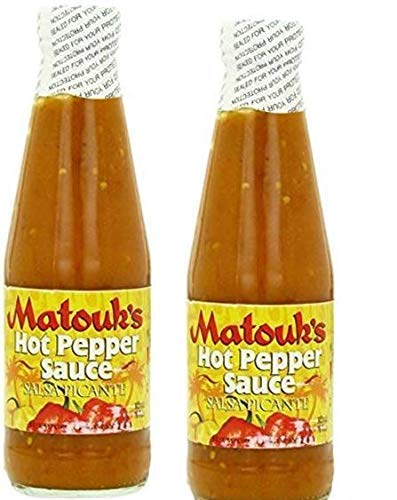
You know that feeling when you’re standing in the international-foods aisle, staring at three bottles of Matouk’s with nearly identical labels, and you genuinely cannot tell whether you’re about to bring home a gentle table condiment or something that will clear out your sinuses at Sunday dinner? That’s the Matouk’s problem — and it’s a real one, because this Trinidadian brand (Trinidad and Tobago, twin-island nation in the southern Caribbean, famous for its pepper sauce culture) makes multiple products under the same trusted name, aimed at very different heat tolerances and culinary uses. Matouk’s has been a household name in Trinidad since the 1930s, and its sauces have followed the diaspora into Caribbean grocery stores across North America and the UK. This guide breaks down the three core players — Calypso, Flambeau, and West Indian Hot — so you can match the right bottle to the right dish, the right guest list, and the right slot in a gift basket.
What Makes Matouk’s Different From the Crowd
Before we get into the lineup, it’s worth understanding why Matouk’s earns a different tier of respect than the generic “Caribbean pepper sauce” you’ll find at a big-box store. The brand is Trinidad-origin and island-associated in its production heritage — a distinction that matters to the provenance-conscious buyer who reads labels the way others read wine back-labels. As Taste Atlas notes in its Trinidad and Tobago condiment profiles, Matouk’s occupies a category alongside the country’s broader pepper sauce tradition, which emphasizes fruity, mustard-forward, and scotch-bonnet-driven heat profiles rather than the vinegar-dominant Louisiana-style heat familiar to American hot sauce buyers.
The scotch bonnet pepper (Capsicum chinense, the same species as the habanero but with a distinctly fruitier, almost apricot-adjacent aroma) is the load-bearing flavor ingredient across the Matouk’s line. Smithsonian Magazine’s feature on how the scotch bonnet became the Caribbean’s signature pepper describes it as occupying a heat range of roughly 100,000–350,000 Scoville Heat Units (SHUs) — Scoville being the standard scale for measuring pepper heat, where jalapeños sit around 2,500–8,000 SHUs for reference. What separates Matouk’s from a pure-heat product is the mustard and papaya base that anchors several of its sauces, which rounds the scotch bonnet’s sharp edges into something more complex, almost condiment-like in the French sense: something meant to complement, not just challenge.
That culinary philosophy is precisely what creates the confusion between bottles. Each sauce in the line uses a version of that same base but calibrates heat, texture, and fruity brightness very differently. If you’re sourcing for a pantry or assembling a gift set, the differences are not cosmetic — they determine whether a sauce is an everyday drizzle, a cooking marinade, or a full-fire enthusiast product.
The Three Bottles, Compared Directly
Matouk’s Calypso Sauce — The Gateway Bottle
Calypso is Matouk’s most recognizable export product and, not coincidentally, its most approachable. The sauce is built on a papaya-mustard-scotch bonnet base with a smooth, almost creamy texture and a heat level that, across aggregated reviews on specialty condiment platforms, lands consistently in the “warm but manageable” register — estimated in the 20,000–50,000 SHU range when diluted through the sauce matrix, well below the raw scotch bonnet ceiling.
The Spruce Eats’ Caribbean hot sauce buying guide describes Calypso-style sauces as designed for “table use across a wide audience,” which tracks with how it actually functions: it’s the bottle you put out at a dinner party without issuing a warning. The fruity brightness of the papaya comes through clearly, and there’s a mild vinegar tang that gives it longevity and versatility. It works on grilled chicken, roti (flatbread common across Trinidad and Tobago, Guyana, and the wider Caribbean diaspora), rice dishes, and as a dipping base.
Decision frame: Calypso is your everyday table sauce and your correct first gift if you’re not sure about the recipient’s heat tolerance. It’s the bottle that converts skeptics into Matouk’s loyalists. Retail pricing in the Caribbean specialty grocery channel in 2026 runs approximately $8–12 for a 13 oz bottle, which makes it highly competitive on a per-ounce basis against Marie Sharp’s entry-level offerings.
Matouk’s West Indian Hot Sauce — The Workhorse Marinade
West Indian Hot is where the line makes a decisive turn. This sauce is thicker, darker, and — critically — hotter than Calypso, with a more pronounced mustard-forward backbone and a scotch bonnet presence that reviewers on specialty food forums consistently flag as “cooking sauce territory.” The texture difference alone signals a different intended use: West Indian Hot has a paste-like body that clings to protein rather than pooling on a plate.
Saveur’s feature on Caribbean hot sauces identifies this style of mustard-pepper sauce as fundamentally Trinidadian in character — distinct from Jamaican jerk-based condiments and from the thinner vinegar sauces of the Eastern Caribbean. The mustard base here isn’t background; it’s structural. It means the sauce behaves like a marinade component when applied to chicken, fish, or pork before grilling or roasting. The heat, which owners and culinary reviewers consistently place above Calypso but below the Flambeau ceiling, is diffuse rather than spiked — the mustard and papaya slow the scotch bonnet’s delivery, producing a long, building warmth rather than a sharp front-of-mouth hit.
Serious Eats’ guide to hot sauce heat levels and the Scoville scale notes that this kind of “heat diffusion through fat and sugar compounds” (the papaya provides both) is precisely what separates well-constructed Caribbean sauces from single-note hot sauces. West Indian Hot benefits visibly from this effect.
Decision frame: West Indian Hot is the cook’s bottle, not the table bottle. If your use case is marinades, stew bases, or adding depth to pelau (a one-pot rice and peas dish common in Trinidad) or curry, this is the Matouk’s you want. At approximately $9–13 for a 13 oz bottle, the per-ounce cost is similar to Calypso, but the utility is different — this one earns its keep in the kitchen, not just at the table.
Matouk’s Flambeau Sauce — The Fire-Breathing Outlier
Flambeau is where Matouk’s stops hedging. The name itself is a signal — “flambeau” is the Trinidadian Creole term for a flaming torch, used in carnival and street-food culture, and the sauce earns the reference. Flambeau is built for heat-seekers, and reviewers and specialty condiment collectors consistently describe it as the highest-output bottle in the Matouk’s portfolio, with a scotch bonnet concentration that requires deliberate, measured use.
The base structure is similar to the other bottles — mustard, papaya, scotch bonnet — but the pepper ratio is dramatically increased, and there is less fruit sweetness to buffer it. The result is a sauce where the scotch bonnet’s characteristic fruity-floral aroma arrives first and is then immediately followed by significant heat. This is not a family-dinner-safe designation. Flambeau is a fire-breathing product — appropriate for heat enthusiasts, as a small-batch finishing sauce, or as a cooking ingredient added early in a braise where the heat will integrate and mellow.
Decision frame: Flambeau belongs in a curated condiment collection or in the hands of a proven heat enthusiast. It is the wrong gift for an uncertain recipient, and it’s the wrong table sauce for guests who haven’t been briefed. As a gift-basket component, it reads as intentional and knowledgeable — the equivalent of including a single-malt Scotch in a whisky bundle rather than a blended. Retail pricing runs approximately $10–14 for a similar bottle size, and because a little goes a long way, the effective cost-per-use is lower than it appears at shelf.
By the Numbers
| Sauce | Approx. Heat Level | Primary Use Case | Family-Dinner Safe? | Est. Retail (13 oz) |
|---|---|---|---|---|
| Calypso | Low-medium (~20–50K SHU est.) | Table sauce, dipping | ✅ Yes | $8–12 |
| West Indian Hot | Medium-high | Marinades, cooking | ⚠️ Warm | $9–13 |
| Flambeau | High | Finishing, heat enthusiasts | 🔥 No | $10–14 |
SHU estimates are based on published scotch bonnet ranges (Smithsonian Magazine) and sauce-dilution patterns described in aggregated buyer reviews; they are editorial approximations, not laboratory measurements.
Stocking Strategy: Which One (or Which Combination) Is Right for You
If you are building a core Caribbean pantry from scratch and want one Matouk’s bottle, Calypso is the correct answer. It bridges the widest range of uses, won’t alienate heat-sensitive household members, and positions you to graduate toward the hotter options once you understand how the brand’s flavor architecture works.
If you are a practitioner-level cook who already uses scotch bonnet sauces regularly and is deciding between West Indian Hot and Calypso as your default cooking sauce, the tradeoff is texture and function: Calypso for table and finishing, West Indian Hot for anything that goes under heat or into a marinade. Owning both is not redundant — they solve different problems.
If you are curating a gift basket in the $60–120 tier — a common use case for diaspora households gifting housewarming or holiday sets — a Matouk’s trio (Calypso + West Indian Hot + Flambeau) tells a complete story about Trinidadian pepper sauce culture and demonstrates range. Pair it with a bottle of Marie Sharp’s Habanero (from Belize, which gives a useful habanero-vs-scotch-bonnet comparison point) and a Walkerswood Traditional Jerk Seasoning for a genuinely educational Caribbean condiment collection.
If the recipient is a heat newcomer — or if you are one, and arrived at this article via the on-ramp and stayed — Calypso is explicitly designed for you. Don’t let the Flambeau label tempt a first purchase. Build toward it.
A Note on Sourcing and Shelf Availability in 2026
Matouk’s has stronger retail distribution than many Caribbean brands in the North American specialty grocery channel, but supply consistency for Flambeau in particular has been flagged by specialty condiment retailers as intermittent — a pattern consistent with the broader seasonal volatility that affects imported Caribbean products. If you find Flambeau in stock, buying two bottles is not an unreasonable call. Calypso and West Indian Hot have more reliable availability through Caribbean food specialty channels and select international grocers.
The brand’s Trinidad-origin provenance remains intact as of this writing — an important distinction for buyers who prioritize island-made products over diaspora-produced equivalents. Per the Taste Atlas entry on Matouk’s, the brand’s association with Trinidadian food culture is long-standing and substantive, not a branding exercise. That heritage is part of what you’re buying, and it’s part of what makes the Matouk’s trio a credible premium gifting choice at the price points above.