You know that feeling when you grab a jar of jerk seasoning at the Caribbean grocery, get home, and then stand at the counter wondering — wait, is this supposed to go on dry or do I mix it with something? You’re not alone. Jerk seasoning (the fiery, allspice-and-scotch-bonnet spice blend that defines Jamaica’s most famous cooking tradition) comes in two very different physical formats — a dry rub, which is a loose powder or coarse spice blend you apply straight to meat, and a wet paste, which is a thick, oil- or vinegar-based marinade already pre-blended with aromatics. Both can produce outstanding results. Both can also go badly wrong if you apply the wrong one to the wrong cook method. This guide gives you the decision framework to stop guessing and start cooking with intention.
What Actually Separates a Dry Rub from a Wet Paste (and Why It Matters)
The difference isn’t just texture — it’s chemistry, moisture management, and the way heat interacts with the surface of your protein.
A dry rub is exactly what it sounds like: a blend of dried spices (typically dried thyme, allspice — called pimento in Jamaican cooking — cayenne or dried scotch bonnet, garlic powder, onion powder, and sometimes brown sugar) that you press into the surface of your meat. Because there’s no liquid, the surface of the protein stays relatively dry going into the cook. That matters a lot. As Serious Eats’ coverage of the Maillard reaction explains, the browning and crust development that makes grilled and smoked meat so satisfying requires the surface to be dry enough to reach high temperatures quickly — moisture on the surface creates steam, which delays browning. A dry rub cooperates with this chemistry. On a charcoal grill or a hot cast-iron grill pan, a dry-rubbed jerk chicken thigh will develop a proper, caramelized bark.
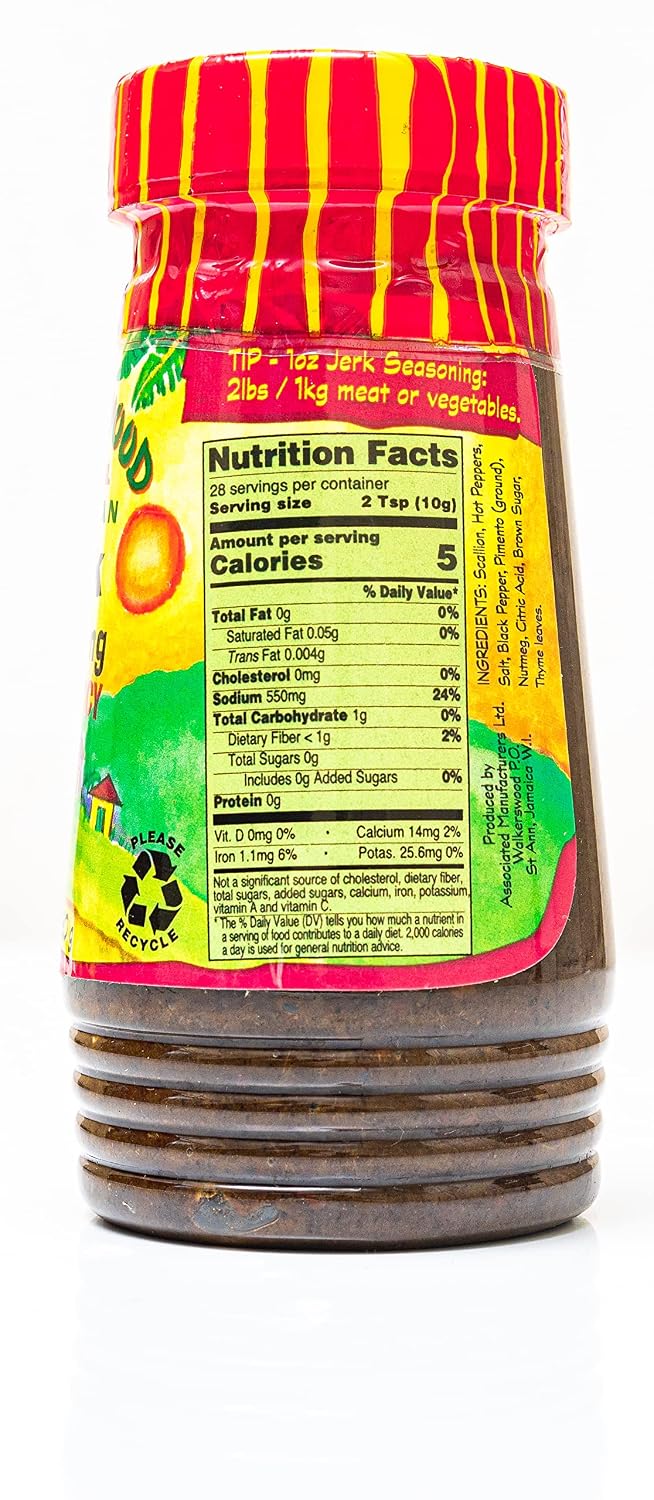
A wet paste (Walkerswood Traditional Jerk Seasoning is the canonical example most Caribbean pantry shoppers will recognize) blends those same dried spices with wet ingredients — typically cane vinegar, oil, green onions, fresh or rehydrated scotch bonnet, sometimes soy sauce. The liquid carries flavor deeper into the meat during a longer marination window, and the sugars and aromatics in the wet mix contribute to a different kind of char — darker, slightly lacquered, more intensely savory. Per Saveur’s deep-dive into Jamaica’s BBQ tradition, authentic Boston Bay jerk (the regional style from Portland Parish, Jamaica, widely credited as the origin point) historically uses wet marinades applied hours or even overnight before the meat goes over pimento-wood coals.
The bottom line before you read further: dry rubs favor speed and high-heat surface browning; wet pastes favor depth, longer marination windows, and lower-and-slower cook environments.
Matching Format to Cook Method: The Decision Framework
This is where most home cooks get into trouble. They buy a wet paste and blast it under a broiler on dry chicken, or they reach for a dry rub for a long braise and wonder why the flavor feels flat. Here’s the match-up, explicitly:
High Heat, Fast Cook (Grilling, Grill Pan, Broiler)
Best format: Dry rub, or wet paste applied early and patted semi-dry before cooking.
If you’re cooking over direct charcoal, a gas grill at high heat, or a cast-iron grill pan, a dry rub is your lowest-friction path to a good crust. Apply it 30 minutes to 2 hours before cooking — long enough for the salt in the blend to start drawing moisture to the surface and then reabsorb into the meat (a mini-dry-brine effect), but not so long that the spices go muddy.
If you’re committed to using a wet paste format (say, you’ve already got a catering jar of Walkerswood open and you want to use it tonight), you can make it work — apply it 4–8 hours ahead and then blot the surface with a paper towel right before the meat goes on the grates. You’ll lose some of the outermost paste layer, but the flavor has already migrated inward, and the drier surface will still give you a decent char. Epicurious’s guide to jerk seasoning technique recommends a similar approach for grilled proteins when wet paste is the starting format.
Watch the sugar content. Some wet paste formulas, particularly supermarket-tier blends, carry high sugar loads that burn fast and turn bitter over direct high heat. Check the label ingredients. A paste with cane vinegar early in the ingredient list will be more heat-stable than one with molasses or brown sugar in the top three.
Low and Slow (Oven, Indirect Grill, Smoker)
Best format: Wet paste.
At 250–325°F over a long cook, you want the moisture and the aromatics of a wet paste working for you. The liquid doesn’t inhibit browning at low-and-slow temperatures the same way it does at high heat — the oven or smoker has time to drive off surface moisture gradually. Meanwhile, the vinegar in the paste gently tenderizes the protein, and the layered aromatics (fresh scotch bonnet, green onion, thyme) build a more complex flavor profile than a dry spice powder alone can achieve.
For this cook method, Walkerswood Traditional Jerk Seasoning — widely regarded as the benchmark Jamaica-made wet paste, produced in St. Ann Parish and island-owned — is consistently cited across long-run user reviews as performing exactly as intended: deep, peppery, fragrant, with a controlled heat that builds rather than scorches. The catering jar (roughly 17 oz, typically $20–30 depending on retailer) is the better value if you’re cooking for a crowd or want a surplus for marinating in multiple sessions.
Braises, Stews, and One-Pot Cooks (Dutch Oven, Instant Pot)
Best format: Wet paste, used as a seasoning base — but measure carefully.
Adding dry rub to a braise is rarely a disaster, but the powdered spices can turn grainy or clump against the liquid without enough fat and heat to bloom them properly. A wet paste dissolves into braising liquid more evenly and its aromatics integrate with the sauce.
That said, jerk paste is concentrated. Taste Atlas’s entry on jerk-seasoned dishes notes that the scotch bonnet pepper content in authentic wet pastes can approach serious heat levels in a reduced sauce environment — the liquid reduces, the heat doesn’t. A starting point of 1–2 tablespoons of wet paste per pound of protein is a reasonable baseline; taste before you add more after the first 20–30 minutes of cook time.
By the Numbers
| Format | Typical Application Window | Best Heat Zone | Crust Development |
|---|---|---|---|
| Dry rub | 30 min – 2 hrs before cook | High (400–550°F direct) | Excellent |
| Wet paste (blotted) | 4–8 hrs, blot before grill | High (400–550°F direct) | Good |
| Wet paste (full) | 8–24 hrs | Low-slow (250–325°F) | Moderate-deep |
| Wet paste in braise | Added at cooking start | Braising temp (275–325°F) | N/A |
Brand Landscape: What You’re Actually Choosing Between
Once you’ve locked down format, you’re choosing between brands — and this is where provenance and heat-level literacy both matter.
Wet Paste Tier:
- Walkerswood Traditional Jerk Seasoning — Jamaica-made, island-owned, consistently the benchmark reference. Reviewers across aggregated feedback characterize it as medium-high heat with pronounced allspice and thyme. The Jamaica Observer has covered Walkerswood’s production roots in St. Ann; it’s a genuinely Jamaican-origin product, not a diaspora facsimile. The mild version exists for family-dinner-safe applications; the traditional version is emphatically not mild.
- Grace Jerk Seasoning (wet format) — More widely distributed, accessible price point (often $5–9 for a smaller jar), solid everyday option. Reviewers consistently note it as milder and sweeter than Walkerswood, which makes it a better on-ramp paste for heat-wary households.
- Matouk’s Jerk Seasoning — Trinidad-originated brand, well-regarded across its condiment line for nuanced flavor layering. Less common in smaller Caribbean grocery outlets; worth sourcing if you’re building a serious pantry.
Dry Rub Tier:
The dry rub category is more fragmented. You’ll find a range of small-batch and brand-name options. Key things to look for on the label: allspice (pimento) should appear in the first three ingredients — it’s the non-negotiable flavor anchor of authentic jerk seasoning, per Taste Atlas’s regional profile of Jamaican jerk. If the first three ingredients are salt, paprika, and garlic powder, you’re holding a generic Caribbean-flavored rub, not a jerk blend.
Heat-level note for both formats: Scotch bonnet peppers (the variety used in authentic Jamaican jerk) measure roughly 100,000–350,000 Scoville Heat Units — significantly hotter than jalapeño (2,500–8,000 SHU) and approaching habanero territory. If you’re cooking for guests with low heat tolerance or children, look for labels that say “mild” or check whether dried scotch bonnet appears in the top five ingredients. “Jerk-flavored” products made for mainstream US grocery shelves frequently substitute milder peppers — which is fine for heat management, but understand the trade-off on complexity.
The Decision Rule
If you’re standing in the aisle or shopping the pantry section right now, here’s the if/then framework:
- If you’re grilling tonight on high heat → reach for a dry rub, or plan a same-day morning marinade with wet paste and blot before grilling.
- If you’re doing a low-and-slow weekend cook, smoking, or oven-roasting for hours → wet paste, applied the night before, is your pick.
- If you’re braising or going into a slow cooker → wet paste, used as your seasoning base, in measured doses.
- If you want one product that does reasonable duty across all three methods → Walkerswood Traditional Jerk Seasoning in wet paste format is the consensus workhorse, specifically because its vinegar base gives you heat stability and its flavor is balanced enough to read clearly in all three cooking environments.
- If heat management is a genuine concern for your household → start with Grace (wet) or any dry rub that lists scotch bonnet lower in its ingredient order, and build up from there.
The format question isn’t academic — it’s the difference between a char that makes your guests ask for the recipe and a singed, bitter crust that made you work hard for nothing. Know your method, match your format, and the seasoning does the rest.