You know that feeling when you’re at a Caribbean grocery and you reach for the same jar you always grab — the one with the red and yellow label — and it’s either out of stock, the price has jumped, or you’re quietly wondering whether there’s something better you’ve been sleeping on? That moment is exactly what this article is for. Jerk seasoning is one of the foundational building blocks of Jamaican cooking: a wet paste (or dry rub) built on scotch bonnet peppers, allspice (called “pimento” in Jamaica), thyme, and a raft of aromatics that together create the smoky, fiery, faintly sweet flavor that defines jerk chicken, pork, and fish. Walkerswood Traditional Jerk Seasoning — made in Jamaica since the 1970s — has long been the community standard, the benchmark everyone measures against. But in 2026, the challenger bracket is real, it’s well-stocked, and several of these alternatives have earned genuine loyalty from cooks who switched for availability reasons and then never went back.
This guide is comparison-focused and decision-oriented. If you’re already fluent in jerk but trying to decide whether to open a Spur Tree jar alongside your Walkerswood, or whether Busha Browne’s calibrated heat profile saves you the extra step you’ve been doing for years, you’re in the right place. We’ll name the tradeoffs, show the flavor math, and end with clear if/then rules.
Why Walkerswood Is the Benchmark (And Where It Leaves Room)
Before you can evaluate a challenger, you need an honest account of what you’re challenging. Walkerswood Traditional Jerk Seasoning — produced in the rural hills of St. Ann Parish, Jamaica — has earned its status through consistency and wide distribution. Serious Eats, in its coverage of jerk seasoning traditions, notes that formulas in the Walkerswood tradition lean on allspice as a dominant aromatic alongside a scotch bonnet base, producing that earthy, clove-adjacent warmth that US cooks often associate with “authentic jerk flavor.”
Two friction points keep coming up among long-term users:
-
Heat calibration. The Walkerswood hot variety runs hot enough that cooks who want to serve at a family dinner often dial it back or mix in the mild version. One pattern that emerges from long-run owner reviews is cooks adding allspice to the hot version specifically to bring balance — essentially post-purchasing their way to the flavor profile they wanted.
-
Availability volatility. In the Caribbean grocery space, Walkerswood is a high-velocity SKU. When supply chains hiccup — and the Jamaica Observer’s food and agricultural coverage has documented seasonal pressure on scotch bonnet and pimento supply from Jamaica in recent growing cycles — the shelves go bare faster than any other jerk product. That’s the crack in the door through which the challengers enter.
The Challengers, Profiled and Compared
Spur Tree: The Real-Scotch-Bonnet Differentiator
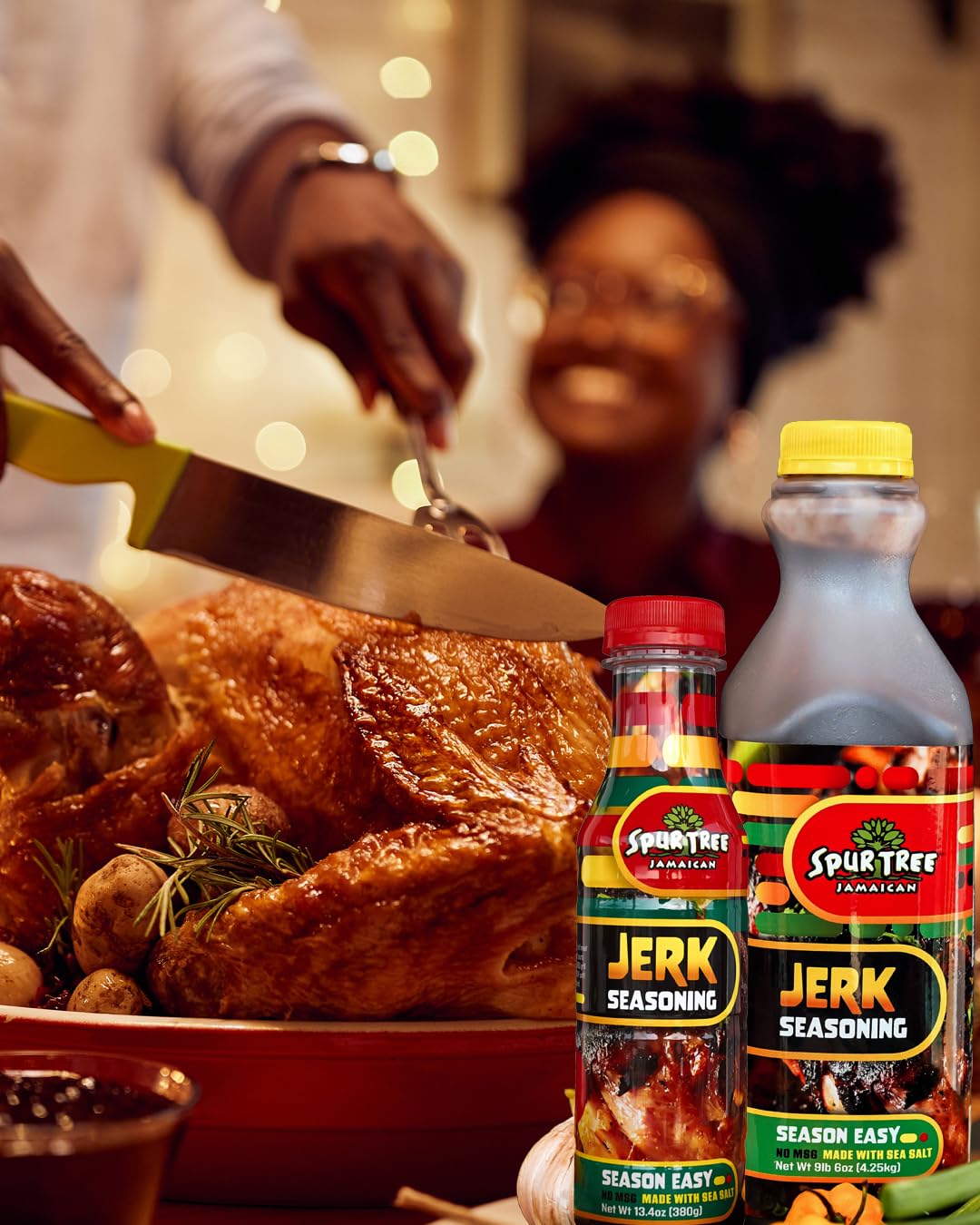
Spur Tree Jerk Seasoning has become the most-cited Walkerswood alternative in diaspora communities, and the origin story of its adoption is instructive: reviewers who switched initially cite availability as the trigger, then note the product won them over on its own merits. The critical differentiator is the presence of real scotch bonnet peppers in a market segment where US-manufactured alternatives lean heavily on cayenne or habanero substitutes and compensate with increased allspice.
This matters more than it sounds. Saveur’s pepper-heat reference reporting places scotch bonnets at roughly 100,000–350,000 Scoville Heat Units, but the more important point is qualitative: scotch bonnets carry a fruity, almost floral heat signature that habaneros approximate but don’t replicate. When you taste a US-made “Caribbean-style” jerk seasoning and something feels slightly off — a sharper, less dimensional heat — that’s often the scotch bonnet absence. Spur Tree reviewers explicitly call this out. It’s a wet paste, same format as Walkerswood Traditional, which makes it the most direct format-equivalent swap on this list.
Decision frame: If you’ve been using Walkerswood and care about scotch bonnet provenance in the ingredient list — not just allspice warmth — Spur Tree is the closest successor flavor profile in this bracket.
Spur
$15.99
In stock on Amazon
Check price on AmazonBusha Browne: Pre-Calibrated for the Cook Who Was Already Modifying
Busha Browne’s Spicy Jerk Sauce occupies an interesting position: reviewers frame it explicitly against Walkerswood, and one recurring pattern in owner commentary is the cook who spent years adding allspice to Walkerswood hot to moderate the heat and balance the aromatic profile — and found that Busha Browne arrived factory-set to almost exactly that ratio.
This is worth sitting with. If your current workflow involves adjusting a base product, a challenger that eliminates that step isn’t just convenient — it’s revealing something about your actual flavor preference that you’d been solving for manually.
Busha Browne has a longer heritage brand story: Taste Atlas’s profiles of Jamaican condiment culture identify Busha Browne as one of the island’s older small-batch-style producers, with premium positioning that bridges the artisan-collector segment. Its heat level sits below Walkerswood hot but above Walkerswood mild, placing it in a genuinely useful middle band — what you might call family-dinner safe with heat-forward presence, rather than fire-breathing or muted.
Decision frame: If you’ve been doctoring Walkerswood hot with extra allspice for years, Busha Browne may already be cooking to your spec. It’s the buy for cooks who want a finished, balanced paste rather than a base to modify.
Island
$22.97
In stock on Amazon
Check price on AmazonKarjos: Authenticity Credibility, Saltiness Caveat
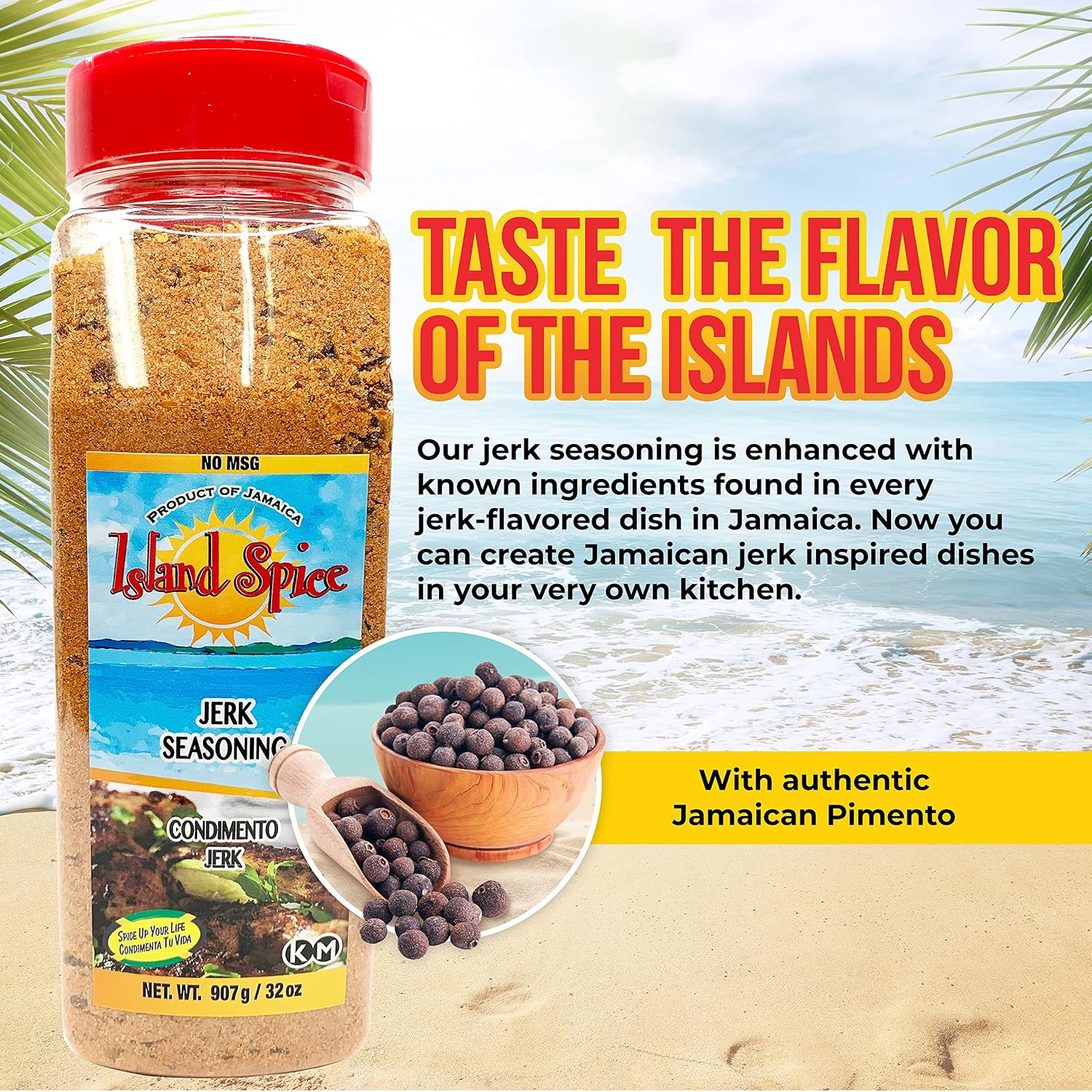
Karjos commands strong loyalty from one specific cohort: cooks who first encountered it in Jamaica rather than through diaspora retail channels. That origin story matters in this category. Taste Atlas and the Jamaica Observer, in their coverage of jerk culture and Jamaican food traditions, consistently emphasize that the most respected jerk seasonings are those tied to specific Jamaican provenance rather than diaspora or US-licensed production — and Karjos carries that credibility.
The loyalty among in-Jamaica-first buyers is genuine and vocal. But there is one specific, actionable caveat that comes up consistently in owner reviews: Karjos reads as significantly saltier than Walkerswood at equivalent application volumes. This isn’t a disqualifier — it’s a recipe-adjustment signal.
The Karjos math: If your jerk chicken recipe calls for 2 tablespoons of Walkerswood per pound of protein, drop to 1.5 tablespoons of Karjos and taste before adding any additional salt to the marinade. Reviewers who flagged saltiness as a problem were applying it at Walkerswood ratios without adjusting; those who made the swap reported excellent results. Consider it a brand that requires calibration rather than a straight substitution.
Decision frame: If Jamaica-sourced authenticity is your primary criterion and you’re comfortable adjusting salt elsewhere in the recipe, Karjos is a strong pick — particularly if you’re building a gift basket or artisan collection where provenance storytelling matters.
Spur
$15.99
In stock on Amazon
Check price on AmazonCool Runnings: The Long-Haul Jar with a Cinnamon Signature
Cool Runnings generates a specific type of review that the other challengers don’t: longevity comments. One pattern in owner feedback involves a single large container tracked across extended use — multiple months of weekly cooking — with consistent performance noted throughout. For a product category where oxidation and flavor degradation after opening are real concerns, that’s meaningful signal.
The flavor note that distinguishes Cool Runnings in blind-comparison descriptions is cinnamon — a warm, slightly sweet top note that reviewers call out unprompted and that sets it apart from the allspice-dominant competitors. Cinnamon is a legitimate jerk ingredient: Serious Eats’ overview of jerk seasoning history notes that early Maroon-tradition jerk formulas often included cinnamon alongside allspice and thyme, making it a historically grounded rather than gimmick addition. That said, it reads differently on the palate and it’s not what most cooks expect when they open a jerk paste for the first time.
Cool Runnings is available in an 800g format — a wet paste, not a dry rub — which positions it well for households cooking jerk at volume: regular Sunday meals, batch-marinating for freezer prep, or a home cook who’s also feeding extended family.
Decision frame: If you cook jerk at high frequency and want a format built for volume use, and if a cinnamon-forward profile sounds appealing or at least interesting, Cool Runnings’ 800g format is the buy. Approach it as a distinct flavor profile rather than a Walkerswood clone.
Karjos
$12.89
In stock on Amazon
Check price on AmazonQuick Comparison: At a Glance
| Brand | Format | Heat Position | Key Differentiator | Key Caveat |
|---|---|---|---|---|
| Walkerswood Traditional | Wet paste | Medium–Hot | Category benchmark, allspice-forward | Availability volatility |
| Spur Tree | Wet paste | Medium–Hot | Real scotch bonnets vs. substitutes | Closest Walkerswood successor |
| Busha Browne | Wet sauce/paste | Medium | Pre-calibrated balance, allspice + heat | Premium price tier |
| Karjos | Wet paste | Medium–Hot | Jamaica-first authenticity credibility | Noticeably saltier — adjust ratios |
| Cool Runnings | Wet paste (800g) | Medium | Cinnamon note, strong longevity reviews | Distinct flavor — not a direct swap |
Frequently Asked Questions
Does Spur Tree jerk seasoning actually contain real scotch bonnet peppers? Based on its ingredient list and consistently reported owner flavor impressions, yes — and reviewers explicitly cite this as the reason it tastes different from US-manufactured “Caribbean-style” alternatives, which typically substitute habanero or cayenne. The fruity, dimensional heat that scotch bonnets produce is why long-term users who switched from Walkerswood for availability reasons ended up staying for flavor reasons.
How salty is Karjos jerk seasoning and how should you adjust your recipe? Karjos runs meaningfully saltier than Walkerswood at equivalent volumes, which is the one caveat that appears repeatedly in owner reviews. The practical fix: reduce your application volume by roughly 20–25% compared to your Walkerswood habit, and hold all additional salt in the recipe until after you taste the marinated protein. Reviewers who made this adjustment report excellent results; those who didn’t flagged over-salting as the sole complaint.
Is Cool Runnings 800g a wet paste or a dry rub? It’s a wet paste — the large format shouldn’t be confused with dry-rub products. The 800g size is designed for volume use and has earned specific mention in reviews for holding its flavor profile across extended post-opening storage, which is the one performance axis where it has a clear edge over smaller-format competitors.
How does Busha Browne’s heat level compare to Walkerswood mild and hot? Busha Browne sits above Walkerswood mild but below Walkerswood hot — a genuinely useful middle band. Reviewers who wanted the full Walkerswood hot flavor but with the allspice ratio turned up and the raw heat dialed back found Busha Browne landed close to that target. It’s family-dinner-safe in a way that Walkerswood hot isn’t for all households, without the flatness that Walkerswood mild can produce in cooked applications.
Which of these brands is closest to what you’d find in Jamaica itself? Among this bracket, Karjos earns the strongest credibility with cooks who encountered it in Jamaica before finding it in diaspora retail — that firsthand on-island experience is the highest authenticity signal in this category. Walkerswood is also genuinely Jamaican-made (St. Ann Parish), and its distribution dominance shouldn’t be confused with inauthenticity. Among the challengers specifically, Karjos and Spur Tree both carry Jamaica-made or Jamaica-sourced credentials that matter to provenance-focused buyers.
Can a dry jerk rub be converted to a wet paste for marinating? Yes, with straightforward technique. A dry rub converts to a workable wet paste by combining it with a neutral oil, fresh citrus juice, or a small amount of water — a 1:1 ratio of dry rub to liquid by volume is a reasonable starting baseline, adjusted to paste consistency by eye. The resulting paste works as a marinade in the same way a commercial wet paste does, though the flavor skews slightly drier and less complex without the fermented or fresh-pepper character of a purpose-built wet product like Walkerswood or Spur Tree.
The Decision Rules
If you’re staring at the shelf with one of these jars in each hand, here’s the if/then framework:
- If Walkerswood is out of stock and you want the closest flavor swap: Spur Tree, specifically for its real scotch bonnet base and equivalent wet-paste format.
- If you’ve been modifying Walkerswood hot with extra allspice: Busha Browne is pre-built to that spec — stop doing the manual work.
- If Jamaica-sourced provenance is your primary decision criterion: Karjos, with the salt-adjustment caveat applied from the first use.
- If you cook jerk at volume and want a large-format paste with documented long shelf stability: Cool Runnings 800g, accepting that cinnamon is part of the flavor contract.
- If you’re building a gift set that needs to tell a clear authenticity story: Karjos or Busha Browne, both of which carry premium-positioning credibility that lands well with the specialty-collector buyer.
The category has matured. Walkerswood earns its benchmark status honestly — but in 2026, “the Walkerswood alternative” is no longer a consolation framing. Several of these challengers have flavor profiles that aren’t approximations; they’re finished positions. The question isn’t which one is closest to Walkerswood. It’s which one is closest to what you actually want.