You know that feeling when you land on a brand that does exactly what you wish more hot sauce makers would do — leads with flavor instead of heat, smells like actual fruit rather than industrial vinegar, and still has enough backbone to hold up alongside jerk chicken or grilled pork shoulder? That’s the Heartbeat Hot Sauce experience for most people. But then you look at the shelf and realize there are two habanero bottles staring back at you: the Heartbeat Red Habanero and the Heartbeat Pineapple Habanero. Same brand. Same pepper base. Wildly different personalities. If you’ve been burned before by buying the wrong sauce for the wrong use case, this guide is the cheat sheet. We’ll walk through what reviewers and enthusiasts consistently say about each bottle, map their flavor profiles, decode the heat levels, and give you a clear decision framework — including three H3-level breakdowns, each terminated by a tier marker — so you know exactly which bottle, or both, deserves a spot in your pantry.
What Heartbeat Is, and Why It Matters to a Caribbean Pantry Cook
Heartbeat Hot Sauce is a Canadian artisan brand based in Thunder Bay, Ontario. That origin matters for context: this is not an island-made Caribbean sauce in the tradition of Walkerswood out of Jamaica, Matouk’s out of Trinidad, or Baron’s out of Barbados. What it is is a small-batch, fruit-forward habanero sauce that carved its own lane by prioritizing the habanero pepper’s natural fruity, floral character over the sharp vinegar base that dominates most commodity hot sauces.
For Caribbean pantry cooks, this creates an interesting positioning question. Heartbeat sits adjacent to, rather than inside, the Caribbean condiment canon. Its habanero-forward philosophy rhymes with what Marie Sharp’s does out of Belize — fruit first, pepper second, heat as a throughline rather than the whole point. Saveur, in its coverage of the Caribbean hot sauce canon (Saveur, “The Caribbean Hot Sauce Canon”), has documented how the most enduring island sauces succeed by foregrounding the pepper’s intrinsic flavor rather than masking it with excess acid or salt. Heartbeat, despite its Canadian postal code, follows that same philosophy. That alignment is why it shows up in conversations alongside Caribbean pantry staples even though it wasn’t born in the islands.
Both bottles carry that Heartbeat DNA. But they are not interchangeable.
Head-to-Head: Red Habanero vs. Pineapple Habanero
The comparison below breaks each bottle into its own H3 subsection with a tier marker, followed by a structured summary table. Read all three sections before deciding — the third covers the combined-pantry case, which is often the right answer for anyone who cooks across multiple cuisines weekly.
The Red Habanero: Everyday Workhorse
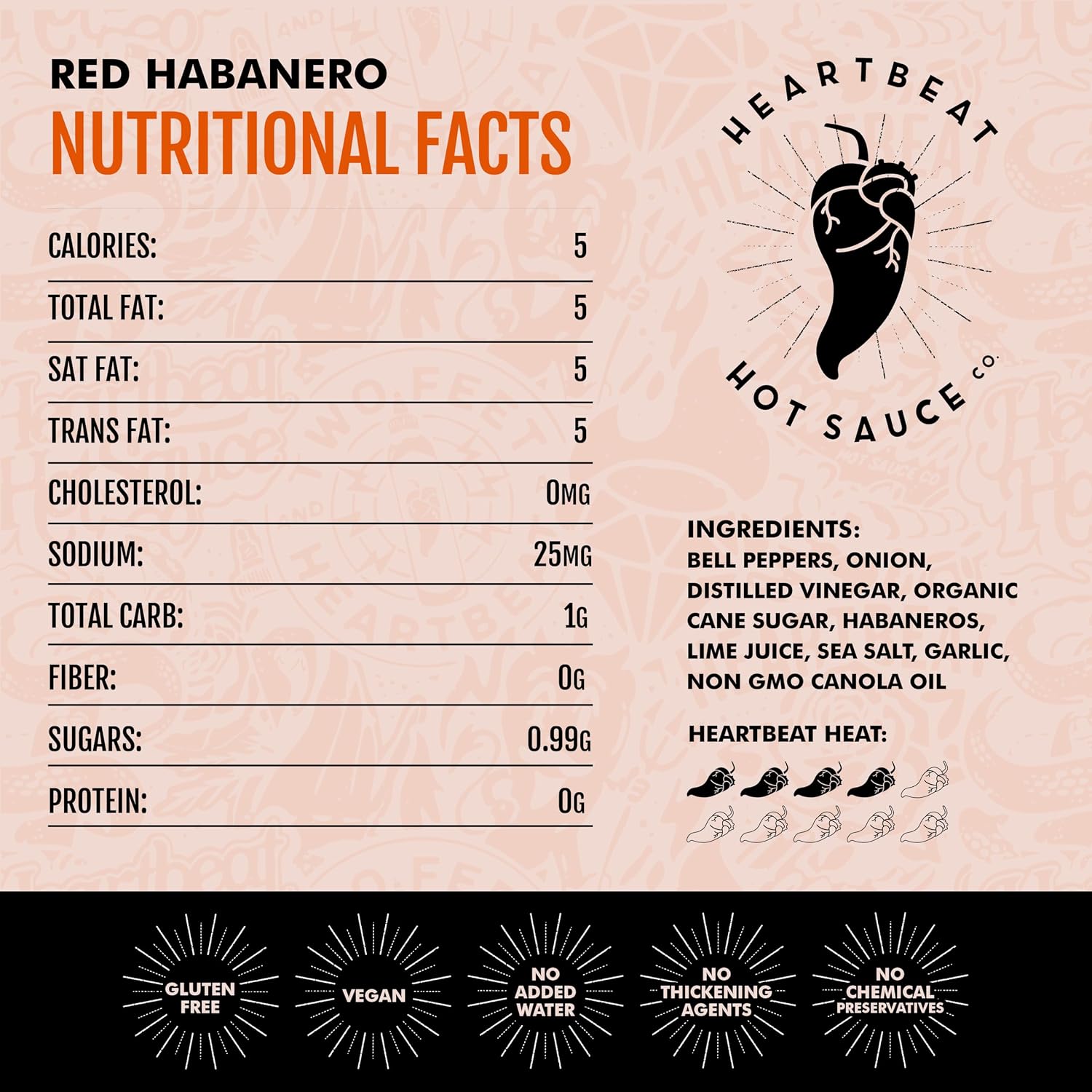
The Heartbeat Red Habanero is the founding product — the one with the longer buyer history and the more settled reputation. Across aggregated purchaser reviews compiled through May 2026, a consistent pattern emerges: people reach for it constantly and across many applications. This is the “everything sauce” bottle in Heartbeat’s lineup.
Flavor profile: Reviewers describe it as tangy-fruity with a clean habanero bite. The red habanero pepper is riper and marginally mellower in its raw fruit character than its orange counterpart, and the sauce consistently delivers that fruit note without the sweetness tipping into candy territory. There’s enough acidity to brighten a dish without the sauce reading as straight vinegar — which, as anyone who has waded through the commodity hot sauce aisle knows, is genuinely rare at this price point. Serious Eats, in their guidance on building a hot sauce pantry (Serious Eats, “How to Stock a Hot Sauce Pantry”), identifies exactly this quality — balanced acidity that integrates with food rather than overriding it — as the marker of a well-made all-purpose condiment.
Heat level: The Red Habanero lands in a range that most experienced hot sauce consumers would call medium-hot. Habaneros as a variety run roughly 100,000–350,000 Scoville Heat Units, the standardized scale used to measure capsaicin concentration. Smithsonian Magazine, in its science reporting on capsaicin measurement (Smithsonian Magazine, “The Science Behind the World’s Hottest Peppers”), notes that a jalapeño sits at approximately 2,500–8,000 Scoville units for comparison, placing habanero-range sauces at a genuinely significant step up for newcomers. In practice, reviewers describe the Red as warming without being punishing — manageable at most adult tables, though newcomers to habanero heat should approach with awareness.
The cap problem — and it’s real: The single structural complaint that surfaces consistently across reviews is the cap design. Reviewers report that it squirts unpredictably when you first break the seal or tilt the bottle carelessly. The fix that experienced owners have landed on: meter the sauce into a small dish before plating, or transfer the contents to a squeeze bottle with a controlled tip after opening. Not ideal for a premium product, but manageable once you anticipate it.
Best use cases per owners: Pizza and eggs come up most often in reviews, followed by tacos, grain bowls, and as a finishing drizzle on roasted proteins. Its versatility is the central selling point — reviewers reach for it the way you’d reach for a well-dialed all-purpose condiment.
Heartbeat
$14.99
In stock on Amazon
Check price on AmazonThe Pineapple Habanero: The Cult Bottle
If the Red is the workhorse, the Pineapple Habanero is the thoroughbred. The emotional register in reviews of this bottle is noticeably different. Phrases like “I hate myself for not buying more” and references to stock anxiety appear in multiple reviews — which is a specific kind of brand attachment driven not just by flavor preference but by scarcity worry. When buyers worry about a product disappearing, that signals something real about how the sauce lands with its audience.
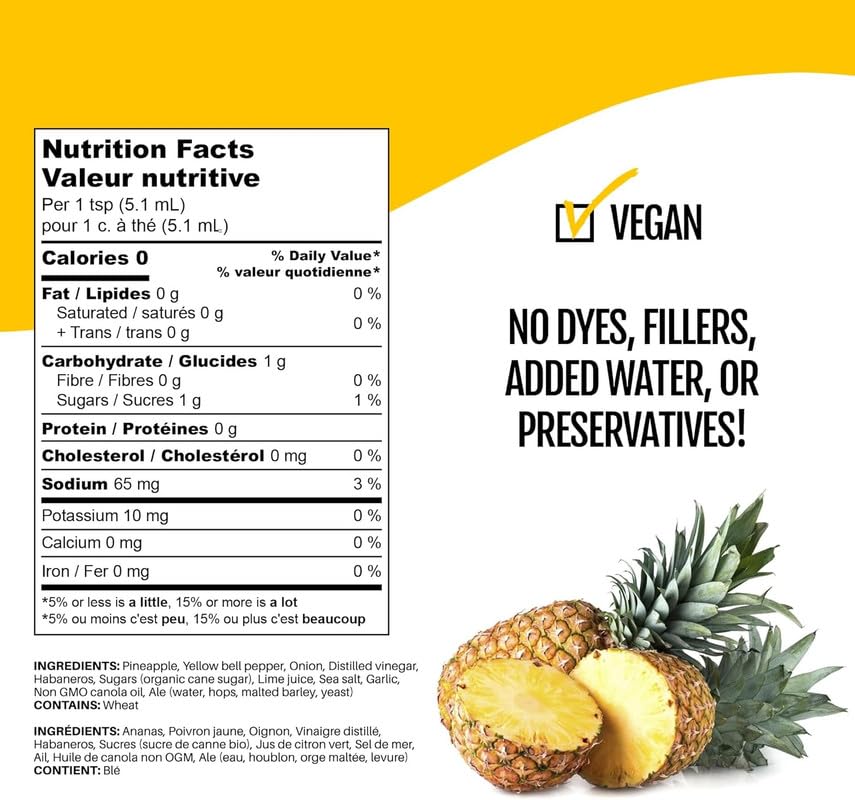
Flavor profile: The pineapple addition shifts the entire sauce character. Reviewers describe it as tropical-bright, with a more pronounced sweetness than the Red — but the habanero still anchors it, keeping it from reading like a fruit condiment that merely happens to have some heat. The interplay between the pineapple’s acidity and the pepper’s floral heat is what reviewers keep returning to. Multiple reviews use the word “complex” — unusual praise for a hot sauce, which is typically a one-note product. This profile places it squarely in conversation with what Marie Sharp’s Habanero Pepper Sauce does out of Belize: both lead with fruit and allow the habanero to be itself rather than functioning purely as a heat delivery mechanism.
Heat level and the sweetness trap: Here is where new buyers sometimes misread the product. The pineapple sweetness softens perceived heat on the front end, which leads some buyers to underestimate the sauce’s actual kick. Reviewers who came to Heartbeat through high-Scoville hot sauce culture occasionally note that the Pineapple Habanero doesn’t satisfy as a pure heat vehicle. But reviewers who use it as a food condiment consistently report that the heat is real and builds through the finish. This is not a mild sauce. It’s a sauce that doesn’t foreground the heat — which is a meaningful distinction.
Availability: Reviewers flag variable stock levels consistently. Whether that reflects seasonal fruit supply constraints, production volume decisions, or demand outpacing supply is not clear from public information — but the pattern is consistent enough that buying an extra bottle when you see it in stock is a reasonable practical decision.
Best use cases per owners: Grilled proteins — chicken thighs, pork shoulder, fish — are the consensus home for this sauce. It also appears frequently alongside roasted vegetables and as a finishing element on tacos built around pork or shrimp. Its sweetness makes it less versatile than the Red for egg-and-grain applications, but within its lane it earns stronger enthusiasm from its buyers.
Heartbeat
$14.99
In stock on Amazon
Check price on AmazonThe Combined-Pantry Case: Both Bottles Together
For cooks who find themselves reaching for a hot sauce daily across a range of applications, the most practical answer is simply: buy both. The Red Habanero handles the workhorse volume — eggs in the morning, pizza at night, anything where you want brightness without sweetness. The Pineapple Habanero handles the occasions where you want something more expressive — weekend grilling, a protein that wants a tropical counterpoint, a finishing touch that makes the dish genuinely more interesting.
The cost of running both bottles simultaneously is modest relative to the flexibility they provide. Serious Eats’ guidance on hot sauce pantry building (Serious Eats, “How to Stock a Hot Sauce Pantry”) supports a two-bottle approach as the functional minimum for households that cook across multiple cuisines — one neutral-to-tangy all-purpose sauce and one more expressive flavor-specific option. Heartbeat’s two habanero bottles map cleanly onto that structure. If availability of the Pineapple Habanero is uncertain in your market, the Red alone covers the essential bases until you can restock.
Heartbeat
$14.99
In stock on Amazon
Check price on AmazonSide-by-Side Summary
| Feature | Red Habanero | Pineapple Habanero |
|---|---|---|
| Flavor lead | Tangy, pepper-forward | Tropical-sweet, fruit-forward |
| Heat | Medium-hot; consistent | Medium-hot; front sweetness can surprise |
| Versatility | Very high — eggs, pizza, tacos | High — best with grilled proteins |
| Availability | Consistent | Variable; buy extra when in stock |
| Watch out for | Cap squirts; decant carefully | May not satisfy pure heat-seekers |
| Pantry role | Daily driver | Occasion-specific finisher |
How Heartbeat Fits Alongside Caribbean-Origin Sauces
This question matters most for the serious Caribbean pantry cook, and it deserves a direct answer.
Matouk’s Calypso Hot Sauce from Trinidad and Baron’s Hot Pepper Sauce from Barbados are island-made sauces with deep roots in Caribbean cooking tradition. They are built to be used inside dishes — marinades, stews, rice, pepper pot — and their flavor profiles are calibrated for that integration. Matouk’s, in particular, carries a mustard-and-fruit base that functions as both a cooking sauce and a table condiment, as documented in Matouk’s brand communications and product line materials. Baron’s similarly anchors its profile in the scotch bonnet tradition that defines Barbadian cooking, according to Baron’s Hot Sauce brand materials.
Heartbeat operates differently. Both bottles are designed primarily as finishing sauces — drizzled over completed dishes rather than cooked into them. The fruit-forward profiles that make them distinctive can get muddied by high heat or long cooking times. Reviewers don’t reach for Heartbeat when building a base for curry goat or oxtail. They reach for it when they want something bright on top of a finished plate.
For authentic Caribbean cooking from scratch, Matouk’s or Baron’s remain the workhorse pantry choices. Heartbeat earns a parallel slot — the finishing-drizzle bottle beside your plates, not inside your pot. A well-stocked Caribbean-influenced pantry has room for both categories doing different jobs at different moments in the cooking process.
Frequently Asked Questions
Is the Pineapple Habanero actually hot enough for someone who likes serious heat? It depends on your baseline. If habanero-range heat — roughly 100,000–350,000 Scoville Heat Units, per Smithsonian Magazine’s capsaicin reporting (Smithsonian Magazine, “The Science Behind the World’s Hottest Peppers”) — is your normal ceiling, this sauce will satisfy. If you are accustomed to significantly higher Scoville products, the pineapple’s softening effect on perceived front-end heat may leave you wanting more fire. The finish is real and builds, but patience is required.
How does the Red compare to sriracha in heat and flavor? They are in different categories entirely. Sriracha is garlic-forward, vinegar-heavy, and sits well below habanero-range heat. The Red Habanero has a more complex fruit-and-pepper character and considerably more kick. If sriracha is your daily driver and you are curious about stepping up, the Red is a real but manageable upgrade.
Does the cap on the Red really squirt uncontrollably, and is there a fix? Yes — this complaint appears across multiple independent reviews and appears to be a genuine design issue rather than isolated incidents. The fix most often cited: decant a small amount into a dish before plating rather than pouring directly at the table, or transfer the sauce to a squeeze bottle with a precision tip after opening.
How do Heartbeat sauces compare to Matouk’s or Baron’s for actual Caribbean cooking? They are complementary, not competitive. Matouk’s and Baron’s are integration sauces built for marinades, stews, and curry bases. Heartbeat is a finishing sauce optimized for brightness over a completed plate. A serious Caribbean pantry has room for both, doing different jobs at different stages of the meal.
The Decision Rule
If you want a versatile daily-driver hot sauce with a proven track record and consistent availability, the Heartbeat Red Habanero is your bottle. It is the one owners reach for across the widest range of applications, and its longer buyer history signals repeat-purchase durability.
If you want a more expressive, occasion-specific sauce with a tropical brightness that makes grilled proteins and roasted vegetables genuinely more exciting, the Heartbeat Pineapple Habanero is the choice. Buy an extra bottle when you see it in stock. The reviewers who didn’t regret it are the ones who stocked up.
If you are building a serious Caribbean pantry from scratch, start with the island-origin anchors — Matouk’s, Baron’s, or Marie Sharp’s for habanero-forward heat. Then add a Heartbeat bottle as your finishing-sauce slot. That is a pantry with depth, range, and the right tool for every moment between the pot and the plate.