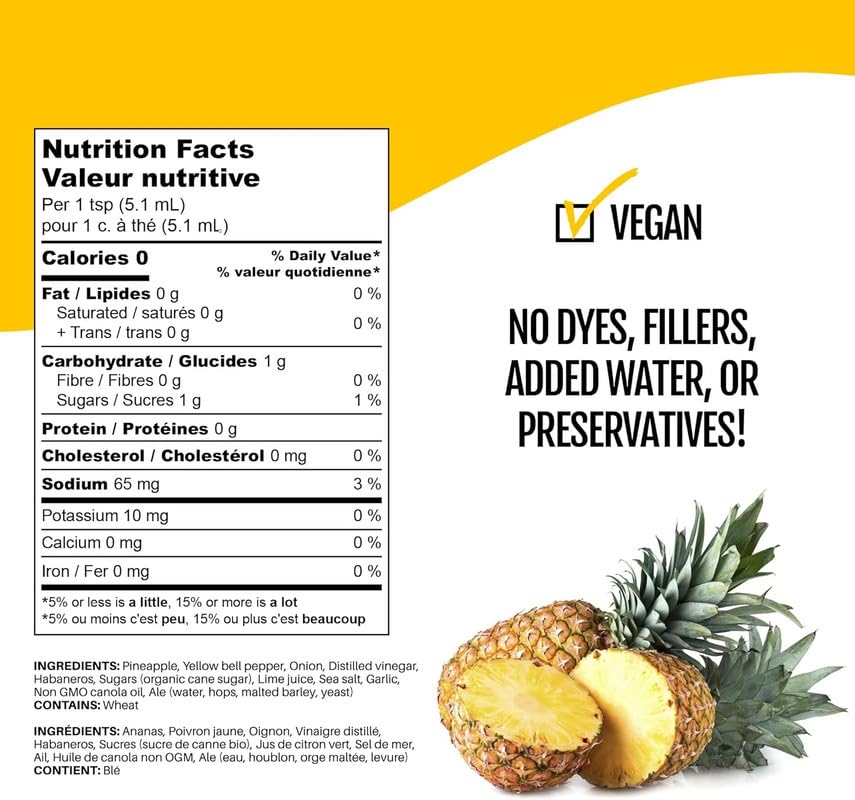
You know that feeling when you reach for the hot sauce and halfway through pouring you realize — too late — that this bottle is built for a dare, not a dinner plate? Habanero hot sauce (made from the habanero pepper, one of the most widely used hot peppers in the Caribbean, with a distinctly fruity aroma underneath its serious heat) is not a monolith. A single grocery shelf can hold bottles ranging from pleasantly tingly to genuinely dangerous, and the difference between them isn’t always obvious from the label. For anyone cooking Caribbean food seriously — jerk chicken, curry goat, pepper pot, stewed saltfish — getting that match right is the difference between a dish that sings and one that overwhelms every other flavor you spent an hour building. This guide maps the habanero heat spectrum from mild-end to scorching, names the bottles worth knowing at each tier, and gives you a clear decision rule for pairing the right sauce with the right dish.
| EDITOR'S PICK[Heartbeat Hot Sauce Co. | Pinea…](https://www.amazon.com/dp/B07XPD9B3C?tag=greenflower20-20) | Mid-tier[Queen Majesty Scotch Bonnet & G…](https://www.amazon.com/dp/B0716G5MBX?tag=greenflower20-20) | Budget pick[Smilin Island Sweet Samba Tropi…](https://www.amazon.com/dp/B01M2A4MR8?tag=greenflower20-20) | |
|---|---|---|---|
| Base Peppers | Pineapple Habanero | Scotch Bonnet, Habanero | Pineapple Mango Habanero |
| Size (oz) | 6 | 5 | 5 |
| Heat Level | — | — | Light Heat |
| Dietary | — | Vegan, Kosher, GF | — |
| Awards | — | Award Winning | — |
| Price | $14.99 | $14.99 | $11.99 |
| See on Amazon → | See on Amazon → | See on Amazon → |
Understanding the Habanero Heat Spectrum (and Why It’s Wider Than You Think)
The habanero pepper sits between roughly 100,000 and 350,000 Scoville Heat Units (SHUs — a standardized measure of a pepper’s capsaicin concentration, where a jalapeño runs about 5,000 SHUs for comparison). That’s a wide range on its own. But finished hot sauce formulations compress and stretch that range further depending on three variables:
Dilution ratio. A sauce that combines habanero mash with carrot purée, vinegar, and onion — like the classic Belizean construction — will land far gentler than a sauce that is mostly habanero concentrate with minimal buffer.
Fruit and acid balance. The habanero’s signature characteristic is a floral, apricot-adjacent fruitiness that precedes the heat. Sauces that lean into that fruit note (mango, papaya, tamarind bases) tend to register as bright and building rather than front-loaded and aggressive. Reviewers at Serious Eats consistently describe well-balanced habanero sauces as having a “delayed ignition” — the heat arrives 20–30 seconds after the flavor.
Sugar and pH. Higher sugar content (from fruit pulée or added cane sugar) slows capsaicin uptake on the palate. Taste Atlas notes that many Caribbean producers deliberately use this to create sauces that are technically hot but culinarily versatile — meant to be used as a condiment on the plate, not just a cooking additive.
What this means practically: two bottles both labeled “habanero hot sauce” can behave so differently at the table that they effectively belong to different product categories. The practitioner’s job is to read the ingredient list, not just the label.
The Four Tiers of Habanero Heat — and Which Dishes They Fit
Tier 1: Moderate (50,000–100,000 SHU range in finished sauce) — Family-Dinner Safe ✅
Lead bottle: Marie Sharp’s Mild Habanero Pepper Sauce (Belize, ~$10–15/bottle)
Marie Sharp’s is the reference point for this entire category. Produced in Dangriga, Belize since the early 1980s, the sauce leads with carrot and onion as a buffer base — this is not a stylistic accident. Per Taste Atlas’s profile of the brand, Marie Sharp deliberately engineered the recipe around culinary versatility, wanting a product that home cooks could use generously without heat fatigue. The Mild variant clocks in at an estimated 1,500–2,500 SHUs in finished form (well below the raw habanero’s floor), with the habanero contributing aroma and a gentle back-of-the-throat warmth rather than front-loaded fire.
Best dish pairings at this tier:
- Stewed saltfish and ackee — the saltfish (salt-preserved cod, rehydrated and sautéed) is already assertive; you want heat that complements rather than dominates
- Rice and peas (coconut-braised kidney beans and rice, a Sunday staple across Jamaica and Trinidad) — a few dashes at the table, not in the pot
- Fish escovitch marinade — the acidity in Marie Sharp’s integrates cleanly with vinegar-based escovitch brines
Decision rule: If the dish already carries a complex spice profile (allspice, thyme, scotch bonnet already in the recipe), stay in Tier 1. You’re adding dimension, not heat.
Tier 2: Medium-Hot (100,000–150,000 SHU range) — The Caribbean Cook’s Everyday Register 🔥
Lead bottle: Marie Sharp’s Original Habanero Pepper Sauce (~$10–15/bottle) Secondary: Matouk’s Calypso Sauce (Trinidad, ~$8–12/bottle)
This is the workhorse tier — where most experienced Caribbean home cooks live. Marie Sharp’s Original steps up from the Mild by reducing the carrot buffer and letting the habanero sit closer to the front of the flavor profile. Reviewers across aggregated platforms consistently describe it as “the sauce that changed how they think about hot sauce” — a product where the fruit note and the heat arrive together rather than sequentially.
Matouk’s Calypso line approaches the same tier from a different angle. Trinidad-produced and widely cited in Saveur’s overview of Caribbean pantry essentials, Matouk’s uses a mustard and pepper base that adds a pungency absent from the Belizean carrot-forward style. The heat profile is sharper and more immediate; the finish is shorter. These are meaningfully different tools despite similar SHU estimates.
Best dish pairings at this tier:
- Curry goat — the sauce goes into the curry base during cooking, where long braise time mellows the volatile heat compounds while preserving the fruity aromatics
- Jerk chicken (as a table condiment, not the dry rub) — Walkerswood Traditional Jerk Seasoning already contains scotch bonnet; a Tier 2 sauce alongside it is additive, not redundant, because the flavor profiles differ
- Pelau (one-pot rice, pigeon peas, and meat, a Trinidadian standard) — Matouk’s Calypso in particular integrates well because its mustard base echoes the savory depth of the caramelized sugar in pelau
Decision rule: If you’re cooking a one-pot dish with 45+ minutes of cook time, Tier 2 is your cooking sauce. The heat cooks down; the flavor stays.
Tier 3: Hot (150,000–250,000 SHU range) — Confident Heat, Deliberate Use 🔥🔥
Lead bottle: Marie Sharp’s Fiery Hot Habanero Pepper Sauce (~$10–15/bottle) Secondary: Walkerswood Scotch Bonnet Pepper Sauce (Jamaica, ~$8–12/bottle)
A brief but important note on taxonomy: the scotch bonnet pepper (Capsicum chinense, same species as the habanero, grown predominantly in Jamaica and the wider English-speaking Caribbean) is functionally the Caribbean habanero variant. Its SHU range overlaps almost entirely — 100,000–350,000 — and its flavor profile is similarly fruity, though many Caribbean cooks describe the scotch bonnet as carrying a slightly sweeter, tomato-adjacent note compared to the habanero’s more citrus-forward character. Per the Jamaica Observer’s coverage of Walkerswood’s production history, the company has been processing scotch bonnets grown in the Walkerswood community of St. Ann parish, Jamaica since the 1970s — provenance that matters to the audience who distinguishes original from facsimile.
At this tier, dosing shifts from “pour” to “spoon.” Epicurious’s editorial guidance on incorporating heat into cooking specifically flags this tier as the point where capsaicin can suppress perception of other flavors if overused — meaning a tablespoon in a pot of callaloo (braised leafy greens — note: in Jamaica this is typically amaranth leaves; in Trinidad, dasheen bush leaves; the word means different things in different islands) will read as heat; a quarter-teaspoon reads as seasoning.
Best dish pairings at this tier:
- Oxtail stew — the connective-tissue richness of long-braised oxtail can absorb and balance Tier 3 heat; fat suppresses capsaicin perception
- Jerk marinade builder — adding Walkerswood Scotch Bonnet Pepper Sauce to a homemade jerk wet marinade alongside the dry seasoning creates layered scotch bonnet depth
- Pepper sauce condiment on the side of any fried fish — the “dip and eat” model, where the diner controls their own exposure
Decision rule: If the dish is fat-rich (braised meat, fried fish, coconut-milk curry), Tier 3 can work both in-pot and table-side. If the dish is lean or delicate (steamed fish, breadfruit salad), stay at Tier 2 or below.
Tier 4: Extra Hot / Fire-Breathing (250,000+ SHU range) — Specialist Territory 🔥🔥🔥
Lead bottle: Marie Sharp’s Beware Smokin’ Marie Habanero Pepper Sauce (~$12–16/bottle) Secondary: Small-batch scotch bonnet concentrate sauces (variable, typically $12–20/bottle in specialty retail)
This tier is not a cooking ingredient for most applications — it is a condiment for people who have built tolerance and know exactly what they’re doing. Across aggregated reviews of Marie Sharp’s Beware line, the consistent note is that the fruit character is still present and recognizable, but it arrives behind a wall of heat that most casual users find overwhelming on first encounter. This is a sauce for dropping into pepper sauce competitions, doctoring a bottle of Tier 2 to custom heat, or the specific ritual of eating pepper pot (a deeply spiced Guyanese/Jamaican stew with cassareep — cassareep is a thick, dark syrup made from cassava root, used as both a preservative and a spice base; its bitterness and complexity anchor dishes with very high heat well) where the dish’s own bitterness can counterbalance the pepper’s intensity.
Decision rule: If you are not already cooking with Tier 3 regularly, this tier is not a pantry staple — it is an occasional purchase. Buy one bottle, use it to blend down into your Tier 2 bottles when you want to step up a specific dish.
By the Numbers: Quick Reference Heat Tier Table
| Tier | Approx. SHU (finished sauce) | Lead Bottle | Best Application |
|---|---|---|---|
| 1 – Moderate | 1,500–50,000 | Marie Sharp’s Mild | Table condiment, delicate dishes |
| 2 – Medium-Hot | 50,000–150,000 | Marie Sharp’s Original / Matouk’s Calypso | Everyday cooking, braises |
| 3 – Hot | 150,000–250,000 | Marie Sharp’s Fiery / Walkerswood Scotch Bonnet | Fat-rich dishes, jerk applications |
| 4 – Extra Hot | 250,000+ | Marie Sharp’s Beware | Specialist use, blending tool |
The Final Decision Rule: Match Heat Architecture to Dish Architecture
Here is the framework that holds across every pairing decision in this guide:
If the dish is fat-rich and long-cooked (oxtail, curry goat, stew chicken), go one tier hotter than you think — fat and time both suppress capsaicin. If the dish is acidic and quick-cooked (escovitch, ceviche-style preparations), go one tier cooler — acid amplifies heat perception. If the dish already contains scotch bonnet or wiri wiri pepper in the recipe, stay at Tier 1 at the table and let the base heat speak.
The practitioners who get this right consistently are not the ones buying the hottest bottle on the shelf. They are the ones who have two or three tiers in the pantry simultaneously and reach for the right one the same way they reach for the right vinegar — by understanding what role it plays in the dish, not just how much heat they can take. Build the spectrum, use it deliberately, and the habanero stops being a risk and starts being a precision tool.