You know that feeling when you’re standing in the Caribbean grocery aisle, staring at four bottles with almost identical orange labels, and you genuinely can’t tell which one belongs in your jerk marinade versus which one is going to make your grandmother push her plate away? That’s the Grace scotch bonnet problem — and it’s worth solving properly.
Grace Foods is a Jamaican company (headquartered in Kingston, operating under the Grace Kennedy Group) that has been making Caribbean pantry staples since 1922. Their scotch bonnet sauce line is one of the most widely distributed Jamaican condiment families in the diaspora. The scotch bonnet pepper itself — a small, wrinkled, lantern-shaped chili native to the Caribbean — runs between 100,000 and 350,000 Scoville Heat Units (SHUs, the standard measure of pepper heat; for reference, a jalapeño sits around 8,000 SHUs). That range is enormous, and it’s exactly why buying the wrong Grace bottle for the wrong dish is such an easy mistake. This guide breaks down the collection, names the tradeoffs, and tells you which bottle earns which shelf position in a working Caribbean pantry.
What You’re Actually Buying When You Buy Grace
Before the product-by-product breakdown, a framing note that experienced Caribbean pantry builders often skip past too quickly: Grace’s scotch bonnet sauces are not interchangeable heat vehicles. They are distinct condiments with different flavor architectures, different use cases, and — critically — different heat ceilings.
The Jamaica Observer’s food coverage has repeatedly noted that Jamaican condiment culture distinguishes sharply between a table sauce (poured on after cooking, expected to be bright and immediate) and a cooking sauce (added during preparation, expected to deepen and mellow into the dish). Grace’s lineup spans both categories, but the labeling doesn’t always telegraph which is which. That’s the first piece of orientation every intermediate buyer needs.
The Spruce Eats’ explainer on scotch bonnet peppers notes that the varietal is prized not just for heat but for a distinctive fruity, almost floral quality — a stone-fruit and tropical undertone that habaneros (the closest widely available substitute) approximate but don’t replicate. Grace’s processing choices — vinegar ratios, whether mustard is added, whether papaya or carrot acts as a base — either amplify or mute that fruitiness. Once you’re tracking for that, the bottles start to feel very different in your hand.
The Core Grace Scotch Bonnet Line: A Honest Comparison
Grace Hot Pepper Sauce (the original)
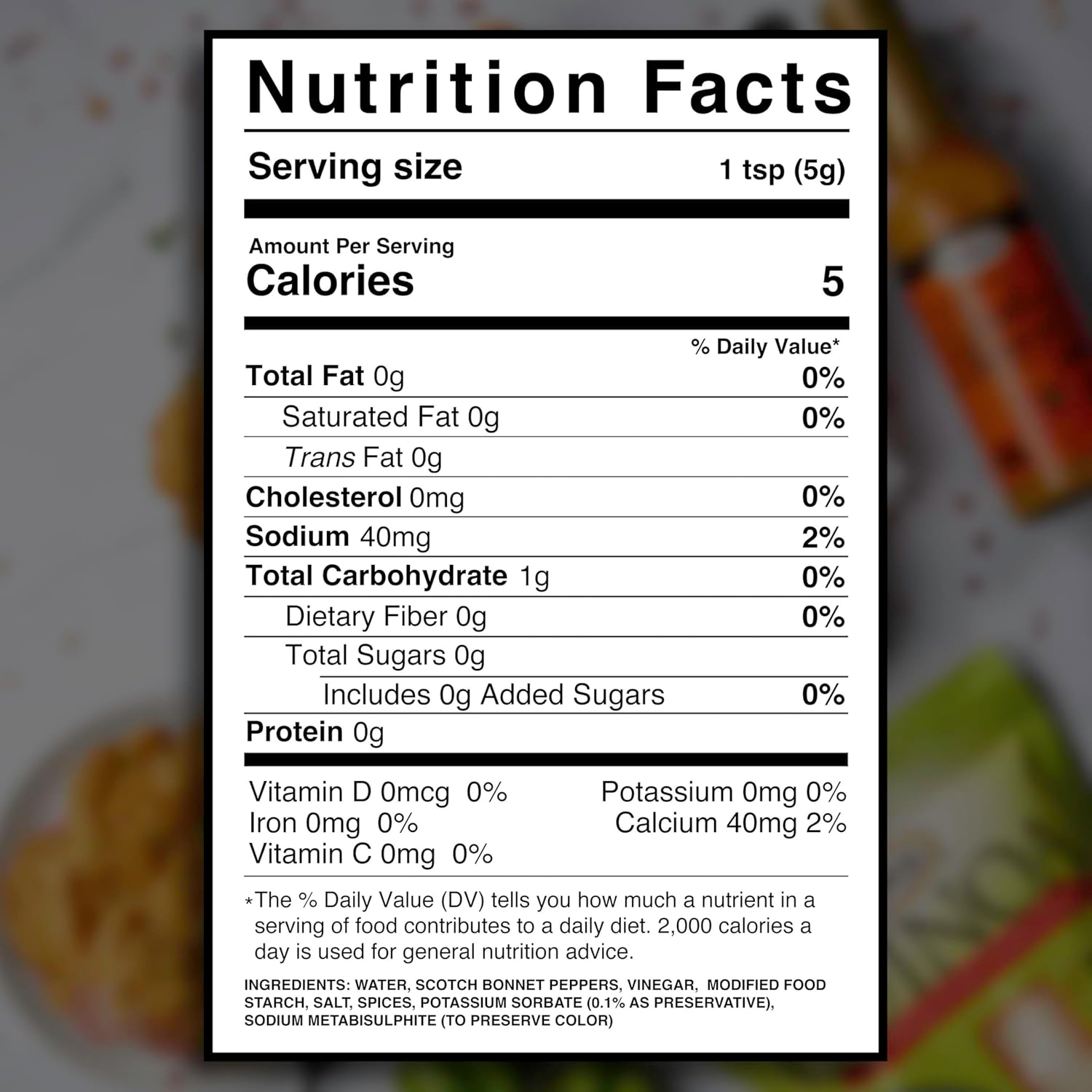
This is the entry point and the workhorse. At roughly $3–5 for a 4.5 oz bottle, it’s one of the most affordable authentic Jamaican pepper sauces widely available in North American Caribbean grocery retailers and specialty importers. The ingredient backbone is scotch bonnet peppers, vinegar, salt, and spices — minimal processing, forward heat, thin enough to pour freely.
Taste Atlas categorizes this style as a classic Jamaican hot sauce profile: vinegar-forward, clean heat that hits fast and exits relatively quickly, without a long burn. That short heat duration is actually a feature for table use — you can dose it generously on rice and peas or oxtail without committing every bite to an escalating burn situation.
Who this is for: Everyday use, high-volume cooking, anyone building a Jamaican pantry from scratch who needs one reliable bottle. This is also the right answer for heat-curious newcomers who are serious about trying authentic flavor but haven’t calibrated their tolerance yet — start here before moving up the line.
Heat designation: Family-dinner-safe with moderate dosing. Fire-breathing if used as a marinade base at full concentration.
The tradeoff: The thin viscosity means it doesn’t cling to protein — you won’t get sauce coverage on a jerk chicken thigh the way you would with a thicker, scotch bonnet-forward paste. It seasons; it doesn’t coat.
Grace Scotch Bonnet Pepper Sauce
This is where the line takes a step up in both price (~$5–7 per bottle) and flavor complexity. The formulation is noticeably thicker than the original, and reviewers across specialty food forums consistently note a more pronounced scotch bonnet fruitiness — that tropical, almost apricot-adjacent quality that makes the pepper distinctive beyond its heat.
The mustard content in this variant (Grace uses a small amount of mustard in several of their sauces) adds a subtle sharpness that bridges the scotch bonnet into vinaigrette territory. That makes it one of the more versatile sauces in the line for cooked applications: it performs in escovitch fish (a Jamaican preparation where fried fish is pickled in a spiced vinegar marinade with vegetables), mixed into a sofrito-style base, or whisked into a pepper sauce for ackee and saltfish.
Who this is for: The intermediate cook who wants to actually taste the scotch bonnet rather than just feel it. If you’ve been using the original for six months and want to graduate your palate, this is the move.
Heat designation: Solidly mid-range. Serious Eats’ hot sauce coverage consistently frames this tier of Jamaican scotch bonnet sauces as “approachable heat with genuine flavor complexity” — meaning the heat is real but not a distraction from the dish.
The tradeoff: The additional complexity costs you versatility in simple applications. This sauce can overpower a mild dish in a way the original doesn’t.
Grace Scotch Bonnet Hot Pepper Sauce (the catering / larger format)
Available in larger formats (typically 12 oz to 1-gallon institutional sizes), this is functionally the same profile as the core Scotch Bonnet Pepper Sauce scaled for volume cooking. The price-per-ounce math here is the clearest in the lineup:
By the numbers:
- Grace Hot Pepper Sauce (4.5 oz): ~$0.78–$1.11/oz
- Grace Scotch Bonnet Pepper Sauce (5 oz): ~$1.00–$1.40/oz
- Grace Scotch Bonnet large format (12 oz): ~$0.58–$0.83/oz
The large format wins on cost-per-ounce by a meaningful margin if you’re cooking for a household that goes through a bottle every two to three weeks — which any active Caribbean kitchen doing weekend jerk, weeknight rice dishes, and Sunday soup will hit comfortably.
The tradeoff: Shelf life management. Once opened, the large format requires refrigeration and consistent use to avoid quality degradation. If you’re not going through sauce at volume, the smaller bottles are the smarter buy.
Where Grace Sits Against the Wider Jamaican Pantry
Here’s the decision frame that intermediate buyers often need stated explicitly: Grace is not competing with Walkerswood or Marie Sharp’s. They occupy different pantry positions.
Walkerswood Traditional Jerk Seasoning (paste format, made in St. Ann, Jamaica) is a marinade and rub base — it’s not a table sauce and it’s not a cooking liquid. Marie Sharp’s (made in Belize, habanero-forward rather than scotch bonnet-forward) is a premium table sauce with a distinct Central American flavor profile. Both of those are legitimate pantry investments in the $10–20 range. They don’t replace Grace; they extend it.
The Jamaica Observer’s food coverage has described Grace as “the everyday anchor of the Jamaican kitchen” — the bottle that’s always present, always in use, while specialty sauces rotate in for specific applications. That’s the right mental model. You’re not choosing between Grace and Walkerswood. You’re figuring out which Grace bottle earns the permanent counter position and which specialty sauces earn the refrigerator door.
A well-built intermediate Jamaican pantry, based on aggregate guidance from sources including Saveur’s Caribbean food coverage and community-level practitioner guidance from the Jamaican diaspora food community, looks something like this:
- Grace Hot Pepper Sauce — everyday table sauce, high-frequency use
- Grace Scotch Bonnet Pepper Sauce — cooked applications, dishes where the pepper flavor matters as much as the heat
- Walkerswood Traditional Jerk Seasoning — marinade and rub work
- Marie Sharp’s Habanero or a small-batch scotch bonnet sauce — premium table application, gifting, tasting
That’s a $35–55 pantry foundation covering 90% of Jamaican cooking scenarios.
Heat Literacy and Family-Dinner Planning
The single most common mis-buy in the Grace line is underestimating the ceiling. Home cooks new to scotch bonnet heat — even experienced cooks who know jalapeños and chipotles well — consistently report being surprised by the gap between “I can handle jalapeños” and “I used Grace scotch bonnet as a liberal pour.”
Taste Atlas notes the scotch bonnet’s Scoville range (100,000–350,000 SHU) puts it in the same tier as a standard habanero but with the additional volatility of significant varietal and harvest variation. That means even within a single product line, heat can shift batch to batch. The practical implication: always taste a new bottle before you pour liberally into a dish for guests.
A rough field calibration that practitioners find useful:
- 1 teaspoon of Grace Hot Pepper Sauce in a pot serving 4: perceptible heat, family-dinner-safe for most adults
- 1 tablespoon in the same pot: moderate-to-high heat, consult your table before committing
- Grace Scotch Bonnet Pepper Sauce at the same quantities: reduce by roughly 30% on first use with a new bottle
Building the Collection: If X, Then Y
If you’re stocking a Jamaican pantry from zero and want one bottle: Grace Hot Pepper Sauce. Lowest price point, highest versatility, genuine flavor, lowest risk of a mis-buy.
If you’re an intermediate cook who already has the original and cooks Jamaican food at least weekly: add Grace Scotch Bonnet Pepper Sauce as your cooking sauce and reserve the original for the table. The flavor differentiation is worth the $2–3 price difference per bottle.
If you’re cooking at volume — weekend jerk sessions, catering for a family gathering, batch cooking for meal prep: the large-format Grace scotch bonnet is the cost-efficient move. Run the per-ounce math before you buy; at current 2026 diaspora grocery pricing, the 12 oz format typically delivers 25–35% savings over the equivalent volume in small bottles.
If you’re assembling a Caribbean pantry gift set in the $60–120 range: Grace serves as the accessible, high-use anchor. Pair it with a Walkerswood catering jar, a bottle of Marie Sharp’s, and a specialty small-batch scotch bonnet sauce from a Jamaican or diaspora producer. That combination tells a coherent story — everyday workhorse alongside artisan expressions of the same flavor tradition — and gives the recipient a full range of heat and use-case coverage.
If you’re heat-calibrating for a mixed household: start with Grace Hot Pepper Sauce only. Build tolerance deliberately. The scotch bonnet’s heat is real and the fruitiness that makes it irreplaceable in Jamaican cooking also makes it easy to overuse when you’re not yet calibrated to its ceiling.
The Grace scotch bonnet line isn’t the most glamorous section of the Caribbean pantry, but it may be the most consequential. Get these bottles right, and the rest of your pantry builds around them with a logic that starts to feel obvious — which is exactly what a foundational ingredient is supposed to do.