You know that feeling when you reach for a hot sauce and get pure vinegar with just a whisper of pepper flavor buried underneath? That’s the commodity-sauce trap — and it’s exactly what the fruit-forward habanero category was built to escape. A fruit-forward hot sauce is one where real fruit (pineapple, papaya, mango) leads the ingredient list and the flavor, with the heat of the habanero pepper arriving as a partner rather than the whole point. Habanero (hah-bah-NAIR-oh) is a small, lantern-shaped pepper native to the Caribbean and the Yucatán, with a Scoville heat rating — the standardized scale measuring capsaicin concentration — that typically lands between 100,000 and 350,000 units. For context, a jalapeño tops out around 8,000 Scoville units. These three sauces — Heartbeat Pineapple Habanero, Baron West Indian Hot Sauce from St. Lucia, and Smilin Island Sweet Samba — all work within that fruity-meets-fiery framework, but they make very different tradeoffs. This guide breaks down exactly what each one is optimized for, who buys it, and how to decide which belongs in your rotation.
| EDITOR'S PICKBaron West Indian Hot Sauce - 2… | Mid-tierSmilin Island Sweet Samba Tropi… | Budget pickBaron West Indian Hot Sauce (39… | |
|---|---|---|---|
| Volume | 28 fl oz | 5 fl oz | 14 oz |
| Fruit in sauce | — | Pineapple; Mango | — |
| Heat level stated | — | Light | — |
| Habanero listed | — | ✓ | — |
| Use case stated | — | Dipping; Marinades; Cooking | — |
| Price | $19.97 | $11.99 | $11.99 |
| See on Amazon → | See on Amazon → | See on Amazon → |
What Separates These Three Sauces Before You Open a Bottle
The single most useful thing you can do when comparing artisan hot sauces is read the ingredient list in order. Ingredient lists are required by law to run highest-quantity-first in both the US and Canada, so the first ingredient tells you what the sauce is, not just what it contains.
Serious Eats, in their guide “How to Read a Hot Sauce Label,” identifies this ordering detail as the fastest way to distinguish a “fruit-flavored” sauce (fruit extract added to a vinegar base) from a genuinely fruit-forward sauce (fruit as the primary structural ingredient). It matters for flavor, viscosity, and how the sauce behaves when heat is applied.
Here’s a quick orientation before we go deeper:
| Sauce | Lead Ingredient | Heat Lane | Primary Use Signal |
|---|---|---|---|
| Heartbeat Pineapple Habanero | Pineapple | Mild–medium | Table sauce, wings, eggs |
| Baron West Indian Hot Sauce | Peppers + mustard | Hot–nuclear | Condiment, cooking addition |
| Smilin Island Sweet Samba | Fruit blend | Mild | Table sauce, marinade base |
The Three Sauces, Compared in Depth
Heartbeat Pineapple Habanero: Fruit First, Heat Second
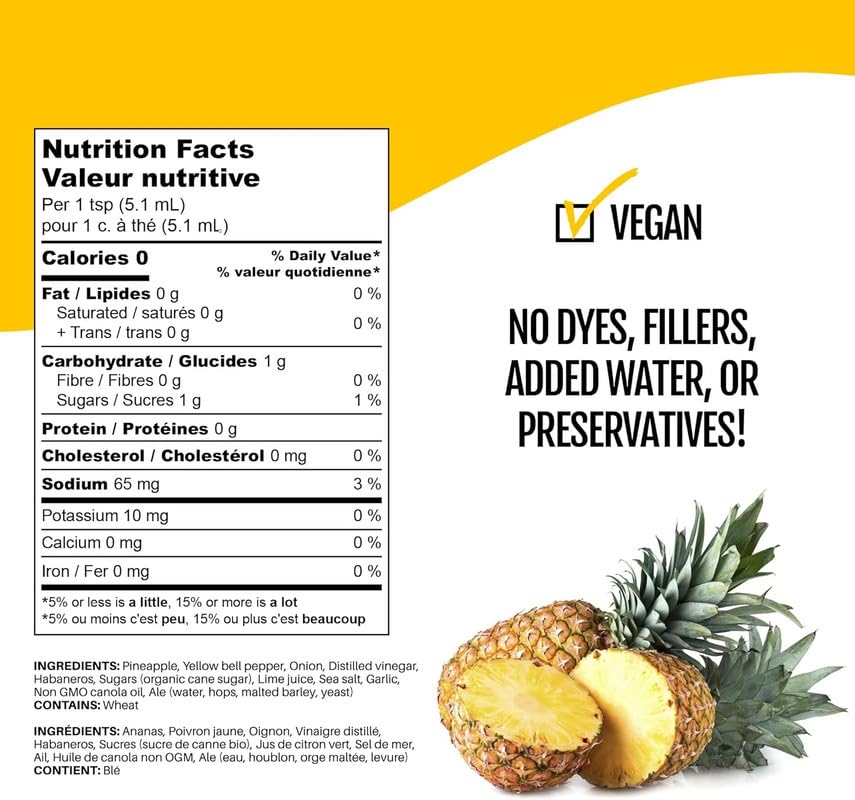
Heartbeat is a Canadian brand producing small-batch sauces with a clear philosophy: fruit first, vinegar later. On the Pineapple Habanero, pineapple appears first on the ingredient list and vinegar falls fourth — a meaningful signal that this is a sauce built around flavor rather than acidic preservation and heat delivery alone.
Food52, in their feature “Fruit-Forward Hot Sauces Are Having a Moment,” highlights this inversion of the standard commodity formula as the reason sauces in this category read as genuinely complex rather than merely spicy. The result is a sauce that leads with bright, tropical pineapple sweetness before the habanero warmth arrives.
The heat question that trips up first-time buyers: Is Heartbeat Pineapple Habanero actually mild? The honest answer is: it’s mild up front, but it builds. Reviewers consistently describe what food writers call a “slow bloom” — the initial bite is fruit-sweet with almost no burn, then the heat develops over 20–30 seconds and lingers gently. It qualifies comfortably as family-dinner-safe for most palates, but people who expect zero heat because it tastes like pineapple will get surprised. That deception is part of the design.
The Red Habanero variant occupies meaningfully different territory. Where the Pineapple version is bright and tropical, the Red Habanero is darker, thicker, and more viscous — closer to a condiment that clings to food than one that drizzles. Owners report using it on pizza, tacos, chorizo and eggs, and wings. The viscosity makes it a better coat-and-cling sauce, while the Pineapple version is more of a finish-and-drizzle tool. The Red Habanero also registers as notably hotter — the fruit buffer is less pronounced without pineapple sweetness to blunt the capsaicin. Think of it as a step up in heat and body, not just a flavor variant.
If X, then Y: If you’re building a starter pantry and want one sauce that works on eggs in the morning and grilled fish at dinner without demanding heat tolerance from your table, Heartbeat Pineapple Habanero is the correct choice. If you want that same brand at higher heat with better cling for proteins, the Red Habanero earns its place alongside it.
Smilin
$11.99
In stock on Amazon
Check price on AmazonBaron West Indian Hot Sauce: The St. Lucia Sleeper with a Mustard Base
Baron generates the most emotionally intense reviews in this comparison. Multiple owners describe the same pattern: they discovered it while traveling in St. Lucia or the wider Caribbean, had the sauce once, and then spent real effort tracking it down afterward. Saveur, in “The Caribbean Hot Sauce Canon,” identifies mustard-based sauces from the Eastern Caribbean as a distinct and historically rooted tradition — and Baron is one of the most widely available representatives of that style.
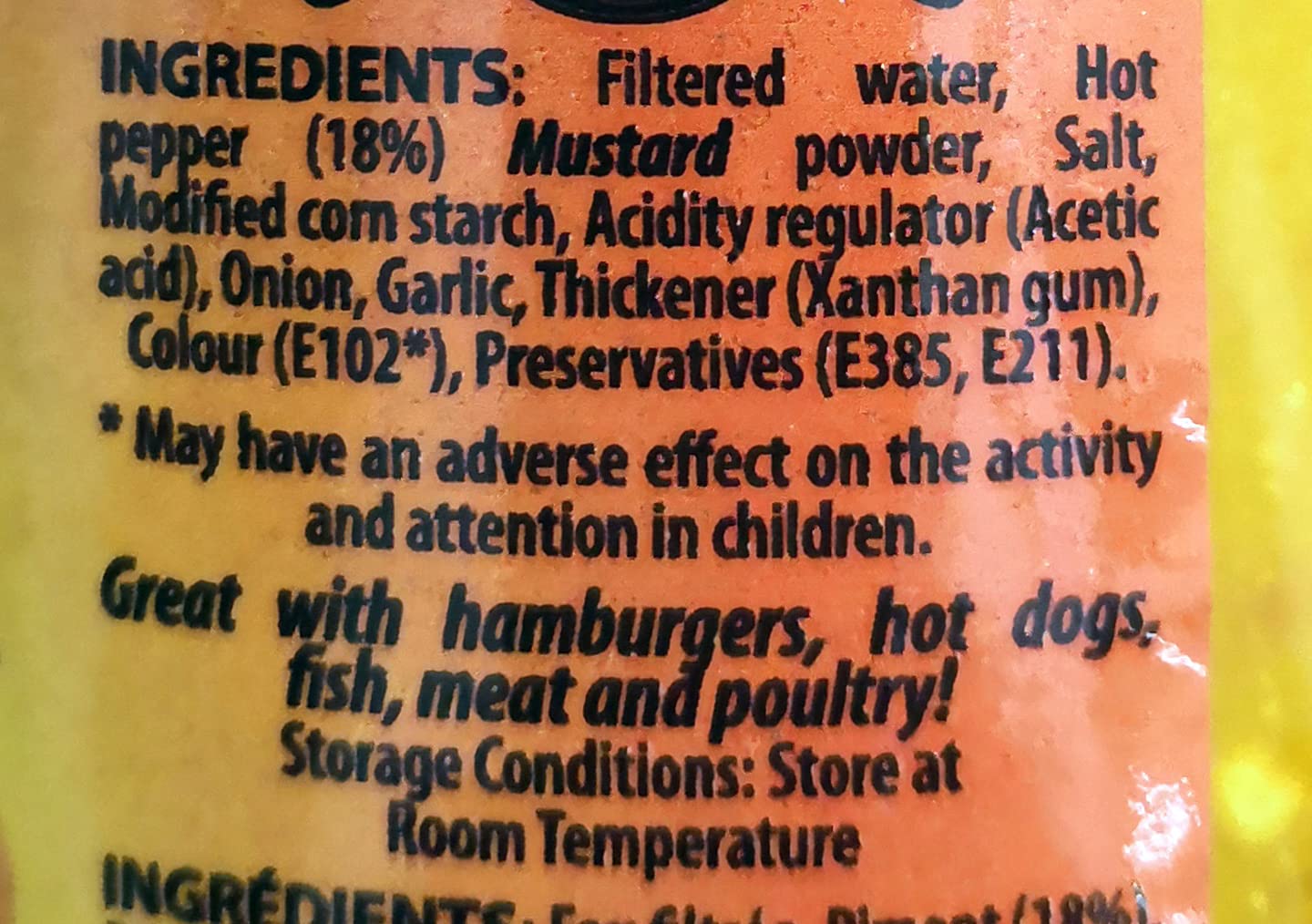
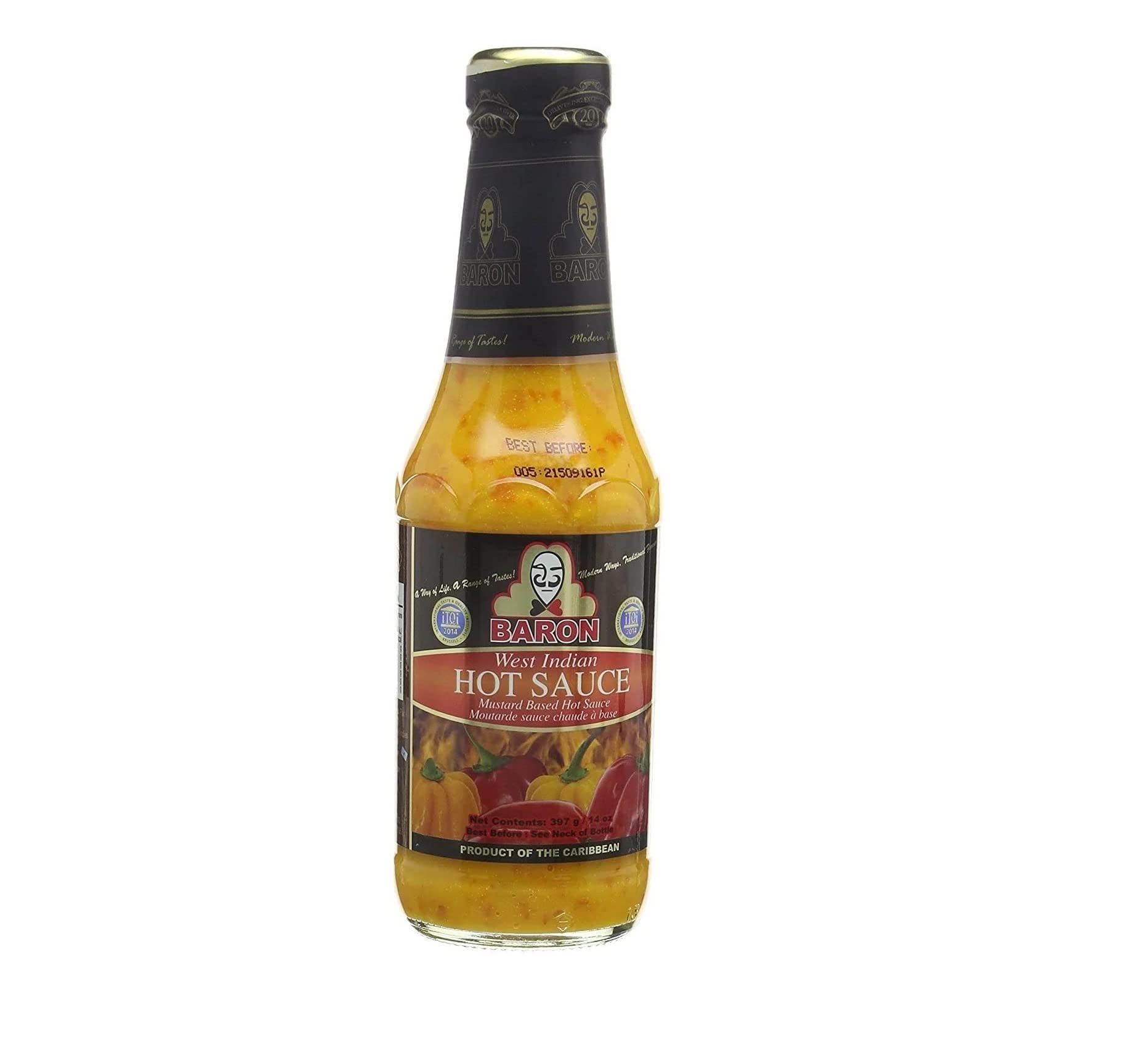
Taste Atlas, in their Baron West Indian Hot Sauce entry, categorizes it as a St. Lucian condiment staple with a complex ingredient profile that includes mustard alongside fruit and hot peppers. That mustard base is not decorative. Reviewers describe the flavor sequence as: fruity sweetness first, then a savory mustard middle, then genuine nuclear heat at the back. Baron runs hot — a fire-breathing designation applies — with the fruit and mustard acting as flavor scaffolding around heat that accumulates meaningfully. This is not a pour-freely family-dinner-safe sauce. It rewards restraint.
The mustard base changes how you use it. As a table condiment, Baron works like a Caribbean cousin of a Dijon-fruit glaze — it coats food with a savory-sweet-hot profile that’s distinctly unlike any pepper-and-vinegar sauce. In cooking, the mustard base means you need to account for it as a flavor variable, not just a heat source. It enriches braises and marinades with body and a savory depth that pure pepper sauces don’t deliver. Owners who use it in cooking consistently note it behaves more like a wet spice paste than a finishing sauce — add it early, and give it time to bloom in fat or liquid.
Is Baron sweet or savory? The answer is both, in sequence. Epicurious, in their “Hot Sauce Buying Guide: Reading Heat Levels,” notes that mustard-based Caribbean sauces tend to read as savory-first to palates accustomed to vinegar-and-pepper American hot sauces, while tasting sweeter relative to pure pepper mash. Baron lands squarely in that paradox: savory against a spicy backdrop, sweet against a savory backdrop. The read is context-dependent.
If X, then Y: If you have heat tolerance above a 7 out of 10, you appreciate complex condiments rather than single-note heat, and you want a sauce that earns its place in cooking as well as at the table, Baron is your priority purchase. If you’re heat-sensitive or shopping for a mixed-tolerance household, bookmark it for later and start with Heartbeat.
Baron
$19.97
In stock on Amazon
Check price on AmazonSmilin Island Sweet Samba: The Gentle Gateway for Fruit-First Flavor
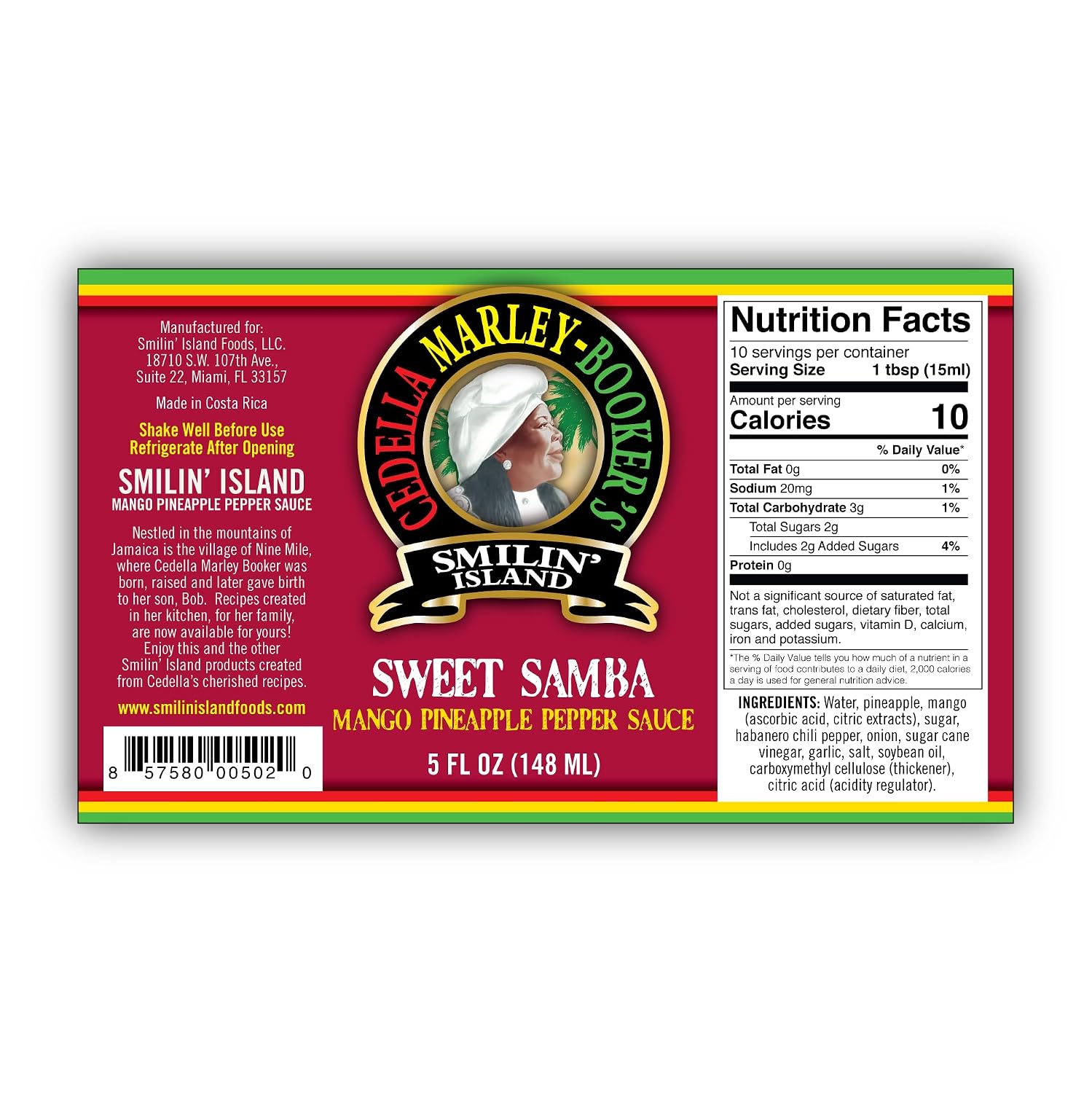
Smilin Island occupies the lightest-heat lane of this comparison, and it earns that position without apology. Sweet Samba is designed to deliver Caribbean fruit-and-pepper flavor to people who want the character of habanero — the floral, slightly apricot-adjacent fruitiness of the pepper — without the physiological consequence.
The use pattern reported by owners is revealing: reviewers document using Sweet Samba on mac and cheese, omelets, and sautéed vegetables in the same week. That’s an unusually diverse deployment for a hot sauce. Most hot sauces self-select for proteins and fried foods. The fact that Sweet Samba lands on mac and cheese and vegetables suggests its flavor profile is gentle enough to complement rather than dominate, and that its sweetness reads as an enhancer rather than a contrast element.
Can Sweet Samba function as a marinade base? Based on owner reports and the sauce’s ingredient structure — fruit-forward, moderate acidity, relatively low heat — yes, and arguably better than the other two sauces in this comparison. A marinade built on Sweet Samba gives you fruit enzymes for tenderizing, controlled heat that won’t overwhelm after extended contact time, and sweetness that caramelizes well under dry heat. Reviewers who use it as a marinade note it works particularly well on chicken and shrimp. Use it straight as a thin marinade, or thin it further with citrus juice for fish.
As a table sauce, it functions in the family-dinner-safe lane for essentially all palates, including those with low heat tolerance and anyone who typically avoids hot sauce altogether. The tradeoff is that heat-seekers will find it underwhelming — this is a mild-and-flavorful sauce by design, not one with a slow reveal.
If X, then Y: If you’re introducing Caribbean flavor profiles to someone who doesn’t eat heat, or building a marinade-forward kitchen routine, Sweet Samba belongs in your pantry. If you’re already comfortable with habanero heat, it’s a valid addition for specific use cases but won’t replace a higher-heat primary sauce.
Baron
$11.99
In stock on Amazon
Check price on AmazonWhich Sauce Works Best on Jerk Chicken?
This question crystallizes the tradeoffs most clearly.
Jerk chicken already contains a complex spice profile — allspice, scotch bonnet (a habanero relative), thyme, and aromatics — so a finishing sauce needs to complement rather than compete. Here’s the honest breakdown:
- Baron West Indian Hot Sauce is the most natural pairing if you want heat-on-heat with savory complexity. The mustard base ties into the allspice and thyme notes in jerk seasoning rather than fighting them. Use sparingly — the heat stacks.
- Heartbeat Pineapple Habanero offers a bright counterpoint: the pineapple acidity cuts through jerk’s richness and adds a tropical sweetness that complements the char without muddying the spice profile. This is the crowd-pleasing table-sauce pick for a mixed-heat-tolerance group.
- Smilin Island Sweet Samba works as a dipping option for guests who can’t handle the jerk heat itself — it delivers something flavorful without adding more burn. Strategic use at a cookout for wide-ranging palates.
Frequently Asked Questions
Is Heartbeat Pineapple Habanero genuinely mild or does the heat build? It builds. The pineapple buffers the initial impact significantly, but habanero heat accumulates — owners consistently report a slow bloom that arrives 20–30 seconds after eating and lingers. Mild enough for most palates; not zero-heat.
What does Baron West Indian Hot Sauce actually taste like — is it sweet or savory? Both, depending on what you’re eating with it. Against a neutral backdrop it reads savory-first due to the mustard base. Against spicy or savory food, the fruit sweetness becomes more apparent. Reviewers describe it as fruity-then-nuclear with genuine complexity underneath.
How does the mustard base in Baron affect how you use it in cooking versus as a condiment? In cooking, the mustard adds body and a savory depth that integrates well when added early in fat or liquid — it behaves more like a paste than a finishing sauce. As a condiment, it creates a savory-sweet-hot sequence that’s distinctly different from vinegar-based sauces. Reduce quantities relative to pure pepper sauces until you understand how it layers.
Can Smilin Island Sweet Samba be used as a marinade base or only as a table sauce? Owners confirm it works well as a marinade — the fruit enzymes tenderize, the heat stays controlled under extended contact, and the sweetness caramelizes nicely under dry heat. It’s one of the more marinade-capable sauces in this comparison. Thin with citrus juice for fish applications.
Which of these sauces works best on jerk chicken specifically? Baron for heat-forward complexity, Heartbeat Pineapple Habanero for a crowd-pleasing bright counterpoint, Smilin Island Sweet Samba as a table option for low-heat-tolerance guests. The right answer depends on your table’s heat tolerance and whether you want complement or contrast.
Does Heartbeat Red Habanero have significantly more heat than the Pineapple version? Yes, meaningfully so. Reviewers consistently place the Red Habanero a step above the Pineapple in heat — more burn, less fruit buffer, higher viscosity. Still approachable by habanero standards, but the gap is noticeable. It’s a step up in both heat and texture, not merely a flavor variant.