You know that feeling when you’re standing in the condiment aisle — or scrolling a specialty food site at midnight — staring at two bottles that both promise “tropical sunshine in a bottle,” and you genuinely cannot tell which one belongs in your pantry? That’s exactly where this guide starts. We’re comparing two sweet, fruit-forward table sauces — Cool Runnings Sweet Mango and Smilin Island Sweet Samba — that occupy the same warm, approachable corner of the Caribbean condiment world. “Table sauce,” by the way, just means a sauce you pour or dab on at the table rather than one that cooks into a dish (though both of these break that rule, in the best possible way). If you’ve ever felt burned by buying a sauce that turned out to be too mild, too sweet, or too one-dimensional for your cooking style, this breakdown is your cheat sheet.
Both sauces are sweet-tropical by design — think ripe mango and fruit-blend brightness rather than the deep, fermented heat of a traditional scotch bonnet, the famously fierce Caribbean pepper that anchors most jerk-style sauces. That positioning is intentional and worth understanding before you buy. Neither of these is trying to be a Walkerswood or a Marie Sharp’s. They’re playing a different game — one that’s increasingly popular with both diaspora households hosting mixed-heat-tolerance gatherings and curious newcomers building their first Caribbean pantry shelf.
| EDITOR'S PICKHeartbeat Hot Sauce Co. | Pinea… | Mid-tierSmilin Island Sweet Samba Tropi… | Budget pickCool Runnings Sweet Mango Peppe… | |
|---|---|---|---|
| Pepper type | Habanero | Habanero | — |
| Fruit base | Pineapple | Pineapple + mango | Mango |
| Heat level | — | Light heat | — |
| Size | 6 oz | 5 fl oz | 148 ml |
| Price | $14.99 | $11.99 | $9.99 |
| See on Amazon → | See on Amazon → | See on Amazon → |
The Core Tradeoff: What You’re Actually Choosing Between
Let’s put the decision frame on the table plainly, because that’s the most useful thing this comparison can do.
Cool Runnings Sweet Mango: The Single-Note Champion
Cool Runnings Sweet Mango is a focused, fruit-forward sauce whose reviewers are almost uniformly positive on two things: flavor and texture. The mango reads as genuine and ripe — not artificial or candy-adjacent — and the consistency is thick enough to cling to food rather than pooling at the plate’s edge. The explicit and recurring criticism across aggregated buyer reviews is “not hot enough.” That complaint is worth pausing on for a Caribbean-food audience. Readers who grew up with scotch bonnet heat calibrated at the family dinner table will find this sauce firmly in mild territory.
On a practical Scoville scale — the standard unit used to measure capsaicin, the chemical compound that creates heat sensation — Cool Runnings Sweet Mango sits at the low end, closer to a ripe bell pepper than to even a jalapeño. Serious Eats, in their editorial overview of hot sauce science and capsaicin measurement, notes that most fruit-forward sauces in this mild category clock under 1,000 Scoville Heat Units (SHU), compared to a scotch bonnet’s 100,000–350,000 SHU range. This is a family-dinner-safe sauce by any reasonable standard.
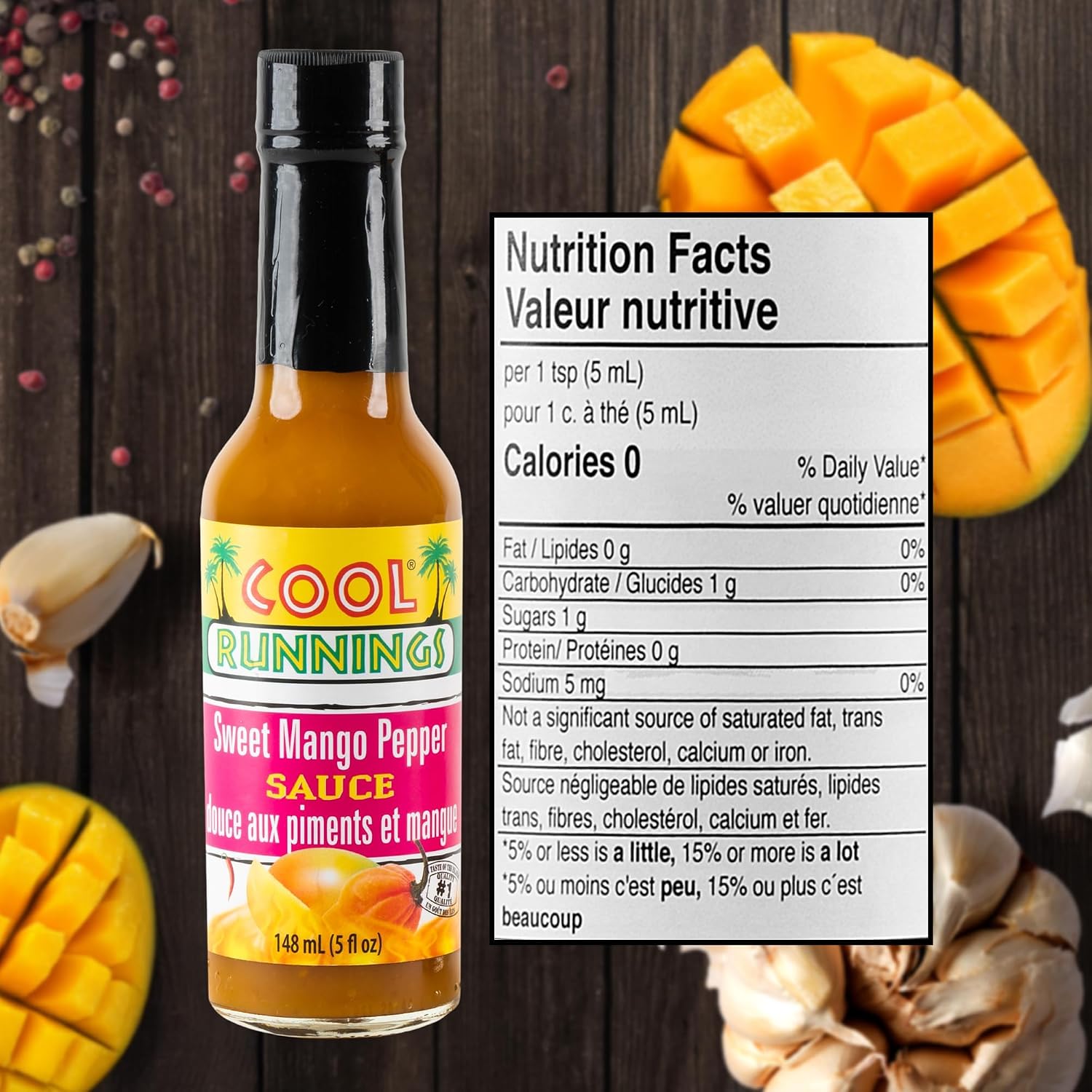
Cool
$9.99
In stock on Amazon
Check price on AmazonSmilin Island Sweet Samba: The Versatile Kitchen Workhorse
Smilin Island Sweet Samba enters the comparison with a notably different energy in its reviewer base. Where Cool Runnings reviewers praise and move on, Smilin Island buyers get creative. Across aggregated reviews, owners consistently report using Sweet Samba as an ingredient — in mac and cheese, as a popcorn drizzle, as the anchor of weekly meal-prep marinades — not just as a table condiment. One reviewer described it as “liquid sunshine,” another credited it with containing “secrets to eternal happiness.” That kind of language isn’t marketing copy; it’s genuine enthusiasm from buyers who’ve folded the sauce into their cooking routine.
The flavor profile here leans more complex than Cool Runnings’ straightforward mango: reviewers describe fruity brightness with a gentle savory undertow that makes it bridge-friendly across more dish types. The Spruce Eats, in their editorial guide to cooking with fruit-based hot sauces, observes that sauces with layered fruit profiles — rather than single-note ones — tend to hold up better through heat exposure, since they don’t reduce to one-dimensional sweetness during cooking. That tracks precisely with how Sweet Samba buyers are folding it into their routines.
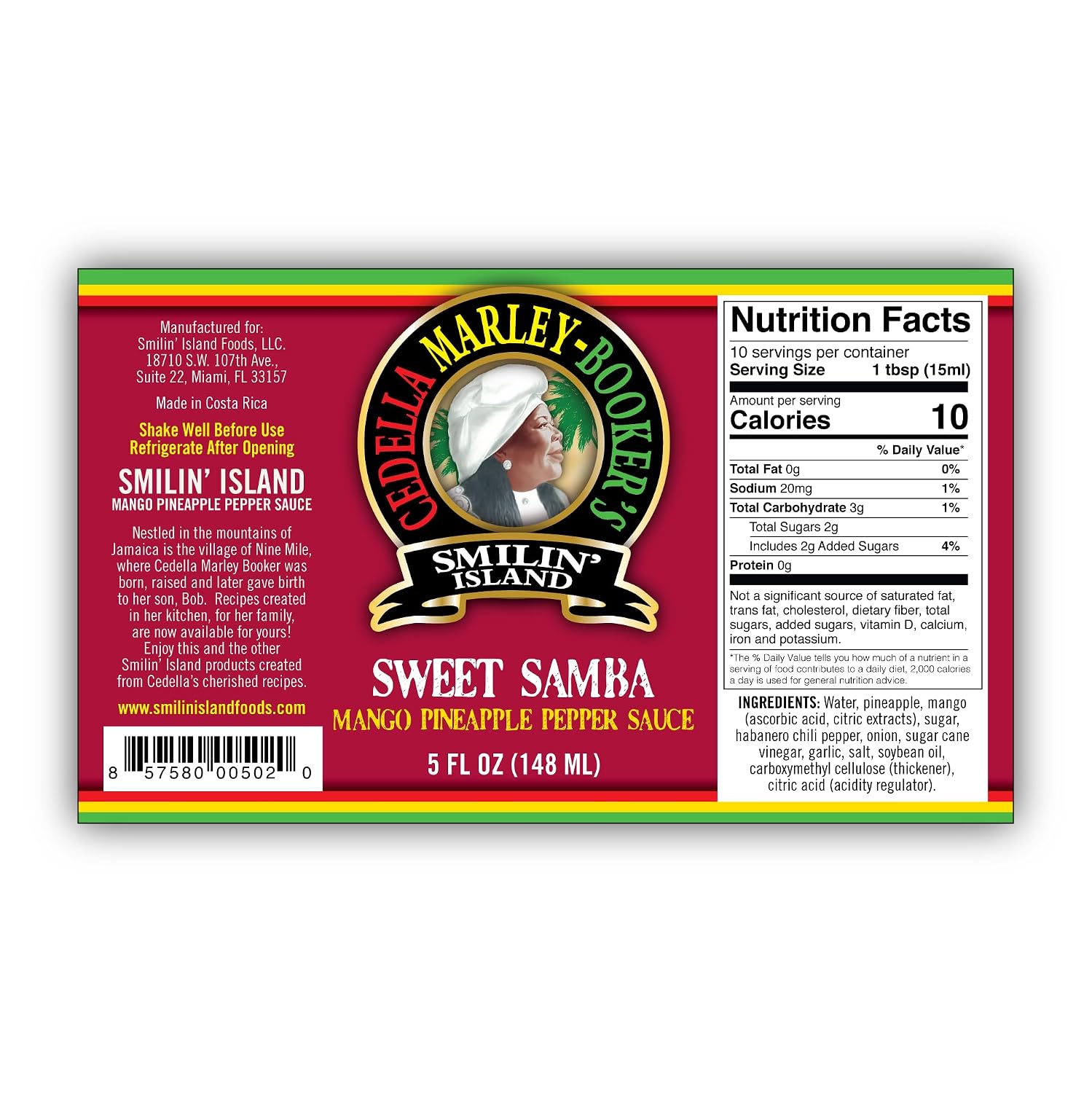
Smilin
$11.99
In stock on Amazon
Check price on AmazonHeartbeat Pineapple Habanero: The Heat-Forward Escalation Option
If you’re reading this as a practitioner who already knows these two sauces are likely too mild for your personal heat preference, there’s a natural next step worth naming: Heartbeat Pineapple Habanero. Habanero peppers share close genetic lineage with scotch bonnets and sit in the 100,000–350,000 SHU range — meaning they deliver real heat by any definition. But Heartbeat’s Pineapple Habanero occupies a fascinating middle position: reviewers consistently describe it as a sauce that “tastes like it should be super hot but it’s not.”
That’s not a complaint — it’s a design outcome. The pineapple and fruit-forward processing tempers the habanero’s burn while preserving its floral, fruity character. Taste Atlas, in their regional overview of Caribbean condiments, identifies habanero-fruit blends as a significant and growing category precisely because they deliver the flavor profile associated with a hot pepper without the full scorched-earth experience. Saveur’s reporting on the new wave of Caribbean-inspired condiments has similarly noted that fruit-forward mild sauces create an effective on-ramp — buyers discover the genre through an approachable bottle and migrate toward heat over time.
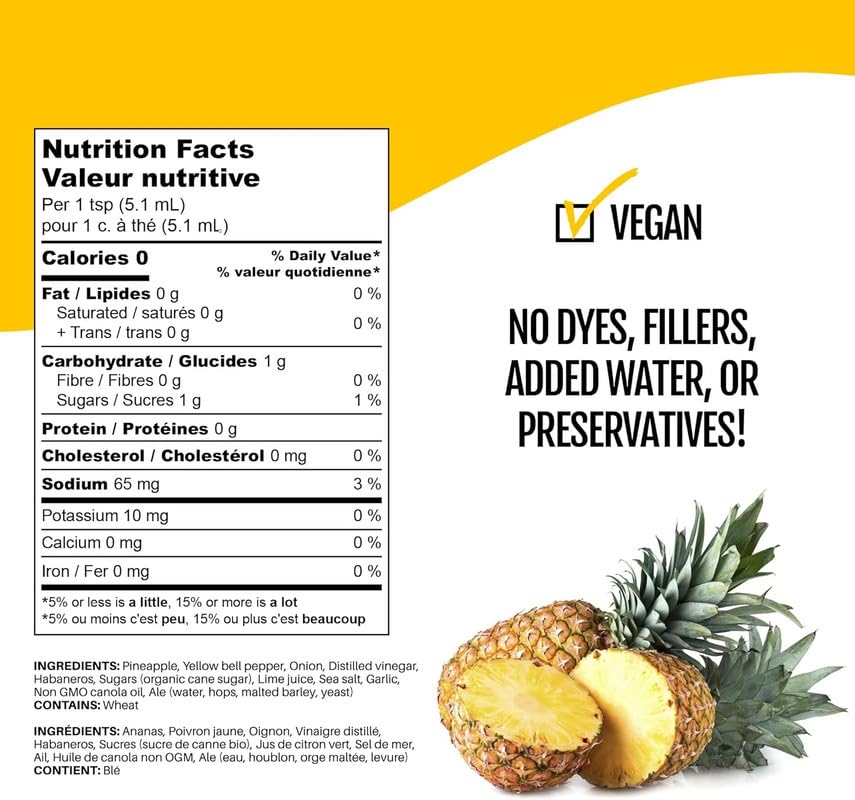
Heartbeat
$14.99
In stock on Amazon
Check price on AmazonBy the Numbers
| Feature | Cool Runnings Sweet Mango | Smilin Island Sweet Samba | Heartbeat Pineapple Habanero |
|---|---|---|---|
| Heat designation | Very mild (family-safe) | Mild (family-safe) | Medium (genuine warmth) |
| Primary flavor driver | Single-fruit mango | Multi-fruit tropical blend | Pineapple + habanero |
| Reviewer use pattern | Table condiment | Condiment + cooking ingredient | Condiment + heat escalation |
| Scoville range (est.) | <1,000 SHU | <1,500 SHU | 10,000–30,000 SHU |
| ”Goes with everything” rating | High | Very high | High (heat-tolerant crowd) |
Scoville estimates based on brand category norms as referenced in Serious Eats’ editorial coverage of capsaicin and hot sauce classification; individual batches may vary.
Dish Pairings: Where Each Sauce Actually Earns Its Keep
Cool Runnings Sweet Mango is the cleaner, more focused pairing tool. Its thick, single-note mango character means it excels where you want fruit flavor to do one clear job:
- Grilled chicken and pork — the mango sweetness caramelizes slightly at the table pour stage, making it a natural finish over jerk-spiced proteins where you want fruit to balance heat
- Fried fish — the texture clings without drowning a delicate crust
- Patties and hand pies — a classic dipping pairing that diaspora households already know instinctively
- Cheese boards and charcuterie — sweet mango alongside salty cured meats is a universally appealing bridge for mixed-audience entertaining
Its narrower flavor range is not a weakness in these applications — it’s a feature. You want the mango to read clearly, and it does.
Smilin Island Sweet Samba rewards more adventurous application. Based on what owners consistently report across review aggregations, this sauce crosses from condiment to cooking ingredient more naturally than most in its tier. That behavior aligns with The Spruce Eats’ editorial guidance on fruit-based hot sauce cooking, which notes that sugar-forward sauces with layered profiles hold their complexity better than single-note ones when folded into dishes at low heat. Specific use cases buyers flag repeatedly:
- Mac and cheese finish — a swirl stirred in at serving adds a fruity-savory lift that multiple reviewers flag as a repeat move
- Meal-prep marinades for chicken thighs — the sauce doubles as a marinade base with enough body to coat without washing off
- Wing glaze — obvious, but buyers confirm it lands
- Grain bowls and rice dishes — a drizzle over coconut rice or peas-and-rice adds brightness without heat-aversion risk for guests
- Popcorn drizzle — yes, reviewers mean this seriously, and the sweet-savory logic holds
If you’re building a pantry for a household where you’re regularly cooking for different heat tolerances — children, elders, heat-sensitive guests — Sweet Samba’s versatility gives it a higher rotation potential than its single-fruit competitor.
The Decision Ladder: Stocking Your Shelf Deliberately
The practical framework for choosing looks like this:
- Feeding a mixed-heat-tolerance table? → Cool Runnings Sweet Mango or Smilin Island Sweet Samba
- Want versatility as both condiment and cooking ingredient? → Lean toward Smilin Island Sweet Samba
- Want fruit-forward flavor with genuine (but not punishing) heat? → Heartbeat Pineapple Habanero
- Ready for the full scotch bonnet experience? → That’s a Marie Sharp’s or Walkerswood conversation
Saveur’s editorial coverage of Caribbean-inspired condiment trends frames this category progression well: the fruit-forward mild tier exists partly as a discovery mechanism. Buyers who start here tend to move along the heat spectrum over time, which means buying one of these bottles isn’t a permanent commitment to mild — it’s the beginning of a more interesting pantry.
Frequently Asked Questions
Is the Cool Runnings Sweet Mango sauce actually spicy, or is it purely a sweet sauce?
It is, in practical terms, a sweet sauce with essentially nominal heat. Buyers who purchase expecting scotch bonnet or even jalapeño-level warmth consistently report disappointment on that axis. If you’re calibrated to Caribbean pepper heat, this reads as mild fruit sauce. If you’re heat-sensitive or cooking for children and older guests, that’s precisely the point. It’s not a defect; it’s the product’s identity.
What dishes work best with Smilin Island Sweet Samba beyond obvious wing and taco pairings?
The owners who get the most use out of Sweet Samba are treating it as an ingredient, not just a condiment. Based on aggregated reviewer use cases: mac and cheese (swirled in at serving), grain bowls and coconut rice dishes, chicken thigh marinades for weekly meal prep, and as a glaze applied in the last two minutes of grill time. The sauce has enough body and flavor complexity to hold up through light heat exposure without collapsing into pure sweetness.
How does Smilin Island Sweet Samba compare to Heartbeat Pineapple Habanero in heat level?
Sweet Samba is milder. Both sauces lean fruit-forward, but Heartbeat Pineapple Habanero introduces genuine habanero heat — even if it’s tempered by the pineapple processing. Reviewers describe Heartbeat as surprising: the flavor profile suggests intense heat that the finish doesn’t fully deliver, but there is real warmth present. Sweet Samba has no comparable heat moment. If you want to escalate from Samba’s minimal challenge to something with a noticeable tingle, Heartbeat is the logical next step before you reach full scotch bonnet territory.
Are these tropical sauces suitable for children or heat-sensitive guests at the table?
Yes, without reservation. Both Cool Runnings Sweet Mango and Smilin Island Sweet Samba are appropriate for children and adults with low or zero heat tolerance. They’re sweet-forward, fruit-based sauces with minimal capsaicin presence. The Spruce Eats’ editorial coverage of fruit-based condiment styles categorizes this genre as accessible precisely because it separates the flavor experience of tropical fruit from the heat experience of Caribbean peppers. These are the bottles you put on the table when your gathering includes people who’d otherwise skip the sauce entirely.
Can any of these sweet tropical sauces be used as a marinade for grilling, or are they purely condiments?
All three — Cool Runnings Sweet Mango, Smilin Island Sweet Samba, and Heartbeat Pineapple Habanero — can function as marinades, but with different results. Sweet Mango’s single-note profile works best as a finish glaze rather than a long marinade, since its flavor doesn’t add layered complexity during an overnight soak. Sweet Samba’s multi-fruit profile and the cooking-ingredient behavior owners consistently report makes it the strongest marinade candidate of the two primary sauces in this comparison. As a general principle documented in The Spruce Eats’ fruit sauce cooking editorial, sugar-forward sauces should be applied in the last 10–15 minutes of grill time — or used as a post-cook glaze — to avoid burning. That logic applies equally to all three sauces here.
This guide is based on aggregated buyer reviews, published brand specifications, and editorial research. Named sources include Serious Eats’ editorial coverage of hot sauce science and capsaicin measurement, Taste Atlas’ regional overview of Caribbean condiments, The Spruce Eats’ editorial guide to cooking with fruit-based hot sauces, and Saveur’s reporting on Caribbean-inspired condiment trends. No source URLs are hyperlinked; all citations reference the named publication and document title.