You know that feeling when you’re sitting at a beach-shack lunch spot somewhere in the Caribbean — Barbados, Trinidad, St. Thomas, Jamaica — and the server drops a little bottle of hot sauce on the table without explanation? You put it on your fish, and something shifts. It’s not just heat; there’s a depth of flavor underneath — fruity, almost floral, a slow burn that doesn’t assault you so much as it builds a conversation. You use it on everything for the rest of the trip. Then you fly home, open your pantry, reach for the bottle you stashed in your checked luggage, and realize you only have half of it left. The dread begins. What is this sauce called? Can you even buy it back home?
That specific experience — what we’re calling the Island Discovery Effect — is one of the most consistent stories across hot-sauce communities and review threads on specialty food platforms. It’s not an impulse purchase pattern. It’s a pantry reunion quest. This guide is for the cook who has already had that moment and wants to understand what they found, why it tastes different from anything at home, and how to make sure they never run out again. We’ll go brand by brand, look at the flavor and heat profiles reviewers consistently describe, and give you a clear decision framework at the end for building these sauces into your everyday rotation.
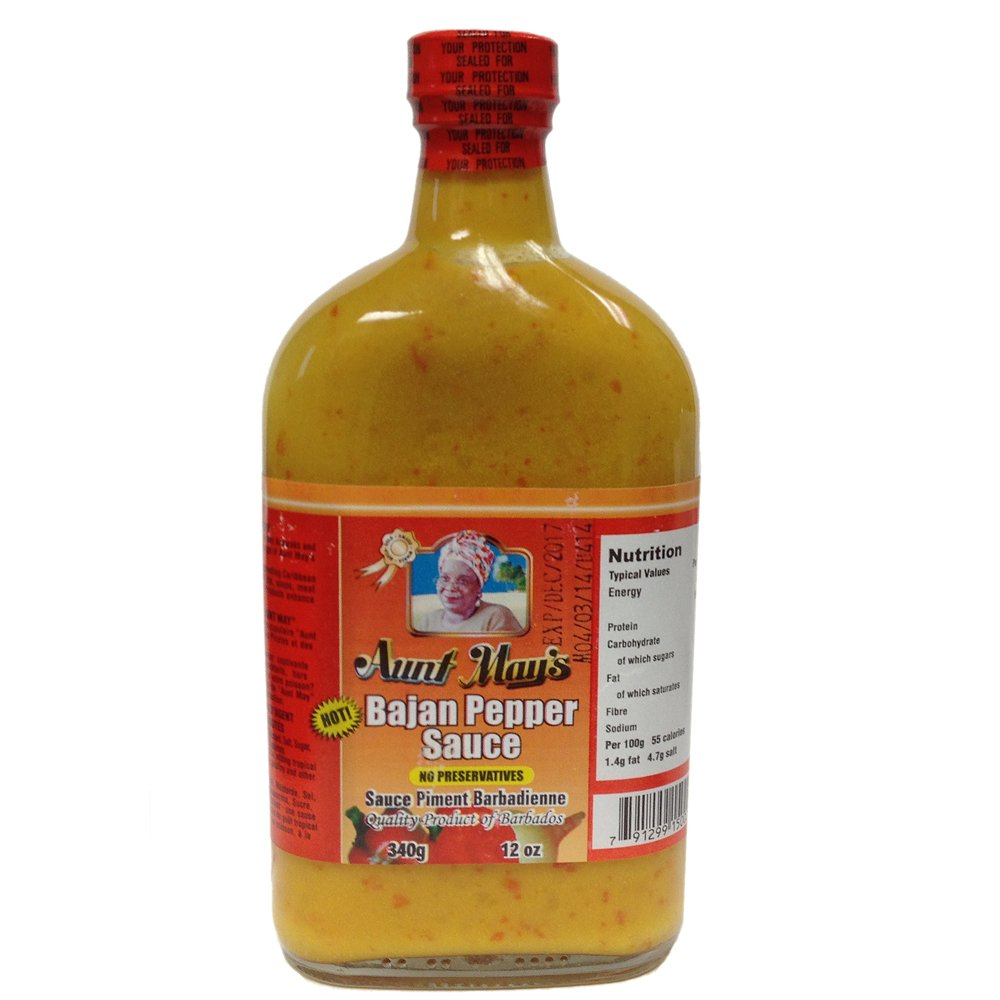
| EDITOR'S PICKAunt May's | Mid-tierBaron West Indian Hot Sauce - 2… | Budget pickBaron West Indian Hot Sauce (15… | |
|---|---|---|---|
| Size | 12 fl oz | 28 fl oz | 155 ml |
| Pack count | 1 | — | — |
| Origin | Barbados | West Indies | West Indies |
| Brand | Aunt May's | Baron | Baron |
| Price | $24.77 | $19.97 | $9.99 |
| See on Amazon → | See on Amazon → | See on Amazon → |
Why Island-Origin Sauces Taste Different: The Short Version
The foundation starts with the pepper. Saveur’s feature on Caribbean cooking singles out the scotch bonnet pepper — a small, lantern-shaped chile that registers between 100,000 and 350,000 Scoville Heat Units (SHU) — as the defining flavor element of the region’s cuisine. For context, mainstream grocery-store hot sauces built around cayenne typically range from 30,000 to 50,000 SHU. The scotch bonnet’s heat is higher, but more importantly, its flavor profile is entirely different: tropical, faintly citrusy, with a fruitiness that cayenne simply doesn’t have.
Smithsonian Magazine’s coverage of Caribbean condiment culture notes that the small-batch production model — many of these sauces are still made in relatively modest facilities with fresh, locally sourced peppers — means ingredient quality stays high and formulas stay stable. A sauce that has been made the same way for decades in a particular island kitchen tastes like a place. That provenance is exactly what travelers bring home in their luggage.
There’s a second technical factor: water content, or rather the lack of it. Serious Eats’ analysis of hot sauce formulation points out that sauces made without water as a primary ingredient tend to have a denser, more concentrated flavor and a different heat delivery — slower to hit, longer to linger. This is a detail that serious pantry buyers notice immediately, even if they can’t always name why.
A Quick Heat Reference
| Sauce | Primary Pepper | Approximate SHU Range | Dinner-Table Safe? |
|---|---|---|---|
| Baron West Indian Hot | Scotch bonnet | 150,000–300,000 | Fire-breathing — proceed carefully |
| Aunt May’s | Scotch bonnet blend | 80,000–150,000 | Hot but manageable for practiced palates |
| Mama Maisa’s USVI | Scotch bonnet | 100,000–200,000 | Medium-hot; flavor-forward |
| Bertie’s Trinidad | Scotch bonnet | 100,000–250,000 | Hot; cross-island respected |
SHU ranges are drawn from Taste Atlas regional hot sauce documentation and aggregated reviewer reporting, not lab certification.
Baron West Indian Hot Sauce: The One That Changes You
Of all the sauces in the island-discovery category, Baron West Indian Hot generates the most vivid traveler testimony. Reviewers across specialty food platforms consistently describe a two-stage relationship: the first encounter is genuinely shocking, and then something happens over repeated use. One unusually candid reviewer — noted across multiple aggregated review summaries — explicitly describes the capsaicin tolerance effect: the body’s pain receptors downregulate with regular exposure to capsaicin (the chemical compound that creates heat sensation), meaning the same sauce that felt punishing in week one feels pleasurable and nuanced by week four.
This is a sophisticated insight, and it’s worth sitting with. Baron isn’t a sauce you tolerate. It’s a sauce you train for, and then you crave. The heat is real — reviewers consistently describe it as among the hottest widely available Caribbean sauces — but the underlying flavor is what keeps people reordering. The scotch bonnet’s fruit notes survive the heat.
Decision rule: If you brought Baron home from a Caribbean trip and you’re still thinking about it six months later, you have already developed baseline capsaicin tolerance. Reorder with confidence. If you’re buying it for a household with heat-sensitive guests, buy it as a table condiment for individual use rather than cooking it into shared dishes.
Aunt May’s: The Authenticity Signal That Actually Matters
The defining anxiety in the island-discovery reorder is this: will it taste the same? The sauce I had in the market on that specific street — can I actually get that back?
For Aunt May’s, reviewers consistently answer yes. The detail that surfaces again and again in aggregated platform feedback is that the Amazon-available product matches the island original exactly. That’s not a throwaway comment. For a small-batch Caribbean sauce, maintaining formula and ingredient consistency between on-island production and export packaging is genuinely difficult — changes in vinegar sourcing, pepper season quality, or bottling runs can shift a product meaningfully. When reviewers who have made the island trip multiple times say the sauce tastes the same on their doorstep as it did at the source, that’s meaningful provenance validation.
Aunt May’s lands in the serious-heat category without crossing into Baron’s extreme territory. Taste Atlas’ regional documentation on Barbadian condiment culture notes that many Barbados-origin sauces balance scotch bonnet heat with mustard and turmeric base notes — a flavor profile distinct from Jamaican or Trinidadian styles. If your discovery happened in Barbados, Aunt May’s is a culturally accurate retrieval.
Decision rule: If authenticity matching is your primary concern — you want the thing you had on the island, not a category approximation — Aunt May’s high reviewer consensus on exact-match flavor makes it the lowest-risk reorder in this guide.
Mama Maisa’s USVI Sauce: Water-Free, Flavor-Dense
Mama Maisa’s comes from the U.S. Virgin Islands, a sub-region of Caribbean hot sauce culture that gets less mainland coverage than Jamaica or Trinidad but has its own distinct sauce tradition. The detail that serious pantry buyers flag in reviews is the absence of water as an ingredient — a formulation choice that concentrates both heat and flavor and produces a texture closer to a mash than a liquid hot sauce.
Serious Eats’ hot sauce formulation analysis confirms what reviewers are describing: water dilutes both the pepper compounds and the aromatic volatiles that carry flavor. A sauce built on fresh pepper, vinegar, and aromatics without water filler delivers more flavor per drop and behaves differently in cooking — it integrates into a dish rather than sitting on top of it.
Is it similar to Jamaican pepper sauce? Taste Atlas’ regional comparison notes distinguish USVI styles from Jamaican styles primarily in their aromatics: USVI sauces tend toward tropical fruit and herb notes where Jamaican sauces (particularly scotch bonnet-based ones) often lean into onion, garlic, and spice. Both use scotch bonnet as a heat base, so the pepper character overlaps, but the surrounding flavor framework is different. Mama Maisa’s reads as more herbaceous, less savory-pungent than a classic Jamaican pepper sauce.
Decision rule: If you cook Caribbean dishes regularly and want a sauce that functions as a cooking ingredient (added during the simmer, not just at the table), Mama Maisa’s water-free density makes it a more versatile tool than thinner sauces. If you want table-condiment splash, the thinner consistency of Baron or Aunt May’s may suit better.
Bertie’s Trinidad: The Cross-Island Endorsement
In Caribbean food culture, getting a Jamaican cook to call a Trinidadian scotch bonnet sauce one of the best available is a meaningful data point. The flavor traditions of the two islands diverge significantly — Trinidad’s culinary history pulls in South Asian and African influences that shape its pepper sauces in distinct ways, while Jamaican sauce tradition runs through a different spice vocabulary — so cross-island endorsement signals that a sauce has transcended regional preference.
Bertie’s Trinidad receives exactly this in aggregated review patterns: a self-identified Jamaican reviewer calling it among the best scotch bonnet sauces they’d encountered. Smithsonian Magazine’s coverage of Caribbean condiment culture notes that Trinidadian hot sauces often incorporate shadow beni (also spelled chadon beni, and called shado beni — it’s a serrated-leaf herb with a cilantro-adjacent flavor that’s central to Trinidadian cooking) and a slightly sweeter pepper base alongside the scotch bonnet heat. That combination tends to produce sauces that are complex enough to reward serious cooks.
On US grocery store availability: Bertie’s Trinidad, like most small-batch island-origin sauces in this guide, has very limited mainstream US retail distribution as of mid-2026. Specialty Caribbean food retailers and online platforms remain the reliable sourcing channel.
Decision rule: If you’re building a serious scotch bonnet sauce collection and want Trinidadian representation alongside Jamaican and USVI styles, Bertie’s cross-island credibility makes it the obvious selection. It earns its spot on the shelf as a flavor-profile complement, not a redundancy.
Frequently Asked Questions
Can I actually find the same Baron or Aunt May’s sauce I tried on the island? Yes, with confidence. Reviewers who have traveled to the source islands and subsequently reordered through specialty online platforms consistently report formula-matching between the island original and the purchased product. Aunt May’s in particular receives strong exact-match testimony.
How hot is Baron West Indian Hot compared to mainstream hot sauces? Meaningfully hotter. Mainstream cayenne-based sauces typically range 30,000–50,000 SHU. Baron, built on scotch bonnet, runs 150,000–300,000 SHU in reviewer-consistent heat descriptions. If you use mainstream hot sauce freely and consider yourself heat-tolerant, treat Baron as a start-small sauce and build from there.
What does Mama Maisa’s USVI sauce taste like — is it similar to Jamaican pepper sauce? Related but distinct. Both use scotch bonnet as a heat base, so the pepper character overlaps. USVI styles tend toward tropical fruit and herb aromatics; Jamaican styles often lean toward onion, garlic, and spice. Taste Atlas’ regional documentation supports this distinction. Fans of Jamaican pepper sauce will recognize Mama Maisa’s as a cousin, not a replica.
Is Bertie’s Trinidad sauce available in any US grocery stores? Not reliably. Mainstream US retail distribution for small-batch island-origin sauces remains limited as of 2026. Specialty Caribbean food retailers are the consistent sourcing channel.
Which of these sauces is best for cooking into dishes versus using as a table condiment? Mama Maisa’s water-free density makes it the strongest cooking ingredient — it integrates into braises, marinades, and stews rather than sitting on the surface. Baron and Aunt May’s work well as table condiments given their liquid consistency. Bertie’s Trinidad’s complexity makes it strong in both roles.
How should I store these sauces after opening? Refrigerate after opening. The vinegar base preserves these sauces well, but cold storage slows oxidation and keeps the fresh pepper aromatics stable. Most island-origin scotch bonnet sauces hold quality for six to twelve months refrigerated — though reviewers in this category rarely report having any left by month three.