You know that feeling when you’re standing in a Caribbean grocery aisle staring at a wall of pepper sauces — all bright labels, all claiming to be “authentic,” all priced somewhere between $7 and $18 — and you genuinely have no idea which one will actually deliver on its promise? That moment is exactly why this guide exists. Today we’re zeroing in on two Trinidadian institutions: Baron and Bertie’s, both household names across the Caribbean diaspora, both built around the scotch bonnet — a small, wrinkled pepper that registers between 100,000 and 350,000 Scoville Heat Units. For reference, a jalapeño tops out around 8,000 SHU, so we’re talking significantly hotter territory. These aren’t novelty sauces. They’re workhorse condiments with decades of kitchen credibility. By the time you finish reading, you’ll know exactly which one belongs in your cart — and why a fully loaded pantry might honestly justify both.
What You’re Actually Buying: Brand Origins and Product Philosophy
Understanding where a sauce comes from isn’t just trivia — it’s the first indicator of what it’s optimized for.
Baron Foods: Caribbean Regional Reach
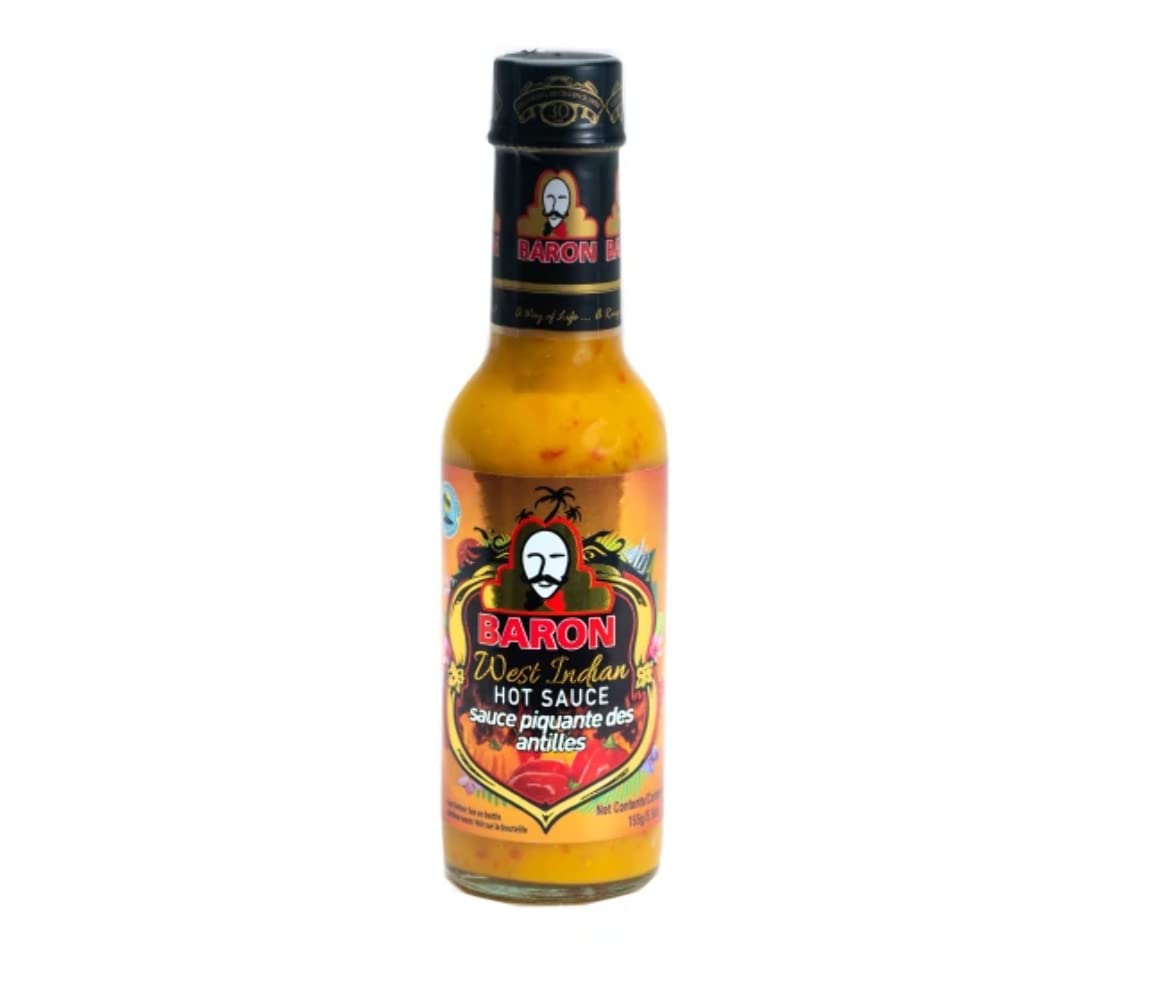
Baron Foods is a St. Lucia-headquartered company that has been producing Caribbean condiments since 1990, with distribution networks spanning the Eastern Caribbean, the UK Caribbean diaspora market, and North American specialty retailers. Their pepper sauce lines — particularly the West Indian Hot Pepper Sauce and the Habanero variant — are formulated for broad accessibility. Baron’s philosophy, consistent across their condiment catalog (which includes ketchup, steak sauce, and seasoning blends), is table-ready versatility: sauces that work equally well drizzled on a roti, stirred into a pot of stewed chicken, or passed around at a family barbecue without alarming anyone’s grandmother.
Smithsonian Magazine, in their feature “How Hot Sauce Became a Caribbean Cultural Export,” notes that brands operating in this Eastern Caribbean commercial tradition have played a defining role in making island condiments shelf-stable and commercially scalable for diaspora retail — a significant logistical achievement that explains Baron’s footprint in Caribbean-owned supermarkets from Brixton to Flatbush. Baron is, in short, a Caribbean regional brand optimized for diaspora-wide appeal.

Baron
$19.97
In stock on Amazon
Check price on AmazonBertie’s Pepper Sauce: Trinidadian Identity in a Bottle
Bertie’s, by contrast, is a Trinidad-origin brand with a much tighter geographic identity. Built on a recipe tradition closer to the home-cook style of pepper sauce — in Trinidad, that phrase specifically refers to a vinegar-mustard-scotch bonnet blend, not generic hot sauce; it’s a textural condiment as much as a heat vehicle — Bertie’s occupies the “grandma’s kitchen scaled up” positioning. The base includes mustard, which gives it a distinctive yellow-gold color and a slightly thicker, almost spreadable body.
Taste Atlas, in their Trinidad and Tobago Condiments Regional Profile, identifies this mustard-forward pepper sauce style as one of the defining flavor signatures of Trini cuisine — distinct from the thinner vinegar sauces common in Barbados or the fruitier profiles of Jamaican sauces. Bertie’s leans hard into that identity. It is a Trinidad-specific brand optimized for Trini culinary logic, and that distinction matters when you’re deciding what to cook.
Baron
$19.97
In stock on Amazon
Check price on AmazonThe Provenance Implication
The origin gap between the two brands is real and decision-relevant. Baron is built to travel across kitchens and occasions; Bertie’s is built to perform within a specific culinary tradition. Neither approach is superior in the abstract — they’re different answers to different pantry questions. Saveur’s “A Field Guide to Caribbean Hot Sauce” draws exactly this distinction, contrasting Eastern Caribbean commercial sauces designed for regional versatility against Trinidad-specific condiment traditions where mustard and turmeric create a flavor architecture that resists easy substitution.
Baron
$19.97
In stock on Amazon
Check price on AmazonHeat, Flavor Architecture, and the Decision Frame
This is where the comparison gets genuinely useful for your pantry decisions.
Baron West Indian Hot Pepper Sauce: The Versatile Finisher
Baron West Indian Hot Pepper Sauce runs in the moderate-to-hot range. The flavor profile leads with vinegar brightness, followed by the fruity, almost floral note that scotch bonnets contribute when they’re not overwhelmed by other ingredients. It’s a clean, relatively thin sauce — pourable, not spreadable — which makes it excellent as a finishing condiment and a reliable cooking sauce when you want heat without muddying a dish’s base flavors.
Saveur’s “A Field Guide to Caribbean Hot Sauce” describes the Baron-style Eastern Caribbean pepper sauce as functioning like a “universal seasoning bridge” — the kind of product that works across cuisines because it doesn’t assert a specific regional identity aggressively. That’s a feature, not a flaw, depending on your cooking context. The heat builds gradually rather than hitting upfront, and the experience is reliably described by experienced users as sustained warmth rather than searing intensity.
Baron
$19.97
In stock on Amazon
Check price on AmazonBertie’s Pepper Sauce: The Personality Condiment
Bertie’s operates differently at every level. The mustard base pushes the flavor architecture toward savory-tangy before the heat arrives. The scotch bonnet heat is genuine — most users place the experience in the medium-high range — but the mustard and turmeric create a thicker texture and a more complex initial flavor. The heat arrives later and lingers longer than Baron’s more immediate vinegar-forward burn.
Serious Eats, in “The Hot Sauces That Actually Belong in Your Fridge,” distinguishes between sauces built primarily as heat delivery mechanisms versus sauces with genuine culinary utility beyond heat. Bertie’s falls clearly in the latter category. It’s an extraordinary condiment on doubles (the Trinidadian street food of bara bread with curried chickpeas), on fried bake, alongside curry, or as a component in a sandwich. It doesn’t disappear into a pot the way Baron does — the mustard asserts itself and can compete with delicate flavors, which makes it a pairing sauce rather than a universal finishing sauce.
Baron
$19.97
In stock on Amazon
Check price on AmazonSide-by-Side at a Glance
| Feature | Baron West Indian Hot Pepper Sauce | Bertie’s Pepper Sauce |
|---|---|---|
| Origin | St. Lucia (Caribbean regional) | Trinidad |
| Base style | Vinegar-scotch bonnet (thin) | Mustard-vinegar-scotch bonnet (thick) |
| Heat character | Building, front-loaded vinegar | Delayed, longer-lingering |
| Typical retail price | $7–$10 / 12 oz | $8–$13 / 12–14 oz |
| Best use signal | Finishing, cooking, table condiment | Pairing, spreading, Trini-specific dishes |
| Family-dinner-safe? | Yes, at moderate portions | Yes, with first-timer guidance |
Baron
$19.97
In stock on Amazon
Check price on AmazonThe Pantry Math: Price-Per-Ounce and Use-Case ROI
At current 2026 specialty retail pricing, Baron typically lands around $0.58–$0.83 per ounce, while Bertie’s runs $0.57–$0.93 per ounce depending on retailer and bottle size. At those ranges, neither sauce represents a budget-breaker — but the per-use value calculation depends entirely on how frequently each sauce fits your actual cooking rotation.
Baron: The Everyday Driver
If your household cooks Caribbean food multiple times per week across a range of dishes — jerk chicken, curry, rice and peas, stewed oxtail, fried plantain — Baron earns its shelf space through sheer frequency of deployment. It’s the everyday-driver sauce: versatile enough to reach for instinctively, heat level calibrated for mixed-household tables, and consistent batch-to-batch in a way that matters when you’re seasoning by feel rather than measuring precisely.
The Spruce Eats, in their overview of pantry condiment building for Caribbean and West Indian cooking, consistently recommends keeping a thin, vinegar-based scotch bonnet sauce as the foundation of a Caribbean condiment shelf before layering in more region-specific options — a framework Baron fits naturally.
Baron
$9.99
In stock on Amazon
Check price on AmazonBertie’s: The Occasion Sauce That Becomes Everyday
Bertie’s is the occasion sauce that gradually becomes an everyday sauce once your palate calibrates to it. The first few uses, it will feel specific — you’ll reach for it deliberately with doubles, with curry, with roti. But users who cook in the Trinidadian tradition consistently report that once Bertie’s becomes part of their condiment mental model, the use occasions expand naturally. It starts appearing on eggs, on grilled fish, as a burger condiment. The mustard base, which initially feels like a constraint, turns out to be an asset because it gives Bertie’s genuine culinary range that thinner vinegar sauces lack.
Baron
$19.97
In stock on Amazon
Check price on AmazonThe Case for Both
The case for buying both simultaneously — at a combined $15–$23 for two quality bottles — is that they genuinely don’t overlap. This isn’t a “pick your favorite” situation. Baron fills the “I need heat integrated into this dish right now” role; Bertie’s fills the “I want a condiment with personality on the side of this plate” role. Serious Eats’ framework of sauces-with-culinary-utility-beyond-heat is the clearest articulation of why these two products occupy different pantry niches rather than competing for the same one.
Bertie's
$28.99
In stock on Amazon
Check price on AmazonProvenance, Authenticity, and the Island-Owned Question
Our readers take this seriously, so it’s worth addressing directly.
Baron Foods is Caribbean-owned and Caribbean-manufactured — a regionally headquartered company whose production remains island-based. That matters in the current market, where “Caribbean-inspired” products from mainland manufacturers increasingly occupy shelf space next to genuine island-produced goods. Paying $8–$10 for Baron means the margin supports Eastern Caribbean food manufacturing infrastructure. That’s a meaningful provenance signal for shoppers who prioritize economic authenticity alongside culinary authenticity.
Bertie’s carries Trinidadian identity authentically in its formulation. The mustard-base pepper sauce style is genuinely rooted in Trinidadian culinary tradition rather than a generalized “Caribbean hot” positioning, a point Taste Atlas’s Trinidad and Tobago Condiments Regional Profile makes explicit in distinguishing Trini pepper sauce from other Eastern Caribbean condiment styles. Distribution has expanded to diaspora markets in the UK and North America, but the product origin and recipe tradition remain Trinidad-rooted.
Neither brand has the artisan small-batch story of a craft scotch bonnet producer selling 200-bottle runs. Both are commercially scaled — and “commercially scaled” means “consistent,” which for a pantry staple is the feature you actually want. Smithsonian Magazine’s feature “How Hot Sauce Became a Caribbean Cultural Export” makes the point that commercially distributed island brands serve a diaspora preservation function: they carry specific flavor memories across borders in a standardized, accessible form. That is a real kind of authenticity, and it’s worth recognizing alongside the more romantic small-batch narrative.
The Decision Rule: If X, Then Y
You’ve read the comparison. Here’s how to close the loop.
If you’re building a general Caribbean pantry from scratch and you need one sauce that handles the widest range of dishes without demanding Trini-specific culinary knowledge, start with Baron. It’s the more forgiving, universally deployable option, and the flavor profile will feel immediately familiar if you’ve encountered any Eastern Caribbean cooking before.
Baron
$9.99
In stock on Amazon
Check price on AmazonIf your cooking leans Trinidadian — doubles, curry, roti, pelau, bake-and-shark — or if you already have a solid all-purpose pepper sauce on the shelf and want to add genuine regional specificity, Bertie’s is the buy. The mustard base isn’t a novelty; it’s the authentic flavor logic of Trini condiment tradition, and it will make your Trini dishes taste more Trini.
Baron
$19.97
In stock on Amazon
Check price on AmazonIf you’re assembling a premium Caribbean pantry gift set in the $60–$120 range — the kind of curated build our readers send for housewarmings or holiday gifts — include both, along with a brief tasting note card explaining the difference. Pairing a versatile workhorse with a region-specific personality sauce is exactly the kind of editorial curation that distinguishes a thoughtful gift from a random condiment haul.
Bertie's
$28.99
In stock on Amazon
Check price on AmazonIf heat level is the primary concern — say, you’re shopping for a household with kids or heat-sensitive guests — both sauces are manageable at normal serving portions, but Baron is the more predictable choice. The thin texture makes it easier to control the amount you’re using, which translates to easier heat management at the table.
The bottom line: these are two of the most honest, kitchen-credible pepper sauces in the Trinidad-and-broader-Caribbean tradition. Neither one is overhyped. Neither one will disappoint a serious pantry builder. The only real mistake is letting the comparison paralyze you into buying neither.
Sources cited: Serious Eats — “The Hot Sauces That Actually Belong in Your Fridge”; Saveur — “A Field Guide to Caribbean Hot Sauce”; Taste Atlas — Trinidad and Tobago Condiments Regional Profile; Smithsonian Magazine — “How Hot Sauce Became a Caribbean Cultural Export”; The Spruce Eats — Caribbean and West Indian Pantry Condiment Overview.